
Choose from a wide range of NEWCV resume templates and customize your NEWCV design with a single click.

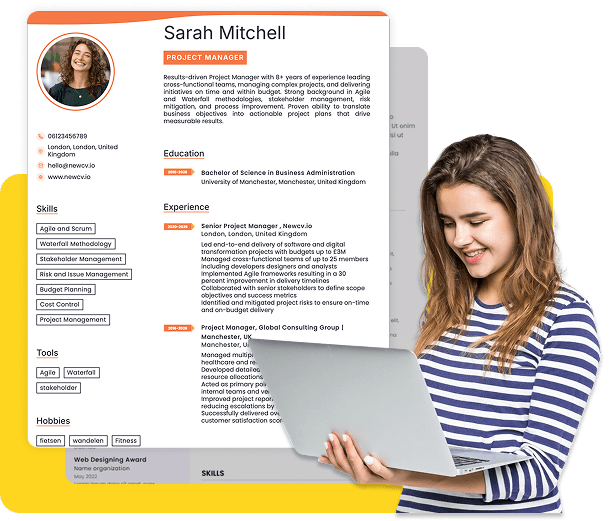
Use ATS-optimised Resume and resume templates that pass applicant tracking systems. Our Resume builder helps recruiters read, scan, and shortlist your Resume faster.

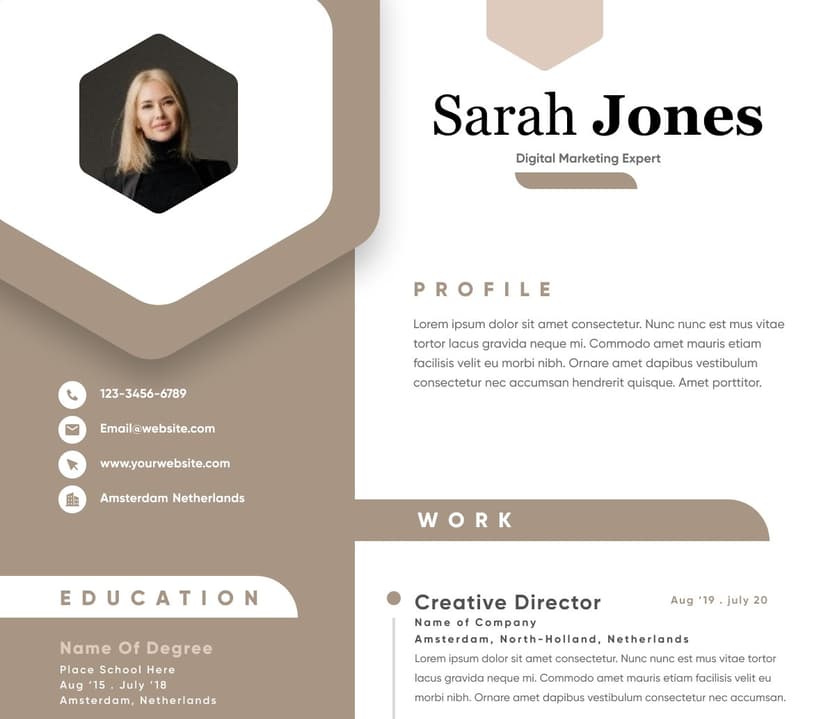
Use professional field-tested resume templates that follow the exact Resume rules employers look for.
Create Resume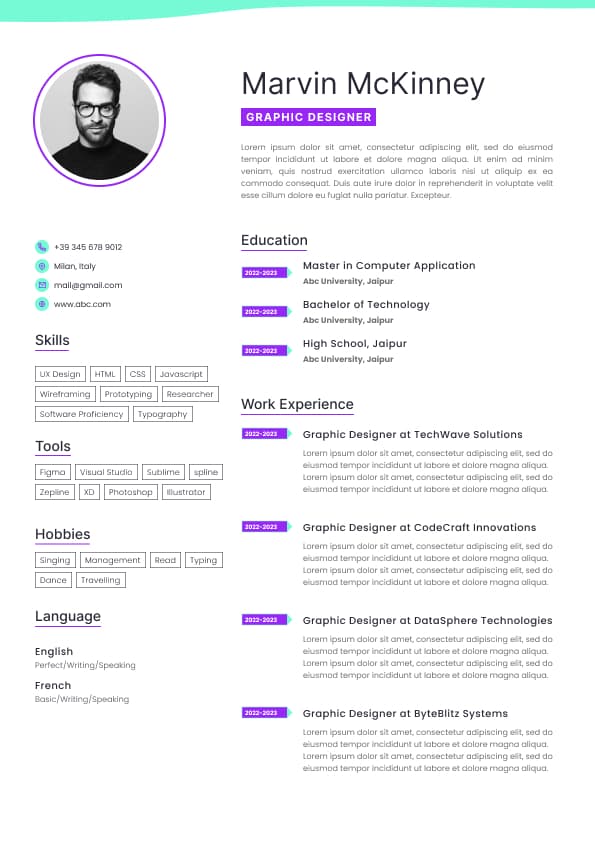
Use professional field-tested resume templates that follow the exact Resume rules employers look for.
Create ResumeA strong marketing resume in Australia is not about sounding creative. It is about proving commercial impact quickly. Australian recruiters and hiring managers scan marketing resumes fast, often in under 30 seconds during the first review. They want immediate evidence that you can generate results, understand audiences, improve campaigns, support revenue, and communicate clearly across stakeholders.
Most marketing resumes fail because they are too generic, too task-focused, or overloaded with buzzwords like “results-driven” and “innovative marketer” without proof. In the Australian market, employers increasingly prioritise measurable outcomes, channel-specific expertise, commercial awareness, and platform familiarity over vague marketing language.
The best marketing resumes position you as a problem-solver who understands both strategy and execution. Whether you work in digital marketing, brand, content, SEO, social media, CRM, product marketing, or performance marketing, your resume must show how your work influenced growth, engagement, acquisition, retention, or revenue.
This guide explains exactly how Australian recruiters evaluate marketing resumes, what employers expect in 2026, common mistakes that stop candidates getting interviews, and how to position yourself competitively in the Australian market.
Hiring managers in Australia typically assess marketing resumes through four core questions:
Can this person drive measurable business outcomes?
Do they understand the channels relevant to our business?
Can they communicate clearly with stakeholders?
Will they fit the pace and expectations of our team?
Most candidates focus too heavily on listing responsibilities instead of demonstrating outcomes. Recruiters are not impressed by statements like:
“Managed social media campaigns”
“Responsible for digital marketing”
“Worked on brand strategy”
Those statements tell us nothing about capability or effectiveness.
What recruiters actually want to see:
Growth metrics
Campaign impact
Conversion improvements
Lead generation results
Revenue influence
Platform expertise
Audience engagement improvements
Budget management
Cross-functional collaboration
Commercial thinking
A marketing resume should read like evidence, not a job description.
Australian recruiters see recurring patterns that immediately weaken marketing applications.
Most resumes use identical terminology:
“Creative thinker”
“Results-driven professional”
“Team player”
“Passionate marketer”
These phrases add no value because they are unsupported.
Instead, prove capability through outcomes.
Weak Example
“Results-driven marketer with strong communication skills.”
Good Example
“Delivered a 41% increase in qualified inbound leads within nine months through SEO-led content strategy and paid search optimisation.”
The second version demonstrates actual business value.
Many candidates explain what they did without explaining why it mattered.
Weak Example
“Managed EDM campaigns and social media content.”
Good Example
“Built and executed EDM campaigns achieving an average 38% open rate and 7.4% CTR while reducing unsubscribe rates by 18%.”
Marketing hiring managers care about performance indicators.
Tool-stuffing is common in marketing resumes.
Recruiters do not care if you can list 25 platforms. They care whether you can use the right tools effectively.
Instead of dumping software names, connect them to outcomes.
Weak Example
“Experienced with HubSpot, GA4, Canva, SEMrush, Meta Ads, Mailchimp and Salesforce.”
Good Example
“Used HubSpot automation workflows to improve lead nurturing efficiency and reduce manual campaign administration by 30%.”
This is one of the most misunderstood parts of marketing recruitment.
In Australia, highly designed resumes often perform worse unless you are applying for graphic design or creative-heavy roles.
Many ATS systems struggle with:
Multi-column layouts
Text inside graphics
Heavy design elements
Complex formatting
Clean, readable, ATS-friendly resumes consistently outperform overdesigned resumes for marketing positions.
Australian recruiters generally prefer concise, achievement-focused resumes between two and three pages depending on seniority.
A high-performing marketing resume should include:
Professional summary
Core marketing skills
Professional experience
Key achievements
Education
Certifications
Technical tools only when relevant
Optional portfolio or LinkedIn link
Your resume summary is critical because recruiters often decide within seconds whether to continue reading.
A strong summary should immediately establish:
Marketing specialisation
Years of experience
Commercial value
Industry relevance
Core strengths
“Digital marketing specialist with 6+ years’ experience across B2B SaaS and eCommerce environments. Proven track record increasing organic traffic, improving lead generation performance, and managing multi-channel campaigns across SEO, paid media, CRM, and content marketing. Experienced collaborating with sales, product, and executive stakeholders to deliver commercially focused growth strategies.”
Why this works:
Specific specialisation
Industry relevance
Commercial outcomes
Strategic positioning
Clear seniority level
Many candidates misuse the skills section by filling it with vague soft skills.
Australian recruiters prefer a focused skills section aligned with the role requirements.
SEO
SEM
Paid social
Performance marketing
Marketing automation
Email marketing
CRO
Analytics
Content strategy
Brand positioning
Copywriting
Campaign development
Social media strategy
Google Ads
GA4
HubSpot
Meta Ads Manager
Salesforce
Marketo
SEMrush
Canva
Only include tools you can confidently discuss in an interview.
This is where most hiring decisions happen.
Australian hiring managers want evidence of:
Ownership
Commercial outcomes
Strategic thinking
Execution capability
Stakeholder management
Adaptability
Your experience section should focus heavily on outcomes and measurable contribution.
Increased organic website traffic by 72% over 12 months through SEO-led content optimisation strategy.
Reduced paid acquisition costs by 28% while improving lead quality through campaign restructuring and audience refinement.
Managed $250K annual paid media budget across Google Ads and Meta platforms.
Launched automated CRM workflows improving lead conversion rates by 19%.
Developed B2B content strategy contributing to 43% increase in marketing-qualified leads.
Coordinated cross-functional product launch campaign achieving first-quarter revenue targets within six weeks.
These bullets work because they demonstrate:
Ownership
Metrics
Commercial impact
Strategic execution
Business relevance
Marketing is increasingly data-driven in Australia.
If your resume lacks measurable outcomes, recruiters may assume:
You were not involved strategically
You do not understand performance metrics
You cannot evaluate marketing effectiveness
You do not need huge numbers. You need relevant evidence.
Good metrics include:
Lead growth
Conversion improvements
CTR improvements
Revenue influence
CAC reductions
Organic traffic growth
Engagement increases
Retention improvements
ROAS performance
Campaign ROI
Even operational marketing roles benefit from measurable results.
Most medium-to-large Australian employers use ATS software.
Your resume must be both recruiter-friendly and ATS-readable.
Use standard headings
Avoid graphics and text boxes
Use keywords naturally
Match terminology from the job ad
Save as PDF unless instructed otherwise
Keep formatting simple
Use readable fonts
Avoid keyword stuffing
One major mistake candidates make is copying entire job descriptions into their resume. ATS systems are increasingly sophisticated and recruiters spot this immediately.
Instead, align naturally with role terminology while keeping content authentic.
One generic marketing resume rarely performs well across all applications.
Different marketing roles prioritise different capabilities.
Prioritise:
Paid media
SEO
Analytics
Conversion optimisation
Campaign performance
Lead generation
Prioritise:
Brand positioning
Campaign strategy
Consumer insights
Stakeholder engagement
Creative coordination
Prioritise:
Content strategy
SEO writing
Audience growth
Engagement metrics
Editorial planning
Prioritise:
Automation
Segmentation
Retention metrics
Email performance
Customer journey mapping
Tailoring matters because recruiters screen based on role relevance first, not overall marketing capability.
There are several hidden evaluation factors candidates underestimate.
Australian employers increasingly expect marketers to understand business impact, not just campaign execution.
Candidates who speak only about “engagement” without linking it to business outcomes often underperform in interviews.
Marketing professionals are expected to communicate clearly.
Overcomplicated resumes signal poor communication discipline.
Recruiters look for candidates who understand what matters commercially.
If every bullet point has equal weight, your resume lacks strategic focus.
Hiring managers prefer strong expertise in fewer relevant channels rather than surface-level exposure to everything.
For most marketing professionals:
2 pages is ideal for mid-level candidates
3 pages may be acceptable for senior marketing managers or specialists with extensive achievements
Australian recruiters generally dislike unnecessarily long resumes.
If your resume exceeds three pages, it often indicates:
Weak prioritisation
Too much task detail
Lack of editing discipline
Marketing professionals are expected to communicate efficiently.
For many marketing roles, yes.
Especially valuable for:
Content marketing
SEO
Copywriting
Social media
Brand strategy
Campaign management
Creative marketing
A portfolio can include:
Campaign examples
Content samples
Landing pages
Analytics screenshots
Case studies
Strategy presentations
LinkedIn content
But only include quality work. Weak portfolios hurt credibility.
Several trends are shaping recruiter expectations.
Marketing candidates increasingly need familiarity with:
AI-assisted content workflows
Marketing automation
Data interpretation
CRM automation
Analytics tools
Employers do not necessarily expect deep technical expertise, but they do expect adaptability.
Australian employers increasingly favour marketers who combine:
Strategic thinking
Data literacy
Content understanding
Commercial awareness
Cross-channel capability
Specialists still matter, but versatility is becoming more valuable.
Marketing teams are under greater pressure to demonstrate commercial contribution.
Candidates who position themselves purely as “creative marketers” without business understanding may struggle in competitive hiring processes.
The strongest marketing resumes usually share these characteristics:
Clear positioning
Strong commercial outcomes
Specific metrics
Relevant channel expertise
Clean structure
Strong relevance to the role
Strategic language
Concise writing
They sound like someone who understands business growth, not someone reciting marketing terminology.
The Australian marketing market is competitive, particularly across Sydney, Melbourne, and Brisbane. Employers are becoming more selective because many candidates look similar on paper.
The candidates who consistently secure interviews are the ones who:
Quantify impact
Position themselves strategically
Tailor applications properly
Demonstrate commercial thinking
Show clear relevance to the role
Communicate clearly and confidently
Your resume should make it easy for a recruiter to answer one question quickly:
“Can this person help solve our marketing problems?”
If the answer is obvious within the first page, your chances improve significantly.


 Upload Resume
 Import from Linkedin