
Choose from a wide range of NEWCV resume templates and customize your NEWCV design with a single click.

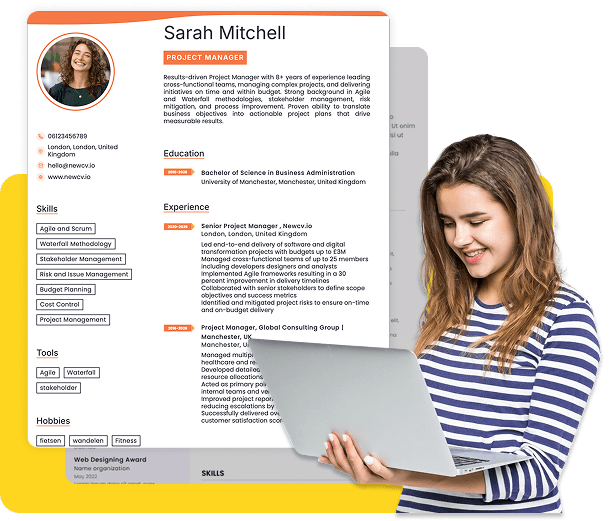
Use ATS-optimised Resume and resume templates that pass applicant tracking systems. Our Resume builder helps recruiters read, scan, and shortlist your Resume faster.

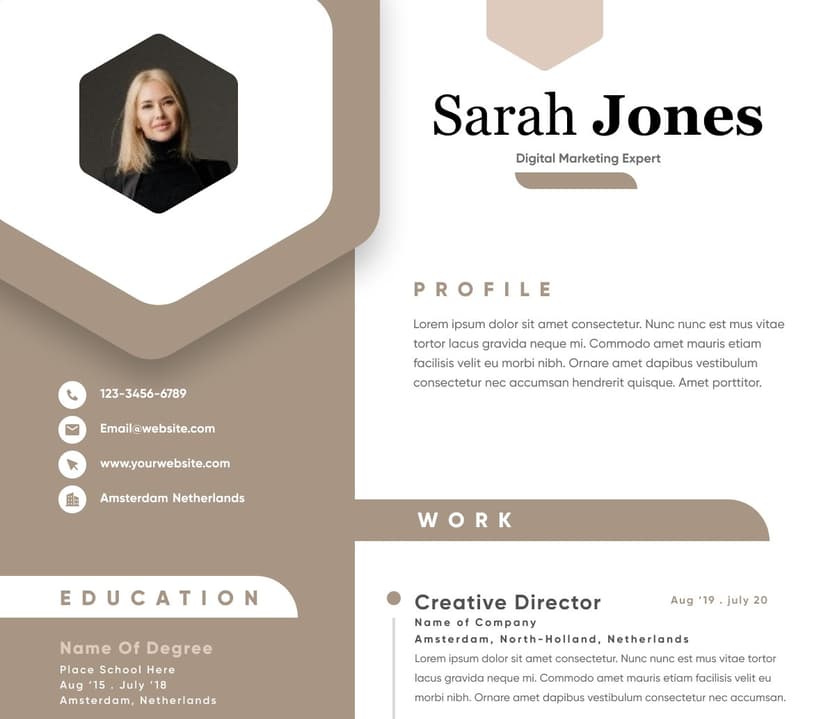
Use professional field-tested resume templates that follow the exact Resume rules employers look for.
Create Resume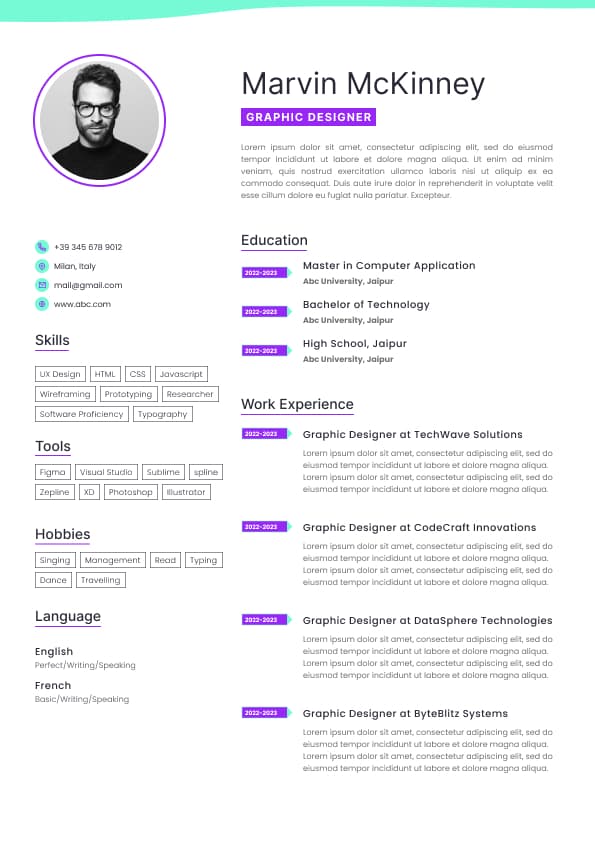
Use professional field-tested resume templates that follow the exact Resume rules employers look for.
Create ResumeIf you are applying for Permanent Residency (PR) in Australia, your resume is not just a job application document. It becomes part of your professional credibility assessment across migration authorities, skills assessment bodies, employers, recruiters, and sometimes state nomination programs.
A standard job-search resume is often not enough.
For Australian PR pathways, your resume needs to clearly demonstrate:
Genuine skilled work experience
Career consistency
Relevant qualifications
Occupational alignment with your nominated ANZSCO occupation
Employment authenticity
Professional seniority and progression
A resume for Australian Permanent Residency is a professional employment document tailored to support:
Skilled migration applications
Skills assessments
Employer sponsorship pathways
State nomination applications
Australian job market positioning
Unlike short-form resumes used in some countries, Australian resumes for PR are usually:
More detailed
Chronological
Australian workplace compatibility
Most applicants make the mistake of submitting either:
An overly generic international CV
A resume designed only for recruiters
Or a migration-focused document that reads unnaturally and weakens employability
The strongest PR resumes balance both migration credibility and real Australian hiring expectations. That balance matters because many applicants later use the same resume for:
Skills assessments
Employer sponsorship
State nomination
Australian job applications
LinkedIn positioning
Recruiter outreach
A well-structured Australian PR resume improves credibility, reduces inconsistency risks, and strengthens how your experience is interpreted by both assessors and employers.
Evidence-aligned
Achievement-focused
Professionally conservative in formatting
Written with factual consistency
For most occupations, a PR resume should clearly show:
Exact employment dates
Employer names
Locations
Job titles
Core duties
Tools, systems, or methodologies used
Career progression
Relevant achievements
Migration assessors are not simply checking whether you had a job. They are evaluating whether your experience genuinely aligns with your nominated skilled occupation.
That distinction is critical.
Most applicants misunderstand how their resume is actually used during the migration process.
Your resume may influence:
Skills assessment outcomes
Employment verification scrutiny
Interview credibility
Employer trust
Consistency checks across documents
Future sponsorship opportunities
Assessors and recruiters often compare your resume against:
Employment reference letters
LinkedIn profile
Payslips
Tax records
Visa history
Academic records
Job descriptions
ANZSCO occupation criteria
If your resume creates inconsistencies, vague timelines, inflated responsibilities, or unrealistic progression, it can raise concerns even before formal verification occurs.
Australian hiring managers and migration assessors generally expect resumes to be:
Clear and factual
Easy to scan
Achievement-oriented
Professionally written
Free from exaggerated language
Structured logically
In Australia, resumes are usually:
2 to 5 pages depending on experience level
Written in reverse chronological order
Focused on outcomes and responsibilities
ATS-friendly
Professionally formatted without graphics or heavy design elements
Avoid:
Photos
Personal information like marital status or religion
Passport details
National ID numbers
Salary information
Excessive design formatting
Generic objective statements
A migration resume should still look like a professional Australian resume, not an immigration form.
Recruiters in Australia often scan resumes in under 30 seconds initially.
The first review usually focuses on:
Job title relevance
Local market alignment
Career consistency
Seniority level
Communication quality
Technical alignment
Stability
Achievements
Eligibility to work in Australia
For PR applicants, recruiters also pay attention to:
Visa status clarity
Australian market understanding
Local terminology
Communication style
Whether the candidate looks genuinely employable in Australia
One major issue recruiters see with international applicants is resumes written for another market entirely.
Examples include:
US-style marketing-heavy resumes
UK academic-style CVs
Overly dense resumes from South Asia
European CV formats with unnecessary personal details
Australian hiring culture values clarity, relevance, and practicality over excessive self-promotion.
Include:
Full name
Mobile number
Professional email address
LinkedIn URL
Australian location if applicable
If you are offshore, you can still mention:
“Planned relocation to Australia” if accurate.
Do not include:
Date of birth
Gender
Religion
Marital status
Passport details
Visa grant numbers
Your summary should position you strategically for both migration and employment purposes.
A strong summary:
Aligns with your nominated occupation
Highlights years of experience
Mentions core expertise
Reflects industry credibility
Uses Australian terminology naturally
“Hardworking professional seeking opportunities in Australia.”
“Civil Engineer with 9+ years of experience delivering large-scale infrastructure and commercial construction projects across transport and urban development sectors. Experienced in project coordination, contract administration, stakeholder management, and site supervision within high-compliance environments.”
The second example sounds credible, employable, and occupation-aligned.
This section helps:
ATS systems
Recruiters
Skills assessors
Hiring managers
Include skills genuinely relevant to your occupation.
Project Management
Stakeholder Engagement
Budget Forecasting
SAP
AutoCAD
Data Analysis
WHS Compliance
Procurement
Agile Delivery
Contract Negotiation
Avoid keyword stuffing.
Recruiters can immediately identify resumes overloaded with artificial keywords.
This is the most important section for PR-related resumes.
For each role include:
Job title
Company name
Location
Employment dates
Short company context if needed
Core responsibilities
Measurable achievements
Senior Business Analyst
ABC Technology Solutions – Singapore
March 2020 – Present
Led process optimisation initiatives across enterprise finance systems, reducing reporting turnaround times by 28%
Coordinated cross-functional stakeholder workshops across IT, finance, and operations teams
Delivered system enhancement recommendations aligned with compliance and operational efficiency targets
Supported Agile delivery processes across multiple transformation projects
This format works because it combines:
Real responsibilities
Business outcomes
Professional clarity
ATS compatibility
Recruiter readability
Many applicants underestimate how carefully skills assessment authorities review resumes.
Authorities such as:
Engineers Australia
ACS
VETASSESS
CPA Australia
TRA
look for alignment between:
Claimed duties
Career progression
Qualification relevance
Occupation consistency
Industry alignment
A resume that appears copied, generic, or inflated can create credibility concerns.
Common red flags include:
Unrealistic promotions
Generic bullet points
Vague responsibilities
Missing technical detail
Overlapping dates without explanation
Duties that do not match the nominated occupation
Inconsistent terminology across documents
Many applicants simply copy job descriptions from the internet.
This weakens credibility immediately.
Assessors and recruiters want evidence of:
What you actually did
Your level of responsibility
Your technical involvement
Your impact
Some resumes read like legal migration paperwork rather than professional resumes.
That becomes a problem later when applying for jobs.
Your resume should still position you as employable in the Australian market.
Australian recruiters are generally sceptical of exaggerated leadership claims.
If someone with three years’ experience claims to have:
Directed enterprise strategy
Led global transformations
Managed massive departments
without supporting detail, credibility drops quickly.
Australian hiring culture values practical evidence over inflated titles.
Date mismatches between:
Resume
Reference letters
Visa documentation
can create unnecessary scrutiny.
Always ensure consistency.
Fancy templates often perform poorly in ATS systems.
Avoid:
Icons
Graphics
Multiple columns
Tables for key information
Heavy colours
Unusual fonts
Simple formatting performs better in Australian recruitment systems.
Sometimes yes.
There are situations where:
A migration-focused version supports assessment requirements
A recruiter-focused version improves hiring outcomes
The difference is usually:
Length
Technical detail depth
Keyword emphasis
Achievement focus
However, both versions should remain fully consistent factually.
Never create conflicting versions of your experience.
For most professionals:
2 to 4 pages is ideal
Senior executives may require more detail
Graduates should usually stay closer to 2 pages
Australian recruiters generally prefer concise but sufficiently detailed resumes.
Extremely short resumes often fail to establish credibility for migration purposes.
Overly long resumes usually contain unnecessary filler.
One of the most overlooked PR resume strategies is ANZSCO alignment.
Your resume should naturally reflect duties relevant to your nominated occupation without artificially copying ANZSCO wording.
For example:
If your nominated occupation is:
ICT Business Analyst
Civil Engineer
Marketing Specialist
Accountant
your resume should clearly demonstrate relevant occupational functions through genuine work examples.
Poor occupational alignment is a common reason for weak skills assessment outcomes.
Australian employers often ask internally:
“Could this person realistically operate in our environment?”
That judgement is influenced by:
Resume communication quality
Local terminology
Practical achievements
Industry familiarity
Clarity of experience
Recruiters see thousands of resumes.
They can instantly recognise:
AI-generated wording
Generic templates
Copied content
Keyword stuffing
Unrealistic achievements
The strongest resumes sound specific, practical, and believable.
Even highly technical roles are influenced by communication quality.
Poorly written resumes create concerns about:
Client communication
Stakeholder management
Documentation ability
Professionalism
Clear writing increases trust.
Instead of saying:
“Results-driven team player”
show:
Projects delivered
Outcomes achieved
Stakeholders managed
Systems improved
Revenue impacted
Compliance maintained
Evidence is more persuasive than adjectives.
Examples:
Resume instead of biodata
Hiring manager instead of reporting authority
WHS instead of generic safety wording where relevant
CV mainly for academic or government contexts
Small terminology choices influence perceived market fit.
Strong resumes often include:
Cost savings
Efficiency gains
Revenue growth
Team size
Project budgets
Delivery timelines
Compliance outcomes
Specificity improves credibility.
Australian recruiters frequently compare resumes with LinkedIn profiles.
Misalignment creates risk.
Ensure consistency across:
Dates
Titles
Locations
Seniority
Responsibilities
Before submitting your resume, confirm:
Dates are fully consistent
Job titles are accurate
Duties align with your occupation
Formatting is ATS-friendly
Achievements are measurable where possible
Language sounds professional and natural
Australian terminology is used appropriately
The resume supports both migration and employability
No exaggerated claims exist
Contact details are current
Grammar and spelling are clean


 Upload Resume
 Import from Linkedin