
Choose from a wide range of NEWCV resume templates and customize your NEWCV design with a single click.

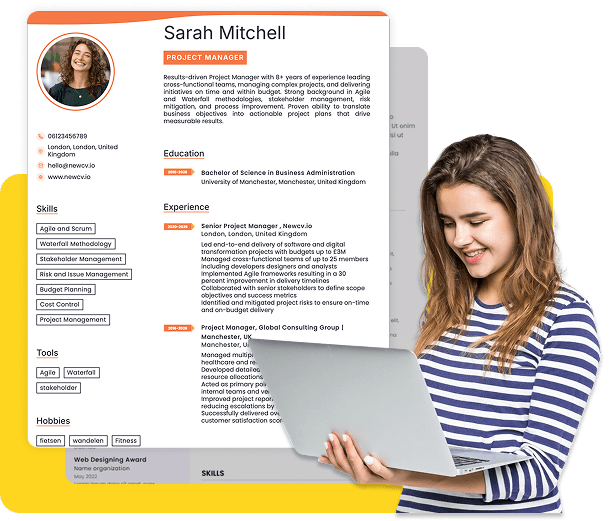
Use ATS-optimised Resume and resume templates that pass applicant tracking systems. Our Resume builder helps recruiters read, scan, and shortlist your Resume faster.

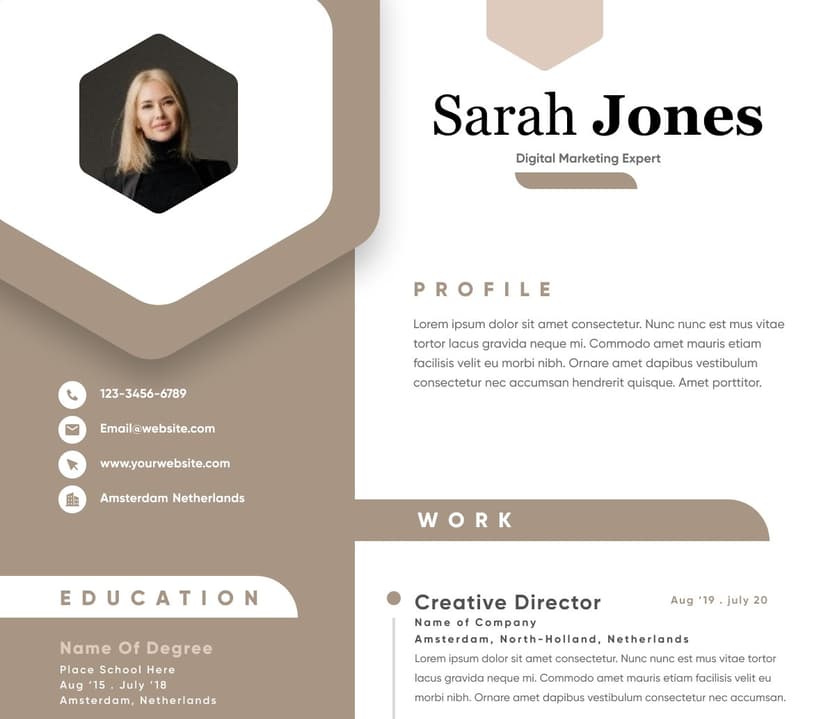
Use professional field-tested resume templates that follow the exact Resume rules employers look for.
Create Resume
Use professional field-tested resume templates that follow the exact Resume rules employers look for.
Create ResumeAustralian transport and logistics employers do not spend long reviewing resumes. Most truck driver resumes are screened in under 30 seconds before the recruiter decides whether to shortlist, reject, or hold the application.
For truck driving roles in Australia, employers are mainly assessing five things immediately:
Your licence class and endorsements
Your driving history and safety record
The type of vehicles and freight you’ve handled
Your route and compliance experience
Whether you look reliable enough to trust with expensive equipment and deadlines
If those details are missing, buried, vague, or unclear, your resume usually gets rejected regardless of experience.
A strong truck driver resume in Australia is practical, easy to scan, ATS-friendly, and focused on operational capability. Employers are not looking for corporate language or generic resume summaries. They want proof that you can operate safely, follow fatigue laws, deliver on time, and represent the company professionally on the road.
The best truck driver resumes in Australia are built around operational trust.
Transport companies are hiring someone who may be responsible for:
Heavy vehicles worth hundreds of thousands of dollars
Dangerous goods or regulated freight
Tight delivery schedules
Fatigue management compliance
Customer-facing deliveries
Long-distance interstate runs
Because of that, recruiters are looking for evidence of professionalism and low risk.
Your resume should quickly communicate:
This guide explains exactly how to structure a truck driver resume for the Australian market, what recruiters actually pay attention to, common mistakes that cost interviews, and how to position yourself competitively whether you are an experienced HC/MC driver or trying to enter the industry.
Licence class held
Years of driving experience
Vehicle types operated
Safety and compliance history
Industries serviced
Availability and work rights
Physical capability where relevant
The strongest resumes also include measurable operational detail rather than generic statements.
Weak Example
“Responsible truck driver with good communication skills.”
Good Example
“HC licensed truck driver with 7+ years of metro and interstate freight experience operating tautliners, refrigerated vehicles, and B-double combinations across NSW and VIC.”
The second version immediately answers what recruiters actually care about.
Australian transport recruiters prefer a simple reverse-chronological resume format.
Avoid graphic-heavy templates, columns, tables, icons, or overly designed resumes. Many logistics companies still use older ATS systems that struggle with complex formatting.
Your resume should ideally be 2 to 3 pages depending on experience.
Include:
Full name
Mobile number
Professional email address
Location suburb and state
Licence class
Work rights if relevant
You can also include:
White Card
Dangerous Goods licence
Forklift licence
MSIC card
Availability
This section matters more than most drivers realise.
Recruiters use it to decide whether to continue reading.
Your summary should cover:
Licence class
Years of experience
Vehicle types
Freight experience
Safety focus
Key strengths
“Experienced MC truck driver with 10+ years in interstate linehaul, refrigerated freight, and general freight transport across Australia. Strong fatigue management knowledge with a clean driving record and proven history of safe, on-time deliveries. Experienced operating B-doubles, road trains, and heavy combination vehicles in high-volume logistics environments.”
That is clear, relevant, and recruiter-focused.
Most applicants either overstuff this section with generic buzzwords or make it too vague.
Recruiters want operational capability, compliance awareness, and reliability.
Heavy vehicle operation
HC or MC licence operation
B-double driving
Road train operation
Fatigue management compliance
Load restraint
Chain of Responsibility compliance
Pre-start vehicle inspections
Route planning
GPS and telematics systems
Manual road ranger gearbox operation
Refrigerated freight handling
Tautliner operation
Wharf and container transport
Dangerous goods handling
Forklift operation
Delivery documentation
Customer service
Defensive driving
Vehicle maintenance reporting
Use only skills that genuinely match your experience.
This is the section recruiters care about most.
The biggest mistake drivers make is writing vague responsibilities instead of operational evidence.
Your experience section should show:
Vehicle types
Freight handled
Route scope
Compliance responsibilities
Delivery volume
Safety performance
Equipment used
Job title
Company name
Location
Employment dates
Operational responsibilities
Achievements or performance outcomes
Operated MC-class B-double vehicles across interstate routes between NSW, VIC, and QLD
Completed scheduled deliveries while maintaining 100% fatigue management compliance
Conducted daily pre-start inspections and defect reporting in line with NHVR requirements
Managed refrigerated freight transport for major supermarket distribution centres
Maintained clean driving history with zero major incidents across 8 years of heavy vehicle operation
Secured and restrained loads according to Australian load restraint guidelines
Used telematics and GPS systems to optimise route efficiency and delivery scheduling
Assisted with forklift loading and unloading in depot environments
These bullets are specific, measurable, and operationally relevant.
Truck driver recruitment in Australia is highly practical.
Many resumes fail because they create risk signals.
Your licence class should be visible immediately.
If recruiters cannot quickly identify whether you hold HR, HC, or MC licences, they often move on.
Statements like:
Hardworking team player
Motivated individual
Excellent communication skills
add almost no value in transport recruitment.
Transport companies are highly risk-focused.
If your resume does not mention:
Safety
Fatigue management
Compliance
Vehicle inspections
it can make you appear inexperienced or careless.
This:
“Transported goods.”
tells recruiters nothing.
This:
“Delivered refrigerated freight to metro and regional distribution centres across Queensland.”
is much stronger.
Many transport companies still print resumes or review them quickly on mobile devices.
Simple formatting performs better.
Yes, if it is strong.
A clean driving history is a competitive advantage in Australia’s transport sector.
You can mention:
Clean driving history
Zero at-fault incidents
Strong safety record
Consistent compliance performance
Do not mention minor issues unless legally required.
Entry-level truck drivers often underestimate what employers will accept.
If you recently obtained your HR, HC, or MC licence, you can still build a competitive resume by focusing on:
Relevant driving history
Physical labour experience
Safety-focused roles
Warehouse experience
Delivery driving
Machinery operation
Reliability and shift flexibility
Many Australian employers hire based on attitude, safety awareness, and trainability.
Useful backgrounds include:
Delivery driving
Forklift operation
Warehousing
Construction
Mining
Farming
Civil works
Labouring
Include all relevant licences and certifications clearly.
Transport employers value flexibility.
Mention:
Interstate availability
Night shift availability
Weekend work availability
Long-haul availability
if accurate.
Most larger Australian logistics companies now use ATS software before recruiter review.
That means keyword relevance matters.
However, keyword stuffing hurts readability and looks unnatural.
Naturally include terms such as:
MC driver
HC driver
Heavy vehicle driver
Interstate driver
Linehaul driver
Freight transport
Logistics
Fatigue management
Load restraint
NHVR compliance
B-double
Road train
Refrigerated freight
Tautliner
Depot operations
Distribution centre deliveries
Only use keywords that genuinely reflect your background.
Relevant certifications strengthen employability significantly in Australia.
MC licence
HC licence
Dangerous Goods licence
Forklift licence
White Card
Basic Fatigue Management certification
Heavy vehicle competency certificates
First aid certification
MSIC card
Load restraint training
Place certifications in a dedicated section if you hold multiple tickets.
You can either:
Include “References available upon request”
Or list 2 references directly
For transport roles, direct references from previous fleet managers, supervisors, or logistics coordinators can help significantly.
Especially for:
Interstate roles
Mining transport
Fuel transport
High-value freight operations
James Walker
Perth, WA
0400 000 000
MC Licensed Truck Driver
Experienced MC truck driver with 9 years of interstate and regional freight transport experience across Western Australia and South Australia. Skilled in operating B-doubles, refrigerated trailers, and general freight vehicles with a strong safety record and extensive fatigue management compliance knowledge. Proven history of reliable delivery performance in high-volume logistics environments.
MC heavy vehicle operation
Interstate freight transport
B-double operation
Refrigerated freight
NHVR compliance
Load restraint
Fatigue management
Vehicle inspections
GPS and telematics systems
Forklift operation
Delivery scheduling
MC Truck Driver
Centurion Transport
Perth, WA
March 2020 – Present
Operate B-double combinations across interstate freight routes between WA and SA
Transport refrigerated and general freight for large retail and industrial clients
Maintain full compliance with fatigue management and NHVR requirements
Conduct daily pre-start inspections and vehicle defect reporting
Achieved strong on-time delivery performance across long-haul operations
Maintain clean driving history with zero major safety incidents
HC Truck Driver
Linfox Logistics
Perth, WA
January 2017 – February 2020
Completed metro and regional freight deliveries across Western Australia
Operated tautliners and refrigerated heavy vehicles
Assisted with depot loading and unloading operations
Maintained delivery documentation and proof-of-delivery records
Followed strict safety and compliance procedures
MC Licence
Forklift Licence
White Card
Basic Fatigue Management
Dangerous Goods Licence
Most applicants assume recruiters only care about years of experience.
That is not true in Australian transport hiring.
Recruiters often prioritise:
Safety profile
Stability
Compliance awareness
Vehicle compatibility
Shift flexibility
Reliability indicators
A driver with 5 stable years and a clean record may be preferred over someone with 15 years and frequent job hopping.
Some movement is normal in transport.
But excessive short-term roles without explanation can create concerns about:
Reliability
Safety issues
Attendance
Behavioural problems
This immediately creates suspicion.
Recruiters want to know what you actually drove.
Transport employers still assess professionalism.
A sloppy resume can signal poor documentation habits or low attention to detail.
Not all truck driving jobs in Australia are the same.
Tailor your resume based on the freight and operational environment.
Prioritise:
Long-distance experience
Fatigue management
Route planning
B-double or road train experience
Highlight:
Remote area driving
Safety systems
Site compliance
Drug and alcohol compliance familiarity
Focus on:
Time management
Customer interaction
Multi-drop delivery experience
Navigation efficiency
Emphasise:
DG licence
Compliance knowledge
Safety procedures
Hazard handling protocols
The best truck driver resumes are not the longest.
They are the clearest.
Australian recruiters want fast evidence that you:
Hold the right licences
Can operate safely
Understand compliance
Have relevant freight experience
Are reliable and employable
If your resume immediately communicates those points clearly, your shortlist chances improve dramatically.
Avoid generic language, focus on operational credibility, and tailor your resume to the specific transport role rather than sending the same version everywhere.
A practical, recruiter-focused resume consistently outperforms overdesigned or keyword-stuffed applications in the Australian transport industry.


 Upload Resume
 Import from Linkedin