
Choose from a wide range of NEWCV resume templates and customize your NEWCV design with a single click.

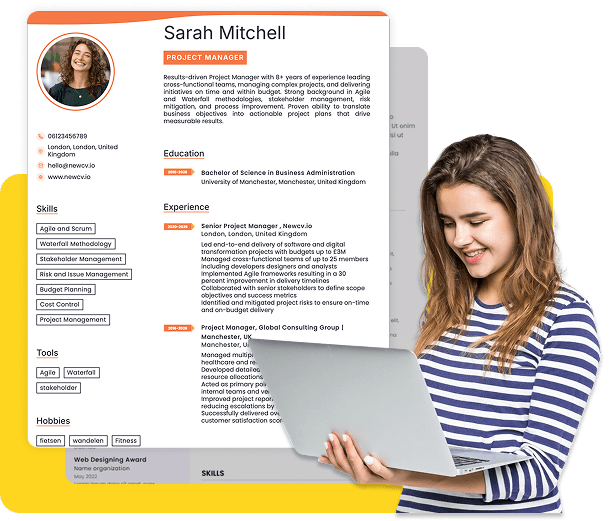
Use ATS-optimised Resume and resume templates that pass applicant tracking systems. Our Resume builder helps recruiters read, scan, and shortlist your Resume faster.
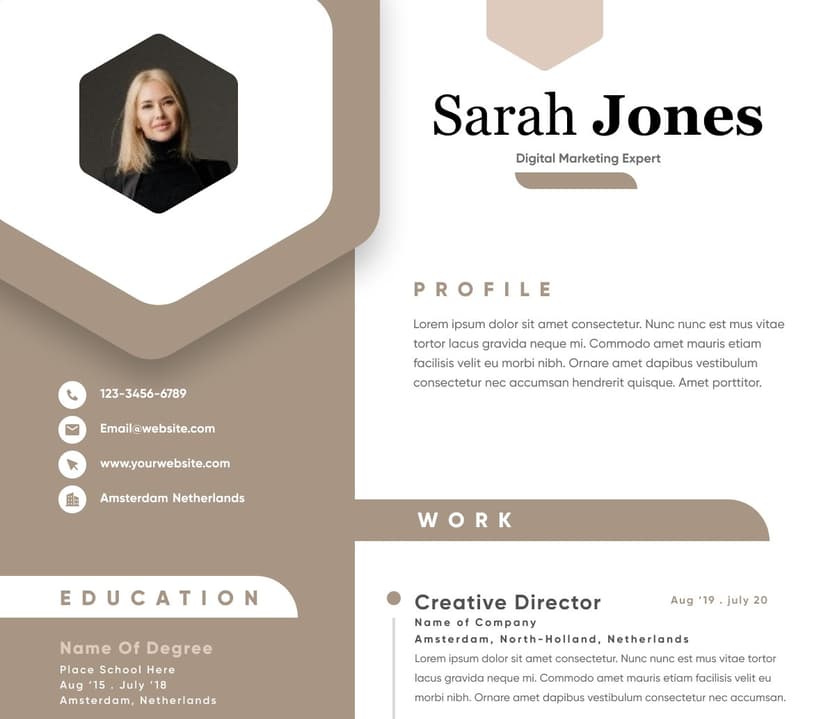
Use professional field-tested resume templates that follow the exact Resume rules employers look for.
Create Resume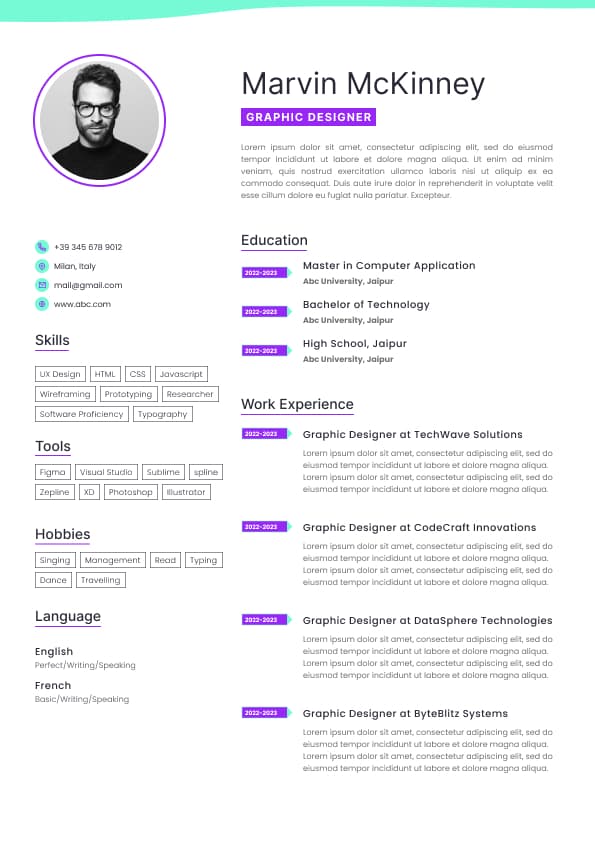
Use professional field-tested resume templates that follow the exact Resume rules employers look for.
Create ResumeUsing ChatGPT to write your resume in Australia can absolutely work, but only if you use it strategically. Most resumes generated entirely by AI fail because they sound generic, over-polished, vague, or disconnected from how Australian recruiters actually assess candidates.
The reality is this: recruiters in Australia can usually tell within seconds when a resume has been heavily AI-written without proper tailoring. The language becomes too broad, achievements feel inflated, and the content lacks commercial relevance to the actual role.
What works is using ChatGPT as a drafting and optimisation tool, not as a replacement for professional judgement.
A strong Australian resume created with ChatGPT should still:
Match the job advertisement closely
Reflect local hiring expectations
Use realistic, evidence-based achievements
Sound natural and commercially credible
Be tailored to the specific role and industry
In many cases, yes.
Not because recruiters are using “AI detectors”, but because AI-generated resumes often follow predictable patterns.
Experienced recruiters review hundreds or thousands of resumes every month. Certain writing patterns immediately stand out.
Overuse of generic corporate language
Unrealistic achievement claims
Buzzword-heavy summaries
Repetitive sentence structures
Vague responsibilities without measurable outcomes
Content that sounds polished but lacks substance
Pass ATS screening without sounding robotic
If you use ChatGPT correctly, it can help you:
Rewrite weak resume content
Improve clarity and impact
Create stronger achievement statements
Optimise keyword relevance
Save significant time during applications
Improve structure and readability
But if you rely on AI blindly, your resume will often fail at recruiter screening.
This guide explains exactly how Australian recruiters view ChatGPT resumes, what hiring managers notice immediately, and how to use AI properly without damaging your job applications.
Identical phrasing across multiple sections
No alignment to the actual role requirements
“Results-driven professional with a proven track record of delivering exceptional outcomes in fast-paced environments while leveraging strong communication and leadership capabilities.”
This tells the recruiter almost nothing.
“Managed end-to-end recruitment across healthcare and aged care portfolios, reducing average time-to-fill from 41 days to 26 days during a period of rapid workforce growth.”
This sounds credible, measurable, and relevant.
Australian recruiters generally care less about whether AI was used and more about whether the resume feels authentic, targeted, and commercially believable.
Most candidates misunderstand how resumes are evaluated.
Hiring managers are not reading resumes line by line from top to bottom. They scan for evidence quickly.
In Australia, most resume reviews focus on four questions:
Recruiters compare your experience directly against:
Industry background
Technical skills
Years of experience
Relevant systems or tools
Sector knowledge
Seniority level
If your resume is too generic, you immediately weaken your positioning.
Australian employers prefer resumes with:
Clear outcomes
Realistic achievements
Practical responsibilities
Evidence of ownership
Business impact
Overly inflated AI-generated claims damage trust quickly.
Tailored resumes consistently outperform generic resumes in Australian recruitment.
Recruiters notice when:
Keywords match the job ad naturally
Responsibilities align with role expectations
Industry terminology is accurate
Relevant achievements are prioritised
Communication quality matters heavily in Australian hiring culture.
A good resume feels:
Clear
Direct
Practical
Easy to scan
Human
Overly formal or robotic wording often performs poorly.
The highest-performing resumes use ChatGPT as an enhancement tool, not an autopilot system.
This is where AI performs best.
Instead of asking:
“Write my entire resume”
Use prompts like:
“Rewrite this achievement to sound stronger and more measurable for an Australian recruiter.”
“Improve this resume bullet point for a project manager role in Australia.”
“Tailor this experience for a customer service role in Melbourne.”
This produces far stronger results.
The quality of output depends entirely on input quality.
Provide:
Your actual responsibilities
Real achievements
Metrics and outcomes
Target job ads
Industry details
Relevant tools or systems
Poor input creates generic resumes.
Australian recruiters expect local phrasing.
For example:
“Resume” instead of “CV” in most private sector roles
“Stakeholders” instead of excessive American corporate jargon
“Recruitment” instead of “talent acquisition” unless relevant
“Bachelor’s degree” formatting aligned with Australian conventions
Local language improves alignment.
AI tools often misunderstand Australian hiring expectations.
One of the biggest mistakes.
ChatGPT frequently generates unrealistic claims like:
“Increased company revenue by 300%”
“Transformed operational performance”
“Led global strategic initiatives”
If these claims do not align with your actual seniority, recruiters become sceptical immediately.
Australian resumes are generally:
More direct
Less exaggerated
Less self-promotional
More practical
Overly dramatic wording feels inauthentic locally.
Most AI-generated summaries sound interchangeable.
Australian recruiters prefer summaries that quickly clarify:
Industry background
Years of experience
Functional expertise
Key strengths relevant to the role
Many candidates misuse ChatGPT to overload resumes with keywords.
This often creates:
Poor readability
Repetitive phrasing
Artificial language
ATS-friendly but recruiter-unfriendly resumes
Modern Australian recruitment requires both ATS optimisation and human readability.
This is the biggest difference between successful and unsuccessful AI-assisted resumes.
Specificity creates credibility.
Instead of:
“Managed multiple projects successfully”
Write:
“Delivered six concurrent infrastructure projects valued at over $2.4M across Queensland government contracts.”
Human resumes include nuance.
For example:
Team sizes
Budget responsibility
Recruitment volume
System names
Industry regulations
Client types
AI-only resumes often miss this.
ChatGPT frequently repeats phrases like:
“Proven track record”
“Results-driven”
“Highly motivated”
“Dynamic professional”
These phrases add little value.
If it sounds unnatural when spoken, it probably reads unnaturally too.
Australian hiring managers generally prefer resumes that sound clear and grounded rather than overly polished.
The quality of prompts dramatically affects output quality.
A strong prompt should include:
Target role
Industry
Seniority level
Australian context
Existing resume content
Desired outcome
“Rewrite these resume bullet points for an operations manager role in Australia. Make them achievement-focused, ATS-friendly, and aligned with Australian hiring expectations without sounding exaggerated.”
“Write me a good resume.”
The more context you provide, the better the output.
Applicant Tracking Systems are widely used across Australia, especially by:
Large corporations
Government employers
Healthcare organisations
Mining and engineering firms
Recruitment agencies
But ATS optimisation is frequently misunderstood.
ATS software primarily scans for:
Relevant keywords
Job titles
Skills
Qualifications
Industry terms
Experience alignment
Excessive keyword repetition does not improve results.
Neither does:
Hidden keywords
White text tricks
Overloading skills sections
Artificial AI-generated jargon
Modern ATS systems are increasingly sophisticated.
Use:
Clear headings
Standard formatting
Relevant keywords naturally
Accurate job titles
Industry terminology
Simple layouts
Avoid:
Complex graphics
Tables overloaded with information
Excessive design elements
Fancy fonts
Multi-column layouts for ATS-heavy sectors
Generally, no.
There is no requirement to disclose that you used AI assistance for your resume.
Most recruiters assume many candidates now use:
ChatGPT
Grammarly
Resume tools
AI writing assistants
The concern is not tool usage.
The concern is authenticity.
If you cannot speak confidently about what is written in your resume during an interview, problems emerge quickly.
Some industries are far more sensitive to generic AI resumes.
Fields like:
Consulting
Law
Finance
Executive leadership
Often involve strong written communication assessment.
Generic language gets noticed quickly.
Australian government applications typically require:
Precise alignment to criteria
Evidence-based examples
Clear competency demonstration
Generic AI wording performs poorly here.
Executives are expected to communicate with strategic clarity and commercial depth.
Generic ChatGPT wording weakens executive credibility.
AI-assisted resumes often work well in:
Customer service
Administration
Retail
Hospitality
Entry-level corporate roles
Operational positions
Particularly when candidates struggle with writing clarity.
ChatGPT can improve:
Structure
Readability
Professional tone
Achievement framing
As long as the information remains genuine.
This is the most common failure.
Raw AI output usually lacks:
Industry nuance
Commercial context
Human tone
Strategic positioning
Australian recruiters strongly favour tailored applications.
One generic AI resume sent to 100 jobs usually underperforms compared to:
Fewer applications
Better targeting
Stronger tailoring
Keywords matter.
But relevance matters more.
A recruiter still decides whether your experience actually fits the role.
If your achievements sound unrealistic for your career stage, recruiters question credibility immediately.
Modern Australian resumes are becoming:
More achievement-focused
More concise
More commercially relevant
More tailored
Less generic
The strongest resumes today:
Show measurable business impact
Match the role directly
Use clear Australian workplace language
Prioritise relevance over length
Balance ATS optimisation with human readability
ChatGPT can absolutely support this process.
But strategy still matters more than automation.
Yes, if you use it properly.
No, if you expect it to replace judgement, tailoring, or career strategy.
The candidates getting the best results with ChatGPT are not using it to “write everything”. They are using it to:
Improve clarity
Strengthen positioning
Save time
Refine wording
Tailor applications faster
Australian recruiters are not rejecting candidates because they used AI.
They reject resumes that feel generic, inflated, untailored, or disconnected from the actual role.
The best ChatGPT resumes still sound human, commercially credible, and clearly aligned with Australian hiring expectations.


 Upload Resume
 Import from Linkedin