
Choose from a wide range of NEWCV resume templates and customize your NEWCV design with a single click.

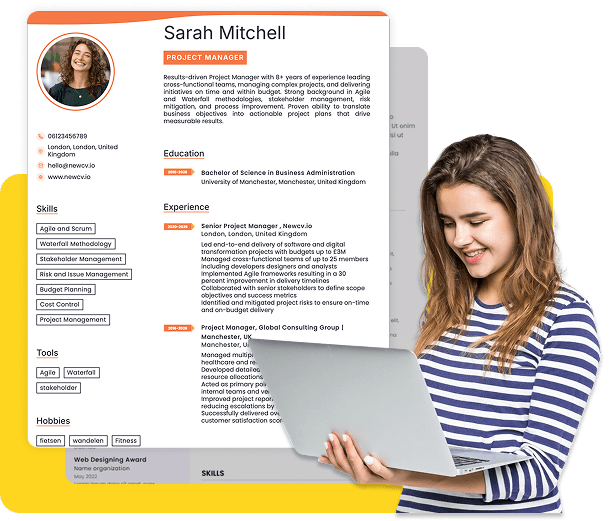
Use ATS-optimised Resume and resume templates that pass applicant tracking systems. Our Resume builder helps recruiters read, scan, and shortlist your Resume faster.

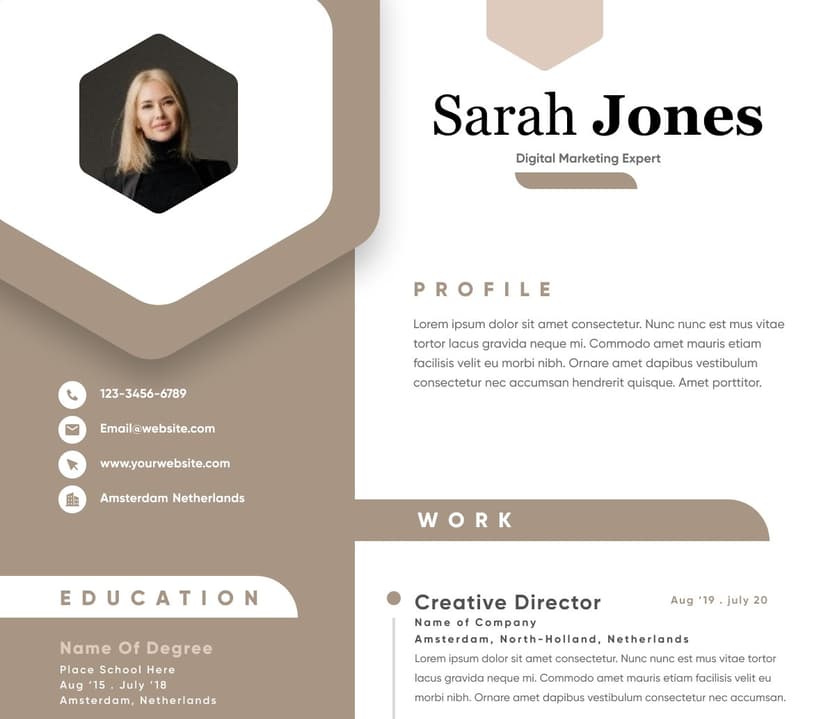
Use professional field-tested resume templates that follow the exact Resume rules employers look for.
Create Resume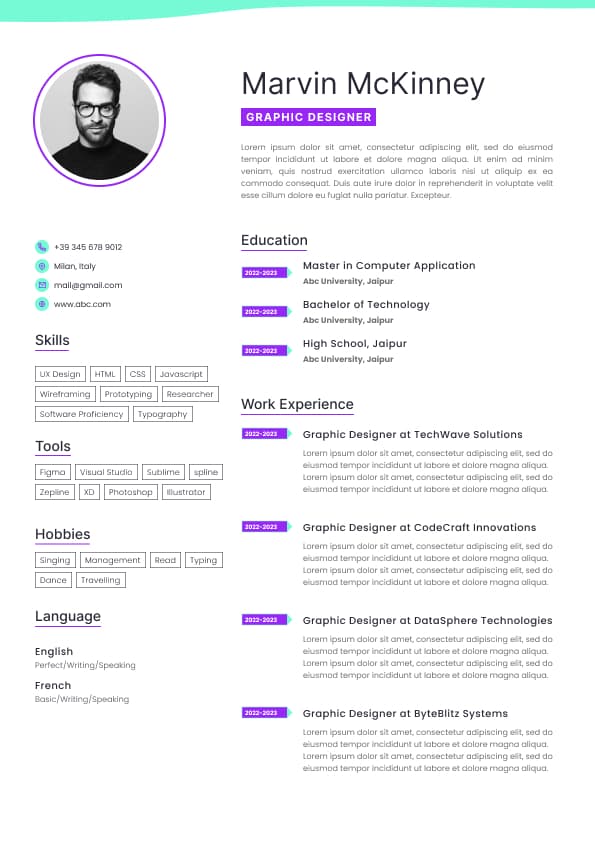
Use professional field-tested resume templates that follow the exact Resume rules employers look for.
Create ResumeMost resumes in Australia fail long before a recruiter properly reads them. Not because the candidate lacks experience, but because the resume is poorly positioned, badly structured, generic, or written without understanding how Australian hiring actually works.
Resume optimisation in Australia is not about stuffing keywords into a document or copying a template from the internet. It’s about aligning your resume with how Australian recruiters, hiring managers, and ATS systems evaluate candidates during real shortlisting decisions.
A properly optimised resume immediately shows:
Why you fit the role
Whether your experience matches Australian market expectations
Your level of commercial value
How quickly you can solve the employer’s problem
Whether you’re worth interviewing within the first 15 to 30 seconds of scanning
In competitive Australian job markets, resume optimisation directly affects interview rates. Small positioning mistakes can cost highly qualified candidates interviews, especially in industries where recruiters review hundreds of applications per role.
Resume optimisation means improving your resume so it performs better across three separate evaluation layers:
ATS systems
Recruiter screening
Hiring manager review
Most candidates only optimise for one of these and ignore the others.
For example:
A keyword-heavy ATS resume may pass software filters but look robotic to recruiters
A visually designed resume may look impressive but fail ATS parsing
A detailed technical CV may satisfy hiring managers but overwhelm recruiters during initial screening
A properly optimised Australian resume balances all three.
The goal is not to “game” recruitment systems.
This guide breaks down exactly how resume optimisation works in Australia, what recruiters actually look for, what causes resumes to fail, and how to position yourself properly in today’s hiring market.
The goal is to reduce friction during hiring decisions.
That means your resume must quickly communicate:
Relevance
Capability
Commercial impact
Clarity
Seniority level
Industry fit
Australian recruiters are heavily focused on alignment and risk reduction. If your resume creates confusion, uncertainty, or ambiguity, interview chances drop rapidly.
Most candidates dramatically overestimate how long recruiters spend reading resumes.
Initial screening often happens in under 30 seconds.
Recruiters typically scan for:
Job title alignment
Relevant industry experience
Recent employment history
Achievements and measurable outcomes
Location and work rights
Career stability
Seniority consistency
Technical or role-specific capability
If these signals are unclear, recruiters move on quickly.
In Australia, recruiters are generally looking for candidates who can demonstrate immediate practical value rather than theoretical capability.
That means your resume needs to answer:
Can this person do the job now?
Have they done similar work before?
How transferable is their experience?
How much onboarding risk exists?
Will the hiring manager see this as a safe interview choice?
This is where most resumes fail.
Candidates often focus on responsibilities instead of evidence.
Recruiters care far more about:
Results
Scope
Ownership
Business impact
Complexity handled
Stakeholder exposure
Commercial contribution
Most summaries say nothing meaningful.
Weak Example
“Hardworking professional with excellent communication skills seeking new opportunities.”
This tells recruiters absolutely nothing.
It does not position:
Industry relevance
Seniority
Technical capability
Commercial value
Hiring fit
Good Example
“Project Coordinator with 6+ years’ experience delivering commercial construction projects across NSW valued up to $18M. Strong background in contractor coordination, procurement, compliance management, and stakeholder communication within Tier 2 environments.”
This instantly establishes:
Industry
Experience level
Scope
Market relevance
Context
Australian recruiters increasingly prioritise measurable contribution.
Most resumes describe tasks instead of impact.
Weak Example
“Responsible for customer service and account management.”
Good Example
“Managed a portfolio of 85 SME accounts across Victoria, improving client retention by 21% over 12 months through proactive relationship management and service optimisation.”
The second version demonstrates:
Scale
Ownership
Results
Commercial impact
ATS optimisation still matters in Australia, particularly for:
Corporate employers
Government roles
Enterprise organisations
Recruitment agencies
But keyword optimisation must be natural.
Keyword stuffing reduces readability and damages credibility.
Good optimisation means aligning language with:
The job advertisement
Industry terminology
Australian role naming conventions
Relevant tools, systems, and certifications
For example:
“Resume” instead of “biodata”
“Stakeholder management” instead of vague interpersonal phrases
“Work rights” where relevant
Australian compliance terminology where applicable
ATS systems in Australia primarily evaluate:
Keyword relevance
Resume structure
Parsing readability
Section clarity
Job alignment
Most ATS software does not “reject” resumes automatically the way candidates often believe.
Instead, ATS systems help recruiters search and organise applicants.
Poor optimisation reduces discoverability.
An ATS-friendly Australian resume should include:
Clear section headings
Standard fonts
Simple formatting
Consistent job titles
Logical chronology
Keyword-aligned terminology
Avoid:
Text boxes
Graphics
Multi-column designs
Excessive icons
Tables for critical information
These often break ATS parsing.
The highest-value keywords are usually:
Job titles
Industry terminology
Systems and software
Certifications
Technical competencies
Compliance frameworks
Methodologies
The best source of keywords is the actual job ad.
But optimisation is not copying.
It is alignment.
Recruiters quickly recognise unnatural keyword stuffing.
Resume optimisation changes significantly depending on industry.
A finance resume should not look like a construction resume.
A government CV should not read like a startup application.
Recruiters usually prioritise:
Commercial outcomes
Stakeholder management
Strategic impact
Leadership exposure
Revenue influence
Project complexity
Tone matters heavily here.
Overly casual resumes perform poorly.
Hiring managers focus more on:
Site experience
Tickets and licences
Safety compliance
Project scale
Technical capability
Reliability and availability
Clear project exposure matters more than polished corporate language.
Optimisation should focus on:
Compliance
Accreditation
Patient or client outcomes
Documentation standards
Communication capability
Risk management
Government applications often require:
Structured achievement examples
Capability alignment
Formal language
Clear policy or compliance exposure
Detailed scope descriptions
A generic commercial resume usually underperforms in government recruitment.
This is positioning, not biography.
Strong summaries immediately establish:
Industry
Seniority
Specialisation
Commercial value
Career focus
This is the highest-value section on most Australian resumes.
Recruiters want:
Clear progression
Stability
Relevant achievements
Scope of responsibility
Measurable outcomes
The best structure is:
Short role overview
Key responsibilities
Achievement-driven bullet points
A skills section should reinforce relevance, not act as filler.
Avoid generic soft skills like:
Team player
Hardworking
Motivated
Instead use:
ERP systems
Financial modelling
WHS compliance
Stakeholder engagement
Contract negotiation
Salesforce CRM
Agile delivery
Australian recruiters usually prioritise recent and relevant qualifications.
Include:
Degrees
Certifications
Licences
Industry accreditations
Professional memberships where relevant
There is no universal perfect length.
But in Australia:
Mid-level resumes are commonly 2 to 4 pages
Senior resumes may extend to 5 pages if highly relevant
Graduate resumes are typically 1 to 2 pages
The real issue is not page count.
It is information density and relevance.
A concise but weak resume performs worse than a slightly longer, highly relevant one.
Career change resumes require strategic repositioning.
Recruiters naturally assess transferability risk.
Your resume must reduce that risk.
That means focusing on:
Transferable capability
Relevant achievements
Adjacent industry exposure
Similar stakeholder environments
Matching responsibilities
Career changers often fail because they focus too heavily on explaining why they want the new role instead of proving capability overlap.
The resume must lead with alignment, not motivation.
Many resume templates are built for aesthetics, not hiring outcomes.
Common problems include:
Overdesigned layouts
Poor ATS compatibility
Weak readability
Excessive whitespace
Generic wording prompts
Lack of strategic positioning
Australian recruiters generally prefer:
Clean formatting
Fast readability
Logical structure
Clear outcomes
Professional presentation
Good formatting supports the content.
It does not replace weak positioning.
This is where most online advice completely fails.
Recruiters are not just evaluating capability.
They are evaluating confidence and hiring risk.
Strong resumes reduce uncertainty.
Weak resumes create hesitation.
For example:
Unclear career progression creates concern
Generic wording suggests low self-awareness
Missing achievements imply low impact
Inconsistent job titles create confusion
Irrelevant detail reduces attention
Recruiters are constantly making micro-decisions:
Is this candidate relevant enough to continue reading?
Is this experience genuinely comparable?
Will the hiring manager agree with this shortlist?
Is this candidate likely to interview well?
Resume optimisation is largely about controlling those decisions.
Many candidates try to include everything.
This weakens positioning.
Strong resumes prioritise relevance over completeness.
Different roles may require:
Different summaries
Different achievement emphasis
Different keywords
Different project examples
One generic resume rarely performs well across multiple job types.
Australian hiring managers respond strongly to commercial impact.
High-performing resumes often include:
Revenue influence
Cost reduction
Operational improvement
Efficiency gains
Client outcomes
Risk reduction
Even non-commercial roles can demonstrate measurable contribution.
If applying for senior roles, your resume must sound senior.
That includes:
Strategic involvement
Leadership exposure
Decision-making authority
Cross-functional collaboration
Business influence
Many candidates are rejected because their resume sounds more junior than their actual experience.
Hiring managers often care about very different things compared to recruiters.
Recruiters assess shortlist fit.
Hiring managers assess operational value.
Hiring managers usually want evidence of:
Problem-solving capability
Ownership
Team fit
Communication quality
Practical delivery
Reliability
Business understanding
This is why achievement quality matters so much.
Strong achievement bullet points show:
Situation complexity
Actions taken
Business outcome
Scale
Responsibility level
A properly optimised resume should:
Clearly target a specific role type
Show measurable achievements
Read naturally
Match Australian hiring expectations
Pass ATS parsing
Reduce recruiter uncertainty
Demonstrate commercial or operational value
Be easy to scan quickly
If recruiters regularly:
View but do not respond
Reject quickly
Fail to shortlist
Ask questions already answered in your experience
Your resume likely has positioning or clarity issues.
Before applying, check whether your resume:
Matches the target role clearly
Uses Australian terminology
Includes measurable achievements
Has ATS-friendly formatting
Shows progression and relevance
Includes role-specific keywords naturally
Removes irrelevant older experience
Uses clean formatting and structure
Demonstrates practical business value
Reads clearly within the first 30 seconds


 Upload Resume
 Import from Linkedin