
Choose from a wide range of NEWCV resume templates and customize your NEWCV design with a single click.

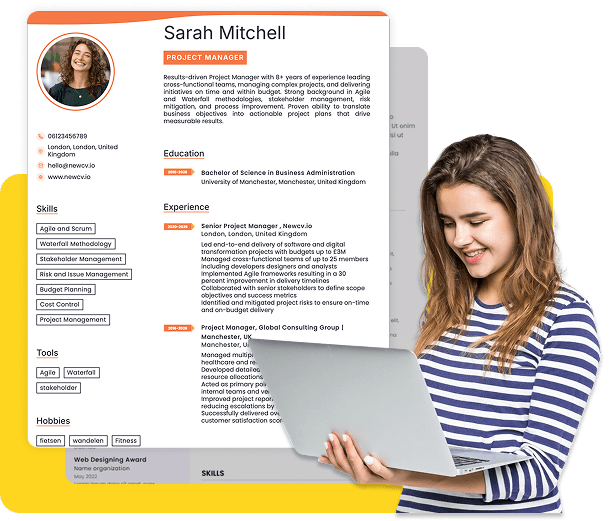
Use ATS-optimised Resume and resume templates that pass applicant tracking systems. Our Resume builder helps recruiters read, scan, and shortlist your Resume faster.

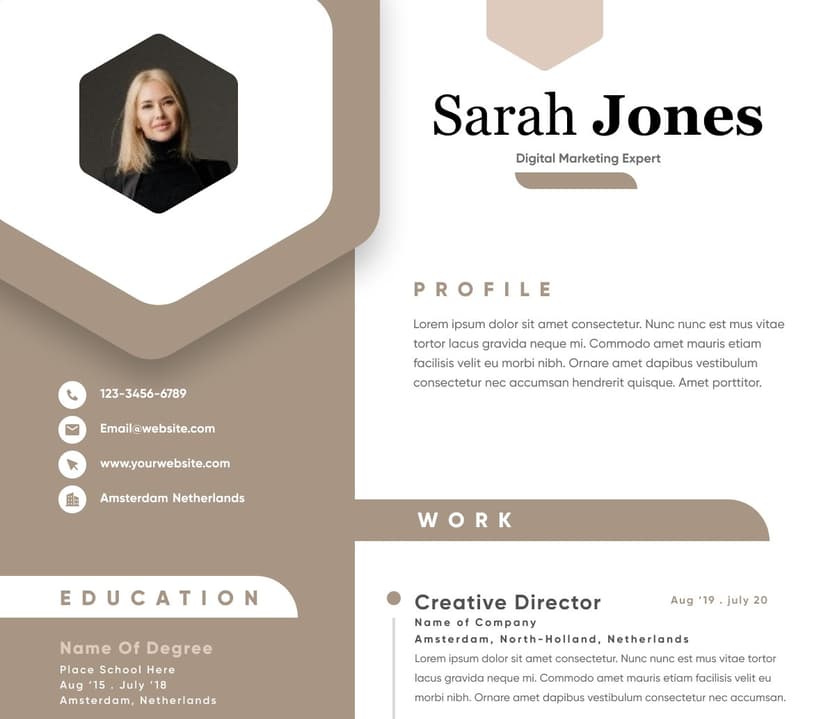
Use professional field-tested resume templates that follow the exact Resume rules employers look for.
Create Resume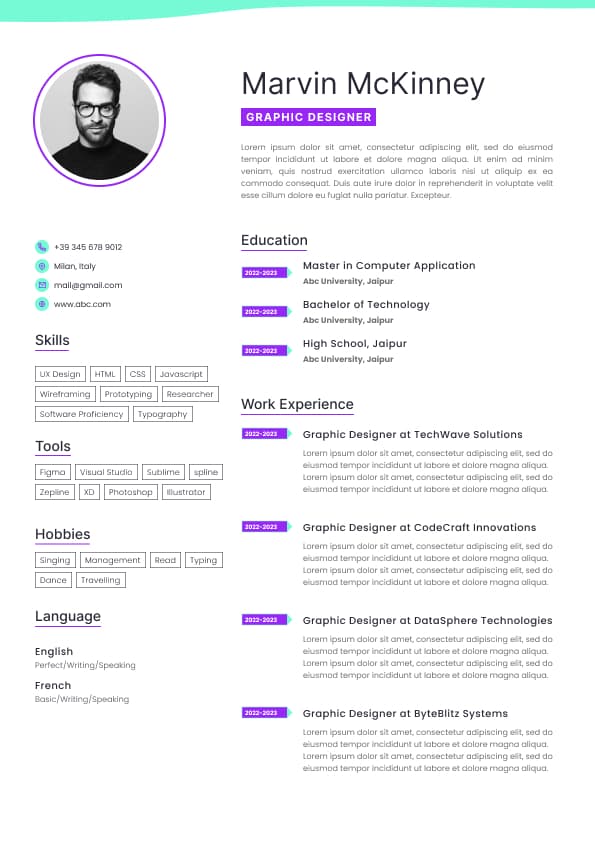
Use professional field-tested resume templates that follow the exact Resume rules employers look for.
Create ResumeA professional resume and cover letter package in Australia is no longer just about formatting or listing experience. Recruiters and hiring managers use these documents to make fast decisions about whether a candidate is worth interviewing, whether they understand the role, and whether they can communicate professionally in an Australian workplace.
A strong package positions you clearly for one target role, aligns with ATS screening systems, reflects Australian hiring expectations, and makes it easy for recruiters to shortlist you quickly. A weak package creates doubt, confusion, or unnecessary friction during screening.
Most candidates lose opportunities because their resume and cover letter are too generic, too broad, poorly targeted, or written without understanding how Australian recruiters actually assess applications.
The best resume and cover letter packages are:
Tailored to a specific role or industry
Built around clear positioning
Written for both ATS systems and human recruiters
Achievement-focused rather than task-focused
Concise, commercially relevant, and easy to scan
A professional resume and cover letter package typically includes:
An ATS-friendly resume tailored to the target role
A customised cover letter aligned to the employer and position
Consistent branding, tone, and positioning across both documents
Targeted keywords relevant to the role and industry
Clear alignment between the candidate’s experience and the job requirements
In competitive Australian job markets, employers expect these documents to work together strategically.
Your resume provides evidence.
Your cover letter explains relevance.
When both documents reinforce the same positioning, recruiters gain confidence faster.
Aligned with Australian hiring culture and communication style
This guide explains exactly what Australian employers expect, what makes applications fail, and how to create a resume and cover letter package that improves interview conversion rates.
One of the biggest misconceptions candidates have is believing volume beats quality.
In reality, Australian recruiters can identify generic applications within seconds.
Common failure patterns include:
Using the same resume for every job
Writing broad cover letters with no employer relevance
Including irrelevant experience that weakens positioning
Using buzzwords without evidence
Overloading resumes with responsibilities instead of achievements
Writing resumes designed around duties rather than outcomes
Poor formatting that reduces readability
Applying for multiple unrelated roles using the same documents
Australian recruiters typically spend very little time on first-pass resume screening.
If the value proposition is unclear quickly, the application usually gets rejected regardless of the candidate’s actual capability.
Australian hiring managers and recruiters generally assess resumes in this order:
They first check whether your background aligns with the role being advertised.
If you appear too broad, unfocused, or unrelated, you may not progress further.
Candidates who clearly position themselves for one specific function consistently perform better.
Recruiters assess whether your career progression makes sense.
Frequent job changes without explanation, inconsistent positioning, or unclear transitions create risk.
This does not mean short tenures automatically fail.
It means the narrative must make commercial sense.
Australian employers care heavily about outcomes.
Strong resumes demonstrate:
Revenue impact
Process improvements
Team leadership
Operational efficiency
Client outcomes
Delivery capability
Stakeholder management
Compliance or risk reduction
Productivity gains
The key question recruiters ask is:
“What commercial value did this person create?”
Poor communication creates immediate concern.
Employers often interpret weak resumes as indicators of:
Poor attention to detail
Weak business communication
Low professionalism
Low effort
Weak organisational skills
A polished package signals professionalism before the interview even starts.
Australian resumes differ from resumes used in many other countries.
Typical expectations:
Early career: 2 pages
Mid-level professionals: 2 to 3 pages
Senior leadership: 3 to 4 pages where justified
Australian employers generally prefer concise, relevant resumes over excessively detailed documents.
The summary should position the candidate strategically, not describe personality traits.
Weak Example
“Hardworking and motivated team player seeking opportunities to grow.”
This says nothing commercially useful.
Good Example
“Customer service professional with 6+ years’ experience across retail and telecommunications environments, specialising in complaint resolution, customer retention, and high-volume inbound support.”
This immediately establishes:
Industry relevance
Experience level
Functional alignment
Core strengths
Australian recruiters prefer measurable outcomes over task lists.
Weak Example
“Responsible for managing customer enquiries.”
Good Example
“Resolved 60+ customer enquiries daily while maintaining a 94% customer satisfaction rating.”
The second version demonstrates performance.
That difference matters significantly during screening.
Modern Australian employers frequently use ATS software.
Poor ATS optimisation can reduce visibility.
Best practices include:
Standard section headings
Clean formatting
No tables or graphics
Relevant keyword alignment
Consistent job titles
Simple fonts and structure
Highly designed resumes often perform worse in ATS environments.
A good Australian cover letter is not a repetition of the resume.
Its purpose is strategic alignment.
It explains:
Why you fit the role
Why your background is relevant
Why you want this opportunity specifically
Why the employer should interview you
The strongest cover letters feel commercially relevant and personalised without sounding overly formal.
Most hiring managers do not read every word initially.
They scan for:
Role alignment
Industry relevance
Communication quality
Motivation clarity
Professionalism
Evidence of tailoring
Long, generic cover letters often get ignored.
Clear, targeted cover letters perform better.
Immediately establish:
The role being applied for
Your relevance
Your core positioning
Connect experience directly to employer needs.
This is where most candidates fail.
Instead of repeating responsibilities, explain:
Similar environments worked in
Relevant achievements
Stakeholder exposure
Industry knowledge
Commercial outcomes
Finish confidently and professionally.
Avoid overly passive wording.
One of the most overlooked strategies is alignment consistency.
Your resume and cover letter should reinforce the same professional identity.
If your resume positions you as an operations coordinator but your cover letter focuses heavily on sales ambitions, recruiters may question your direction.
Strong applications create a consistent narrative across:
Resume summary
Core skills
Career history
Cover letter messaging
Keywords
Industry positioning
Consistency improves recruiter confidence.
Different Australian industries evaluate applications differently.
Employers prioritise:
Commercial achievements
Stakeholder management
Communication quality
Professional presentation
Strategic thinking
Hiring managers often focus on:
Licences and tickets
Safety compliance
Site experience
Reliability
Availability
Machinery or systems experience
Government applications usually require:
Strong alignment to selection criteria
Structured communication
Policy or compliance awareness
Detailed evidence of competencies
Employers assess:
Certifications
Regulatory compliance
Empathy and communication
Clinical or support experience
Documentation capability
Tailoring matters because each sector evaluates risk differently.
Candidates who target multiple unrelated roles often weaken their positioning.
Recruiters prefer candidates with clear direction.
Many resumes explain what the candidate wants instead of solving employer problems.
Strong applications answer:
“How does this candidate reduce hiring risk?”
Terms like:
Results-driven
Passionate
Dynamic
Hardworking
have little value without evidence.
Evidence matters more than adjectives.
Australian resumes should avoid:
Full home addresses
Photos
Irrelevant hobbies
Personal details unrelated to work
Excessive early-career history
Relevance improves readability and recruiter engagement.
AI-generated resumes are increasingly obvious to recruiters.
Common signs include:
Generic wording
Repetitive language
Vague achievements
No commercial context
Lack of role-specific nuance
AI can assist drafting, but strategy and positioning still determine outcomes.
Shortlisting is usually based on risk reduction.
Recruiters shortlist candidates who appear:
Relevant
Credible
Professional
Aligned to the role
Easy to present to hiring managers
Most candidates are not rejected because they are incapable.
They are rejected because the application does not make their value obvious quickly enough.
That distinction is critical.
Candidates who consistently secure interviews usually:
Tailor every application
Position themselves clearly
Focus on achievements
Understand employer priorities
Use commercially relevant language
Match the tone of the industry
Keep documents concise and strategic
Demonstrate confidence without exaggeration
They make screening easy.
That alone creates a major competitive advantage.
Professional services can help significantly when:
You are changing industries
You are applying for competitive roles
Your interview conversion is low
Your resume lacks clear positioning
You struggle to articulate achievements
You are targeting senior roles
You are re-entering the workforce
English is not your first language
However, not all services understand Australian hiring practices properly.
The best resume writers think like recruiters, not graphic designers.
A visually impressive document means very little if the positioning strategy is weak.
The clearest indicator is interview conversion.
If you apply consistently to suitable roles and receive little or no response, the issue is usually:
Positioning
Relevance
Clarity
ATS optimisation
Achievement framing
Industry alignment
A strong resume package should improve:
Recruiter response rates
Interview invitations
Recruiter engagement
LinkedIn approaches
Shortlisting consistency
In the Australian job market, resumes and cover letters are strategic positioning tools, not administrative documents.
The strongest applications are not necessarily written by the most experienced candidates.
They are written by candidates who understand how recruiters assess risk, relevance, and commercial value.
A high-performing resume and cover letter package:
Targets one role clearly
Aligns with Australian hiring expectations
Demonstrates measurable value
Makes screening fast and easy
Reinforces a strong professional narrative
When done properly, your application does more than describe your experience.
It positions you as the safest and strongest hiring decision.


 Upload Resume
 Import from Linkedin