
Choose from a wide range of NEWCV resume templates and customize your NEWCV design with a single click.

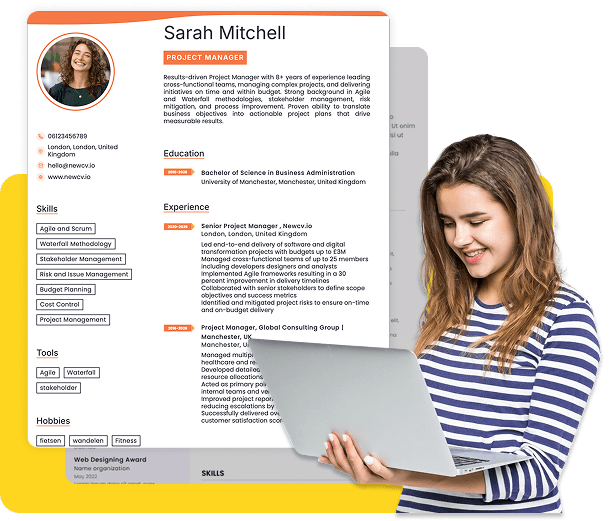
Use ATS-optimised Resume and resume templates that pass applicant tracking systems. Our Resume builder helps recruiters read, scan, and shortlist your Resume faster.

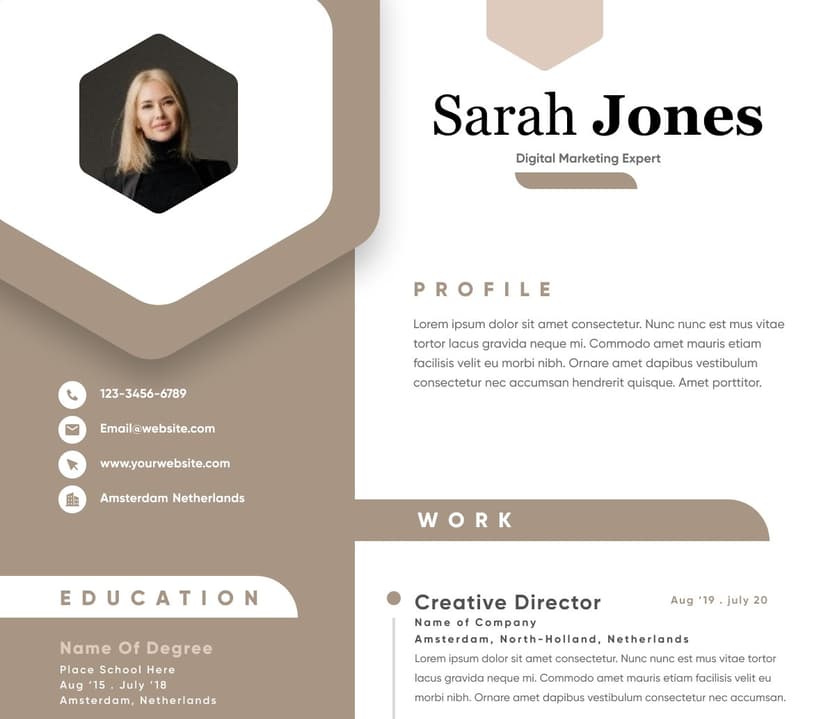
Use professional field-tested resume templates that follow the exact Resume rules employers look for.
Create Resume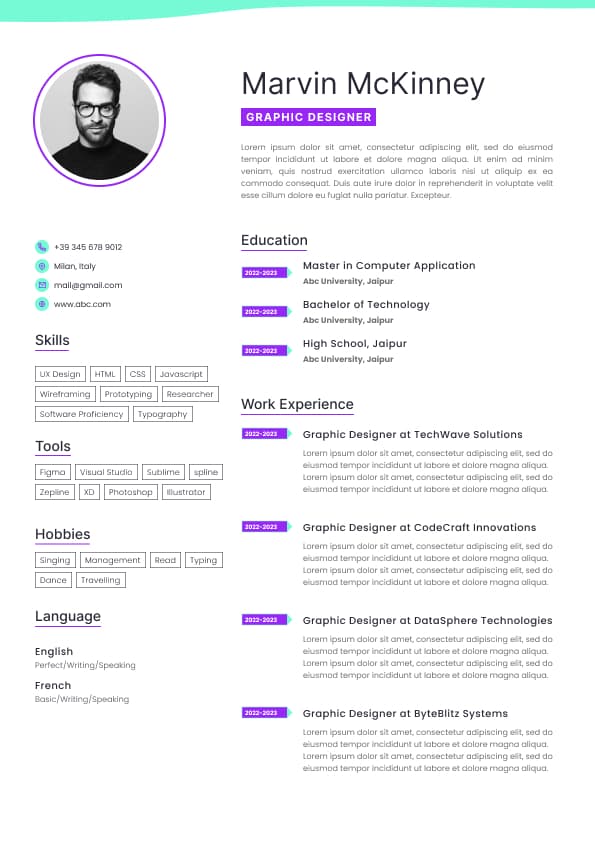
Use professional field-tested resume templates that follow the exact Resume rules employers look for.
Create ResumeMost resume advice online is either too generic or written for overseas hiring markets that do not reflect how Australian recruiters actually screen candidates. In Australia, resume optimisation is less about “gaming ATS” and more about making your value immediately clear to recruiters and hiring managers within seconds.
A well-optimised resume in Australia does three things exceptionally well:
Matches the language and priorities of the target role
Makes achievements easy to identify during fast recruiter screening
Positions the candidate at the correct seniority and market value
Australian recruiters often review hundreds of applications per role. If your resume is difficult to scan, overloaded with generic keywords, missing commercial outcomes, or poorly aligned to the job ad, you will usually be rejected before experience is evaluated properly.
The strongest resumes are not the longest or most “creative”. They are strategically positioned, highly targeted, commercially relevant, and easy to assess quickly.
This guide breaks down how resume optimisation actually works in the Australian job market, including ATS strategy, recruiter screening behaviour, keyword alignment, formatting decisions, and the mistakes that quietly kill interview chances.
Resume optimisation is the process of improving your resume so it performs better during both recruiter screening and applicant tracking system evaluation.
In Australia, optimisation is not simply adding more keywords.
A properly optimised resume aligns your:
Skills
Experience
Achievements
Positioning
Industry terminology
Seniority level
Resume structure
with the expectations of the target role and the Australian hiring market.
An optimised resume helps recruiters answer five questions quickly:
Does this candidate match the core requirements?
Are they at the right seniority level?
Have they delivered measurable results?
Can they communicate clearly and professionally?
Are they worth interviewing immediately?
If your resume delays those answers, recruiters move on.
Most candidates dramatically overestimate how long recruiters spend reviewing resumes.
For first-pass screening, Australian recruiters commonly spend between 6 and 20 seconds deciding whether to continue reading.
That initial review usually focuses on:
Job titles
Industry relevance
Recent experience
Key skills alignment
Commercial outcomes
Resume clarity
Career consistency
Location and work rights
Recruiters are not reading every line initially. They are pattern-matching.
This means resume optimisation is heavily influenced by readability and positioning.
Within the first half-page, recruiters usually want clarity on:
Your professional identity
Years of experience
Industry background
Core specialisation
Technical capability
Leadership scope
Major achievements
Relevant systems or tools
If this information is buried, diluted, or unclear, interview chances drop quickly.
Many candidates believe ATS optimisation means stuffing resumes with repeated keywords.
That approach often damages readability and weakens recruiter engagement.
Australian employers increasingly use ATS platforms such as:
Workday
Greenhouse
PageUp
SAP SuccessFactors
Lever
SmartRecruiters
However, ATS systems primarily organise and filter applications. Human recruiters still make the actual hiring decisions.
The best ATS optimisation strategy is natural relevance.
Using keywords naturally from the job advertisement
Matching industry terminology
Using clear section headings
Avoiding graphics-heavy formatting
Including relevant certifications and systems
Aligning job titles where appropriate
Using standard resume structures
Keyword stuffing
Text hidden in tables or graphics
Overdesigned templates
Unclear job titles
Excessive columns
Headers filled with critical information
PDF formatting issues from poor templates
Most rejected resumes are not rejected because candidates lack experience.
They are rejected because the resume communicates value poorly.
Weak summaries say nothing meaningful.
Weak Example
“Hardworking and motivated professional with excellent communication skills.”
This sounds interchangeable and low-value.
Good Example
“Operations Manager with 9+ years’ experience leading warehouse and supply chain teams across FMCG and logistics environments, delivering cost reductions, inventory accuracy improvements, and national process standardisation.”
The second version establishes:
Seniority
Industry
Functional expertise
Commercial value
Credibility
immediately.
Australian recruiters care heavily about impact.
Candidates often write task-focused resumes instead of achievement-focused resumes.
Weak Example
“Responsible for managing client accounts and reporting.”
Good Example
“Managed a portfolio of 45 enterprise accounts worth $3.8M annually while improving client retention by 18% across 12 months.”
Outcomes create credibility.
One of the most common reasons strong candidates get ignored is poor targeting.
A resume optimised for a Project Manager role in construction will not necessarily perform well for an IT transformation role.
Optimisation requires alignment with the actual vacancy.
Even strong experience loses impact if the document is difficult to scan.
Common structural problems include:
Large text blocks
Dense paragraphs
Inconsistent formatting
Poor spacing
Missing achievement separation
Overly long profiles
Cluttered layouts
Recruiters favour resumes that reduce cognitive effort.
The highest-performing resumes are strategically aligned to the target advertisement.
This does not mean copying the job ad.
It means reflecting the employer’s priorities naturally and credibly.
Most job ads contain hidden weighting signals.
For example:
A company may list 15 requirements, but only 3 truly drive shortlist decisions.
Look for repeated themes such as:
Stakeholder management
Leadership
Compliance
Revenue growth
ERP systems
Team management
Transformation delivery
Customer engagement
Technical expertise
The most repeated themes are usually the most commercially important.
Australian recruiters are highly influenced by terminology alignment.
For example:
If the market uses:
instead of
then matching market terminology improves relevance perception.
This matters significantly in:
Government
Mining
Healthcare
Construction
IT
Engineering
Financial services
Optimised resumes connect actions to results.
High-performing achievement statements often include:
Revenue impact
Cost reduction
Efficiency gains
Team performance
Compliance outcomes
Customer outcomes
Project delivery metrics
Risk reduction
Operational improvements
Australian employers strongly favour commercially aware candidates.
Most Australian recruiters prefer resumes between 2 and 4 pages depending on seniority.
Senior executives may exceed this slightly, but unnecessary length usually weakens resumes.
Contact details
Professional summary
Core skills
Professional experience
Education
Certifications
Technical skills if relevant
Only include sections that strengthen relevance:
Projects
Security clearances
Professional memberships
Publications
Awards
Avoid filler sections that add little hiring value.
Keyword strategy should support readability, not destroy it.
The strongest resumes use semantic relevance naturally.
Recruiters heavily focus on:
Headline or professional summary
Recent roles
Core skills section
Technical environment
Achievements
Instead of forcing repetition:
Use related terminology naturally.
For example, an IT Project Manager resume may include:
Agile delivery
Stakeholder management
Transformation programs
Change management
PMO governance
Cross-functional leadership
Budget management
This creates topical authority without sounding robotic.
Optimisation varies significantly across industries.
Employers usually prioritise:
Commercial outcomes
Stakeholder management
Communication
Leadership
Revenue or efficiency impact
Government resumes often require:
Policy alignment
Compliance language
Procurement understanding
Governance capability
Structured achievement examples
Keywords matter heavily in public sector recruitment.
Recruiters commonly prioritise:
Safety
Project delivery
Compliance
Technical systems
Site experience
Certifications
Operational scale
Tech resumes should balance:
Technical capability
Delivery outcomes
Systems expertise
Cross-functional collaboration
Commercial impact
Pure technical lists without business context often underperform.
Many candidates confuse visual design with optimisation.
In Australia, heavily designed resumes frequently reduce performance.
Problems include:
ATS readability issues
Distracting layouts
Hidden information
Reduced scanning speed
Lower professionalism in conservative industries
Simple, clean formatting almost always performs better.
Clear headings
Consistent spacing
Strong hierarchy
Easy-to-read fonts
Logical flow
Achievement separation
Minimal visual clutter
Good formatting improves recruiter efficiency.
That directly impacts interview rates.
Recruiters shortlist candidates.
Hiring managers decide who actually gets hired.
Their evaluation criteria are often different.
Hiring managers typically assess:
Capability credibility
Problem-solving ability
Commercial impact
Leadership maturity
Industry understanding
Communication quality
Risk level
This is why resume optimisation must go beyond keywords.
A technically optimised resume that lacks strategic credibility still fails at interview selection stage.
Career transition resumes require a different positioning strategy.
The biggest mistake career changers make is forcing irrelevant experience.
Instead, focus on transferable commercial value.
Evidence of capability transfer
Clear transition logic
Relevant achievements
Learning agility
Reduced hiring risk
Generic summaries
Unclear positioning
Overexplaining the transition
Irrelevant experience overload
Missing alignment with target role priorities
Strong career-change resumes reduce uncertainty.
Positioning is one of the most overlooked parts of resume optimisation.
Two candidates with identical experience can receive very different outcomes based on positioning alone.
Appears:
Too junior
Too broad
Too technical
Too operational
Unclear
Unfocused
Clearly communicates:
Seniority
Functional expertise
Industry relevance
Commercial impact
Leadership scope
Specialisation
Positioning influences salary perception, shortlist rates, and hiring confidence.
The best achievement statements combine:
Action
Scope
Commercial outcome
Action + Context + Result
Good Example
“Led a national warehouse optimisation initiative across 5 distribution centres, reducing operating costs by 14% while improving order accuracy to 99.2%.”
This works because it demonstrates:
Leadership
Scale
Technical relevance
Commercial value
without sounding inflated.
Avoid statements that:
Lack outcomes
Sound vague
Use generic soft skills
List responsibilities only
Overuse buzzwords
Recruiters trust specificity more than hype.
Many candidates only realise there is a problem after months of rejection.
Common warning signs include:
High application volume with few interviews
Recruiters contacting you for the wrong roles
Being screened out despite relevant experience
Reaching recruiter calls but not hiring manager interviews
Feedback that you appear too senior or too junior
Resume feels generic across industries
These are often positioning and optimisation problems, not capability problems.
Professional resume optimisation can help significantly when:
You are targeting competitive roles
Transitioning industries
Applying for leadership positions
Returning to work
Migrating to Australia
Struggling with positioning
Applying in ATS-heavy industries
However, not all resume writers understand Australian hiring behaviour.
Strong resume strategists:
Analyse market positioning
Improve recruiter readability
Align keyword strategy
Clarify value proposition
Reposition seniority correctly
Translate experience commercially
Reduce screening friction
Poor services typically:
Use templates only
Add generic buzzwords
Overdesign resumes
Ignore hiring logic
Stuff keywords unnaturally
Rewrite without strategic positioning
The difference is substantial.
Before applying for roles in Australia, check whether your resume:
Clearly identifies your professional value within 10 seconds
Aligns with the target role language
Uses achievement-focused content
Demonstrates measurable outcomes
Avoids keyword stuffing
Uses clean, ATS-friendly formatting
Matches the correct seniority level
Reduces recruiter effort
Positions you competitively in the market
A resume should not simply describe your career.
It should strategically sell your relevance for the exact role you want.


 Upload Resume
 Import from Linkedin