
Choose from a wide range of NEWCV resume templates and customize your NEWCV design with a single click.

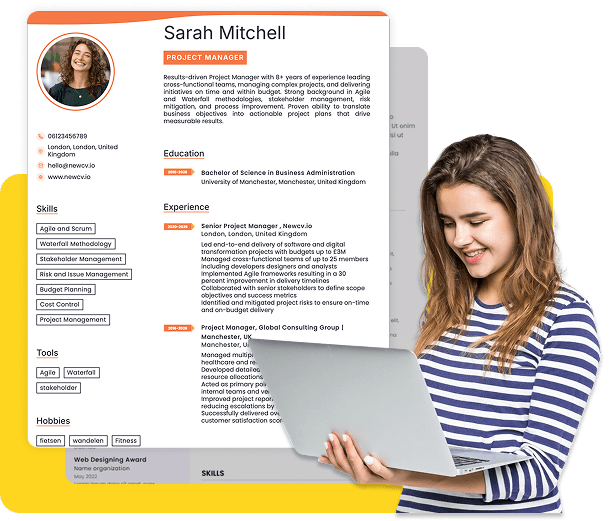
Use ATS-optimised Resume and resume templates that pass applicant tracking systems. Our Resume builder helps recruiters read, scan, and shortlist your Resume faster.

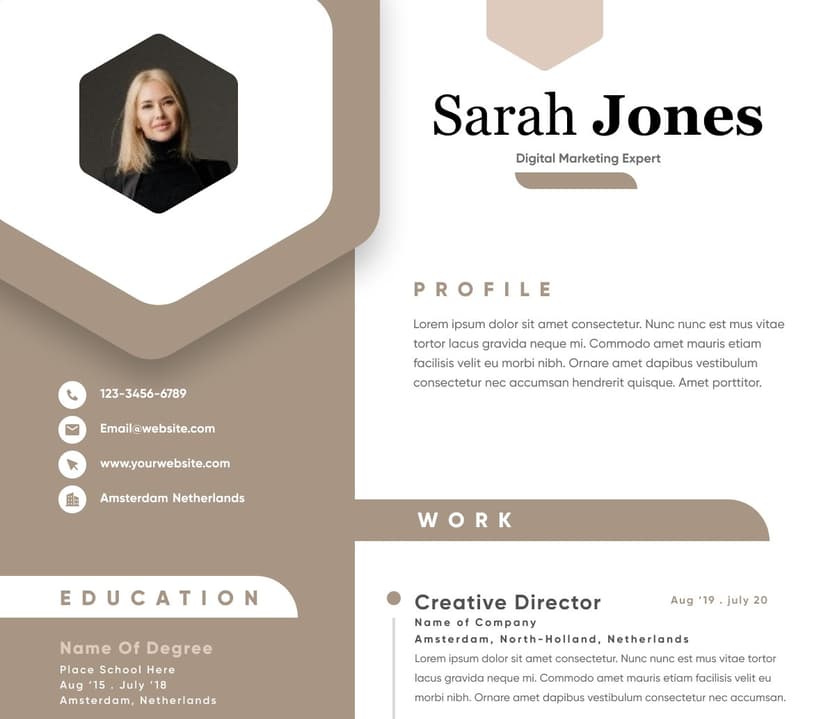
Use professional field-tested resume templates that follow the exact Resume rules employers look for.
Create Resume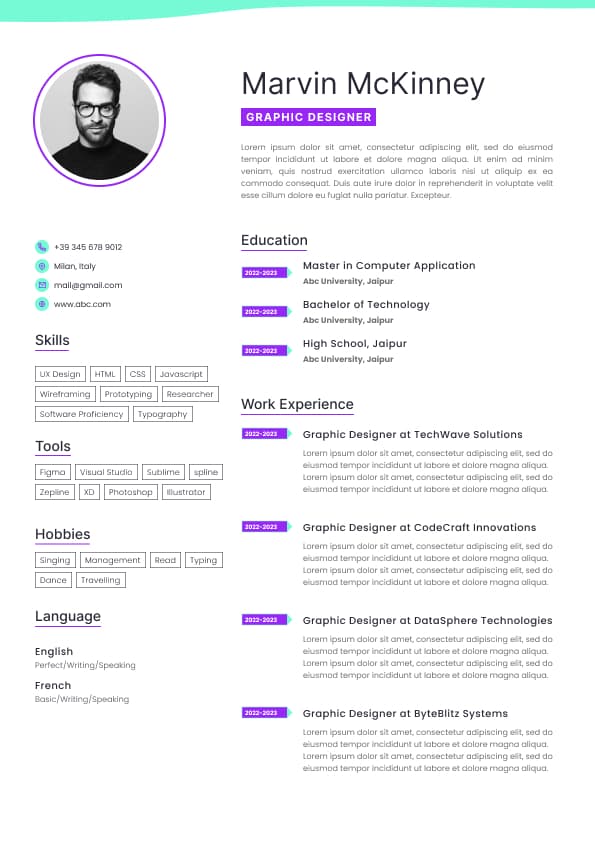
Use professional field-tested resume templates that follow the exact Resume rules employers look for.
Create ResumeAustralian Government job applications are very different from standard private-sector applications. Most candidates fail because they submit a generic resume and cover letter instead of addressing the actual assessment criteria the hiring panel uses.
To succeed in APS and government recruitment, your application must clearly demonstrate how your experience matches the role requirements, behavioural capabilities, and APS values. Hiring managers are assessing evidence, not claims. They want practical examples that show how you’ve handled situations, delivered outcomes, communicated with stakeholders, and worked within structured environments.
Strong Australian Government applications usually include:
A tailored resume aligned to the APS level
A targeted pitch or statement of claims
Clear STAR examples
Evidence against the role criteria
Strong alignment with APS behaviours and capabilities
This guide explains exactly how Australian Government applications are assessed, what recruiters actually look for, and includes real Australian Government job application examples you can model properly.
One of the biggest misconceptions candidates have is assuming APS recruitment works like private-sector recruitment. It does not.
In most Australian Government hiring processes:
Applications are assessed against formal criteria
Panels score evidence using structured frameworks
Multiple reviewers may independently assess applications
Written communication quality matters heavily
Generic applications are eliminated quickly
Behavioural capability evidence is critical
Unlike many corporate roles, the hiring decision is not usually based on personality, networking, or “culture fit” alone.
The panel needs documented evidence that you can perform the role within government processes, stakeholder environments, legislation, compliance frameworks, and public sector expectations.
This is why weak applications fail even when candidates are technically qualified.
The majority of unsuccessful APS applications contain the same issues.
Government recruiters see resumes full of vague statements like:
“Excellent communication skills”
“Team player”
“Strong organisational abilities”
These statements carry almost no assessment value unless backed by evidence.
Most APS roles assess:
Communication
Stakeholder engagement
Decision-making
Problem-solving
Policy understanding
Attention to detail
Leadership capability
Candidates often mention these skills without proving them.
Panels want outcome-focused evidence.
A weak example explains responsibilities.
A strong example explains:
The situation
The challenge
The action taken
The measurable result
Government hiring managers often prioritise:
Process adherence
Risk awareness
Written communication
Stakeholder management
Professional judgement
Policy interpretation
Accountability
Candidates coming from private-sector environments often underperform because they do not adapt their application style.
Government recruiters are trained to assess evidence systematically.
Strong applications demonstrate:
Recruiters immediately look for:
Relevant sector experience
Similar stakeholder environments
Matching capability examples
Evidence of handling comparable responsibilities
Applications that force unrelated experience into the role usually score poorly.
Government environments value:
Clear writing
Logical structure
Concise communication
Professional tone
Accurate detail
Messy formatting and vague writing create immediate concerns about capability.
APS recruitment heavily assesses behaviour.
Panels want evidence showing:
How you solve problems
How you manage conflict
How you prioritise
How you communicate under pressure
How you handle competing stakeholders
How you apply judgement
Strong applications quantify impact wherever possible.
Instead of:
Use:
Specificity creates credibility.
Most APS applications include three core documents.
Your APS resume should:
Be tailored to the specific role
Focus on achievements, not duties
Include measurable outcomes
Align with APS capabilities
Prioritise relevance over length
For APS roles, a 2 to 4-page resume is generally acceptable depending on seniority.
Some departments request:
A cover letter
A one-page pitch
A statement of claims
Responses to selection criteria
These are not interchangeable.
Always follow instructions exactly.
Failure to follow application instructions is one of the fastest ways to be screened out.
Many government applications still require formal criteria responses.
This is where most candidates fail.
The strongest responses:
Use STAR methodology
Stay evidence-focused
Include measurable outcomes
Address the exact wording of the criteria
Remain concise but detailed
Below is a strong example of an APS-style pitch response.
Good Example
“In my previous role as an Administration and Compliance Officer within a state government department, I supported regulatory reporting, stakeholder correspondence, and policy implementation activities across multiple operational teams.
One of my key responsibilities involved coordinating compliance documentation for a statewide audit process with strict reporting deadlines. During this project, inconsistencies were identified across reporting submissions from several business units, creating risks around audit accuracy and completion timelines.
To address this, I developed a centralised tracking system, worked directly with internal stakeholders to clarify reporting requirements, and introduced a streamlined review process to improve data accuracy before submission.
As a result, reporting errors were significantly reduced, audit documentation was finalised ahead of schedule, and senior management commended the process improvements implemented during the project.
This experience strengthened my ability to manage competing priorities, communicate with diverse stakeholders, and maintain high attention to detail within structured regulatory environments. I believe these capabilities align strongly with the requirements of the APS4 Policy Support Officer role.”
This type of response performs well because it demonstrates:
A real workplace scenario
Problem-solving capability
Stakeholder communication
Initiative
Measurable outcomes
Government-relevant context
Strong written communication
Most importantly, it provides evidence instead of unsupported claims.
“I have strong communication and organisational skills and work well in teams. I am highly motivated and believe I would be a great fit for the role.”
This fails because:
No evidence is provided
No outcomes are shown
No behavioural capability is demonstrated
It sounds generic and reusable
“In my previous role supporting procurement operations, I coordinated supplier documentation across multiple internal teams during a high-volume contract renewal period. I identified delays caused by inconsistent approval processes and implemented a central tracking workflow that improved document turnaround times by 30% while reducing follow-up requests from stakeholders.”
This works because:
The scenario is specific
The action is clear
The outcome is measurable
The capability is demonstrated naturally
STAR responses are still one of the most effective frameworks for government applications.
Briefly explain:
The context
The challenge
The environment
Keep this concise.
Explain:
Your responsibility
What needed to be achieved
This is the most important section.
Focus on:
What YOU did
Your judgement
Your communication
Your process
Your decision-making
Avoid overly broad team descriptions.
Show:
Outcomes
Improvements
Efficiency gains
Stakeholder impact
Risk reduction
Positive feedback
Operational results
Government panels score results heavily because they show effectiveness.
Many applicants think APS hiring is purely merit-based on technical experience.
In reality, panels often assess risk.
Hiring managers ask themselves:
Can this person operate in structured environments?
Can they communicate professionally?
Will they follow process correctly?
Can they handle stakeholders appropriately?
Can they write clearly?
Can they represent the department professionally?
This is why writing quality matters so much.
A poorly written application creates concerns about:
Judgement
Attention to detail
Communication capability
Professional standards
Even highly experienced candidates get rejected because their application lacks structure and clarity.
Recruiters can immediately identify recycled applications.
Strong candidates tailor:
Resume summaries
Key achievements
Capability examples
Keywords
Role relevance
APS3, APS4, APS5, APS6, EL1, and EL2 roles are assessed differently.
For example:
APS3 and APS4 focus more on operational capability
APS5 and APS6 require stronger judgement and stakeholder management
EL1 and EL2 require strategic leadership and organisational influence
Candidates often fail because they write below or above the expected level.
Government recruitment commonly references:
Stakeholders
Compliance
Policy
Governance
Risk
Procedures
Legislation
Frameworks
Public sector values
Service delivery
Using relevant terminology helps establish alignment.
However, keyword stuffing weakens credibility quickly.
Government recruiters want evidence of:
Improvement
Efficiency
Accountability
Accuracy
Coordination
Delivery
Communication
Outcomes separate strong applicants from average ones.
Most APS applications use scoring frameworks.
Panels often assess:
Relevance
Evidence quality
Communication clarity
Behavioural alignment
Depth of examples
Complexity handled
Outcome demonstrated
A candidate with less experience but stronger evidence often outperforms a more experienced candidate with vague examples.
This surprises many applicants.
Many candidates barely analyse the job ad.
Strong applicants study:
Capability wording
Key responsibilities
Behaviour expectations
Mandatory requirements
APS work level standards
The wording matters.
Long responses without structure often perform poorly.
Government panels review large volumes of applications.
Clarity wins.
Recruiters see identical wording constantly.
Overused phrases include:
“Results-driven professional”
“Highly motivated individual”
“Excellent communication skills”
These add little value without evidence.
Government recruitment values:
Process
Accountability
Governance
Risk management
Stakeholder engagement
Applications focused purely on sales, hustle, or aggressive self-promotion often feel misaligned.
Strong government applications feel:
Structured
Evidence-based
Relevant
Clear
Professional
Outcome-focused
The best candidates also demonstrate:
Calm judgement
Process awareness
Stakeholder maturity
Clear communication
Attention to detail
Hiring panels are looking for reliability and capability, not flashy language.
The biggest shift candidates need to make is understanding that APS applications are evidence assessments, not personality contests.
Most rejected applications fail because they:
Stay too generic
Lack evidence
Ignore the criteria
Use weak examples
Fail to demonstrate outcomes
Strong applicants:
Tailor every application
Use structured STAR examples
Demonstrate capability clearly
Align with APS expectations
Write concisely and professionally
A well-written Australian Government application should make it easy for the panel to score you positively.
That is the real goal.


 Upload Resume
 Import from Linkedin