
Choose from a wide range of NEWCV resume templates and customize your NEWCV design with a single click.

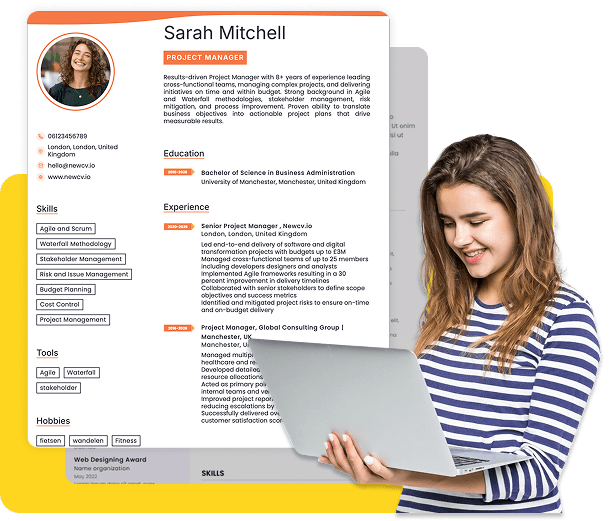
Use ATS-optimised Resume and resume templates that pass applicant tracking systems. Our Resume builder helps recruiters read, scan, and shortlist your Resume faster.

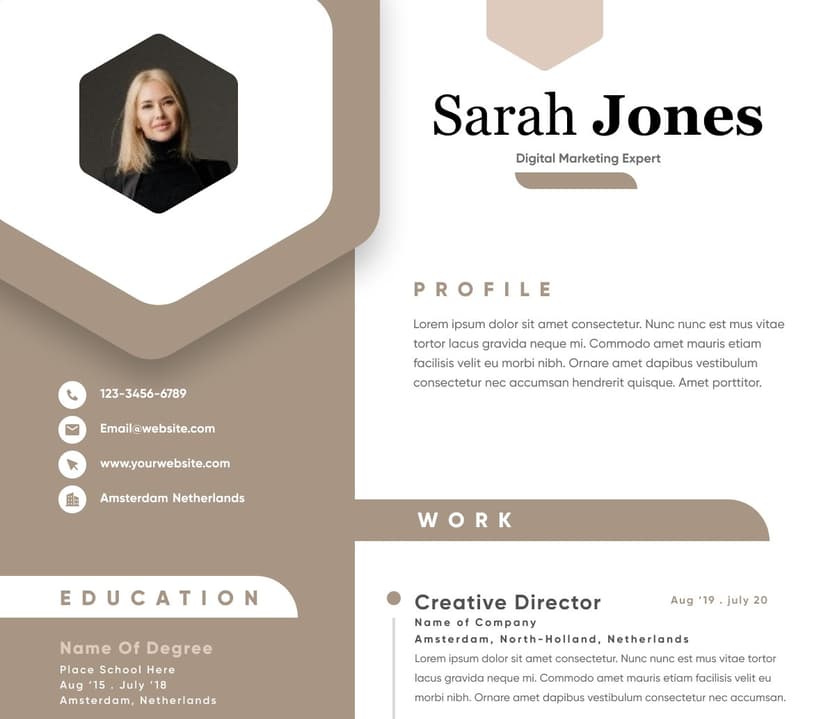
Use professional field-tested resume templates that follow the exact Resume rules employers look for.
Create Resume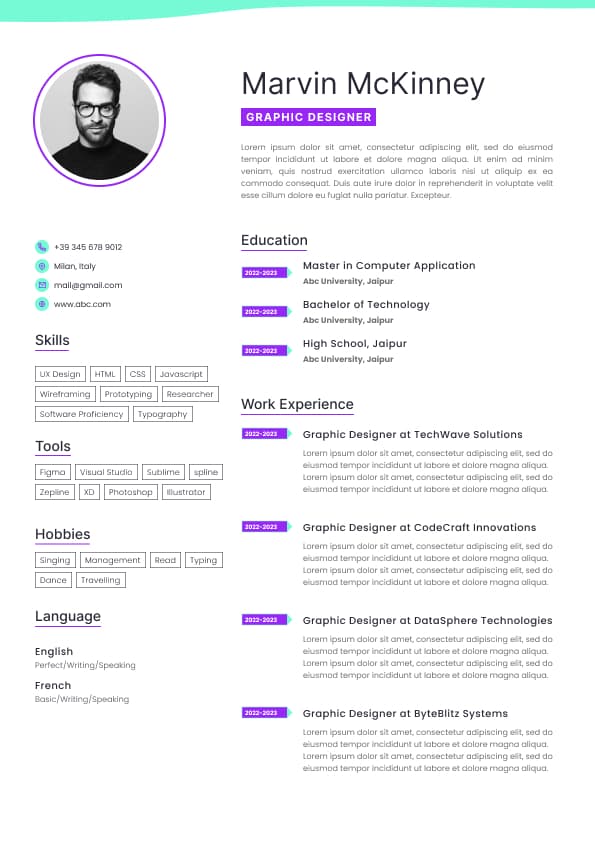
Use professional field-tested resume templates that follow the exact Resume rules employers look for.
Create ResumeA cold email for jobs in Australia works when it feels targeted, commercially aware, and genuinely relevant to the employer’s hiring needs. Most candidates fail because they send generic “just checking if you’re hiring” emails that create extra work for recruiters and hiring managers.
In the Australian market, cold emails perform best when they:
Target the right person directly
Position the candidate around business value, not desperation
Show clear alignment with the role, industry, or company
Respect the employer’s time
Make it easy to assess fit quickly
A strong cold email can absolutely lead to interviews in Australia, especially in industries where hidden jobs, referrals, project-based hiring, and talent pooling are common. This includes construction, tech, healthcare, engineering, mining, sales, marketing, logistics, and professional services.
The key is understanding how Australian recruiters and hiring managers actually evaluate unsolicited applications.
A cold email for jobs is an unsolicited email sent directly to an employer, recruiter, hiring manager, or business owner to express interest in opportunities before a job is formally advertised.
Unlike applying through Seek or LinkedIn Easy Apply, a cold email aims to:
Start a direct conversation
Create early visibility
Access hidden job opportunities
Position yourself ahead of competitors
Build recruiter familiarity before hiring begins
In Australia, many roles are filled before public advertising, especially:
Small and medium businesses
Recruitment agency pipelines
Contract and project-based work
Executive and specialist roles
Regional hiring markets
Internal referral-driven hiring
That is why a well-written cold email can be surprisingly effective when done properly.
Most cold emails fail because candidates misunderstand recruiter psychology.
Recruiters are not looking for long personal stories. Hiring managers are not impressed by vague enthusiasm. Employers are not interested in generic “I’ll do anything” emails.
The biggest mistakes include:
Sending the same email to dozens of employers
Writing overly long introductions
Focusing on personal needs instead of employer value
Attaching irrelevant resumes
Using awkward corporate language
Sounding desperate or overly aggressive
Asking for jobs without demonstrating fit
Sending emails with no clear positioning
Australian hiring culture generally values:
Direct communication
Commercial relevance
Professional confidence
Clarity and brevity
Authenticity over exaggerated self-promotion
Candidates who understand this perform far better.
When recruiters open a cold email, they subconsciously assess four things within seconds:
This is the first filter.
Recruiters immediately scan for:
Job title alignment
Industry alignment
Relevant technical skills
Local market experience
Australian work rights
Seniority level
If relevance is unclear within the opening lines, most emails are ignored.
Strong cold emails reference:
A recent project
Company growth
Expansion plans
Industry challenges
Team structure
Relevant business activity
This signals genuine interest rather than mass emailing.
Recruiters naturally assess hiring risk.
Candidates who appear:
Easy to interview
Easy to present to clients
Clear communicators
Commercially aware
Organised and professional
usually move forward faster.
Recruiters scan emails rapidly.
A strong cold email:
Gets to the point fast
Uses short paragraphs
Avoids buzzwords
Makes value obvious immediately
Dense walls of text almost always fail.
The highest-performing cold emails typically follow this structure:
Your subject line should feel professional and relevant, not spammy.
Good examples:
Civil Engineer Seeking Opportunities in Brisbane
Experienced Payroll Officer Available Immediately
Digital Marketing Specialist | Melbourne Based
Expression of Interest | Project Coordinator
Warehouse Supervisor with FMC Experience
Weak subject lines:
Looking for a Job
Please Hire Me
Resume Attached
Need Work ASAP
The subject line should immediately communicate relevance.
The opening determines whether the recruiter continues reading.
“Hi, my name is Sarah and I’m looking for any opportunities available within your company.”
This sounds generic and low-value.
“Hi James, I’m a Melbourne-based Business Analyst with five years’ experience across financial services and digital transformation projects. I came across your recent expansion into enterprise transformation hiring and wanted to introduce myself.”
This works because it:
Establishes relevance immediately
Sounds commercially aware
Shows targeting
Feels professional and direct
Hi [Name],
I hope you’re well.
I’m reaching out to introduce myself as a [Job Title] with [X years] of experience across [industry/specialisation].
I recently came across [company/recruitment agency/project/news/update], and based on my background in [relevant expertise], I thought it made sense to connect directly regarding potential opportunities within your team or network.
My experience includes:
[Relevant achievement or capability]
[Relevant industry/project exposure]
[Technical or commercial strength]
Most recently, I worked with [company/project] where I was responsible for [high-value responsibility or outcome].
I’ve attached my resume for reference and would welcome the opportunity to discuss any suitable current or upcoming roles.
Thanks for your time, and I appreciate your consideration.
Kind regards,
[Full Name]
[Phone Number]
[LinkedIn URL]
This structure aligns with how Australian recruiters screen talent.
It:
Leads with relevance
Avoids unnecessary storytelling
Demonstrates business awareness
Highlights value quickly
Makes next steps easy
Most importantly, it respects the recruiter’s time.
Yes, in most cases.
But only attach a tailored, ATS-friendly resume relevant to the role or industry you are targeting.
A major mistake candidates make is attaching:
Generic resumes
Multi-industry resumes
Outdated resumes
Poorly formatted resumes
If your resume does not align with the email positioning, the cold email loses credibility immediately.
Timing matters more than most candidates realise.
The best times are usually:
Tuesday mornings
Wednesday mornings
Thursday mornings
Best sending windows:
7:30am to 9:00am
12:00pm to 1:00pm
4:30pm to 5:30pm
Avoid:
Friday afternoons
Sunday nights
Public holidays
Monday morning inbox floods
Australian recruiters often review emails between meetings or before daily workload builds up.
Both can work, but the strategy differs.
Best for:
Corporate roles
High-volume hiring
Specialist recruitment
Contract work
Fast-moving industries
Recruiters care about:
Marketability
Client fit
Speed of placement
Communication quality
Best for:
Smaller businesses
Direct internal hiring
Senior roles
Niche expertise
Relationship-driven industries
Hiring managers care more about:
Team fit
Business impact
Problem-solving ability
Industry understanding
A smart strategy often combines both.
The effectiveness of a cold email depends heavily on who receives it.
Good targets include:
Talent Acquisition Managers
Internal Recruiters
Recruitment Consultants
Hiring Managers
Directors in smaller businesses
Team Leads in technical industries
Best platforms:
Company websites
Recruitment agency websites
Industry associations
Professional directories
Avoid sending cold emails to:
Generic admin inboxes
Support email addresses
Customer service accounts
Direct contact dramatically improves response rates.
Shorter is almost always better.
Ideal length:
Why?
Recruiters skim rapidly.
Long emails create friction.
The goal of a cold email is not to tell your whole career story.
The goal is:
Generate interest
Establish relevance
Secure a conversation
Your resume handles the deeper detail.
Recruiters spot copy-paste emails immediately.
This destroys credibility.
Phrases like:
Results-driven professional
Dynamic self-starter
Passionate team player
rarely add value.
Australian recruiters generally prefer plain, direct communication.
“I really need a job urgently and would appreciate any opportunity.”
This creates hiring risk psychologically.
“I’m currently exploring opportunities within the Melbourne infrastructure market following the completion of a major transport project.”
Professional positioning matters.
Long emails reduce reply rates.
The more effort required to read your email, the lower your chances.
A tailored email dramatically outperforms generic outreach.
Even one customised sentence can significantly improve response rates.
Follow-up is normal in Australian recruitment.
But poor follow-up can damage your reputation.
Best practice:
Wait 5 to 7 business days
Keep follow-up short
Stay professional
Avoid guilt language
Hi [Name],
Just following up on my previous email regarding potential opportunities within your team/network.
I remain very interested in relevant openings within [industry/company area] and would welcome the opportunity to discuss where my background may be a fit.
Thanks again for your time.
Kind regards,
[Name]
Cold outreach performs particularly well in industries where:
Hiring moves quickly
Skills shortages exist
Networking influences hiring
Hidden jobs are common
These industries include:
Construction
Engineering
Healthcare
Mining and resources
IT and cyber security
Sales
Logistics and supply chain
Trades
Marketing and digital
Professional services
In smaller Australian markets and regional areas, cold emailing can outperform online applications entirely.
Cold emails generally outperform LinkedIn messages for serious job opportunities.
Why?
Emails:
Feel more professional
Allow resume attachments
Are easier to forward internally
Show stronger intent
Sit inside recruiter workflows
LinkedIn messages work best as:
Relationship starters
Follow-ups
Networking touchpoints
The strongest strategy often combines both.
Most candidates talk about themselves.
Top candidates position themselves around employer problems.
“I’m seeking opportunities to grow my career in operations management.”
“My background has focused heavily on improving warehouse efficiency, reducing fulfilment delays, and supporting high-volume distribution environments.”
The second example speaks the employer’s language.
That changes how recruiters evaluate the candidate.
Based on real recruiter behaviour, the highest-response cold emails usually include:
Clear role alignment
Australian market experience
Strong communication
Industry relevance
Concise messaging
Specific targeting
Professional tone
Easy-to-scan formatting
The biggest difference between ignored candidates and interviewed candidates is usually positioning clarity.
Not experience alone.


 Upload Resume
 Import from Linkedin