
Choose from a wide range of NEWCV resume templates and customize your NEWCV design with a single click.

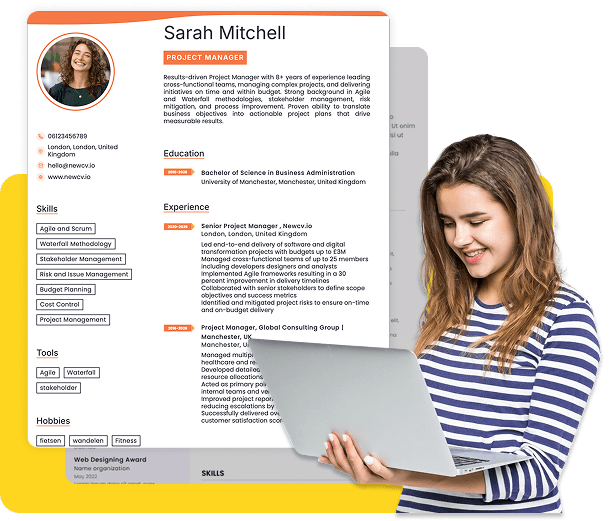
Use ATS-optimised Resume and resume templates that pass applicant tracking systems. Our Resume builder helps recruiters read, scan, and shortlist your Resume faster.
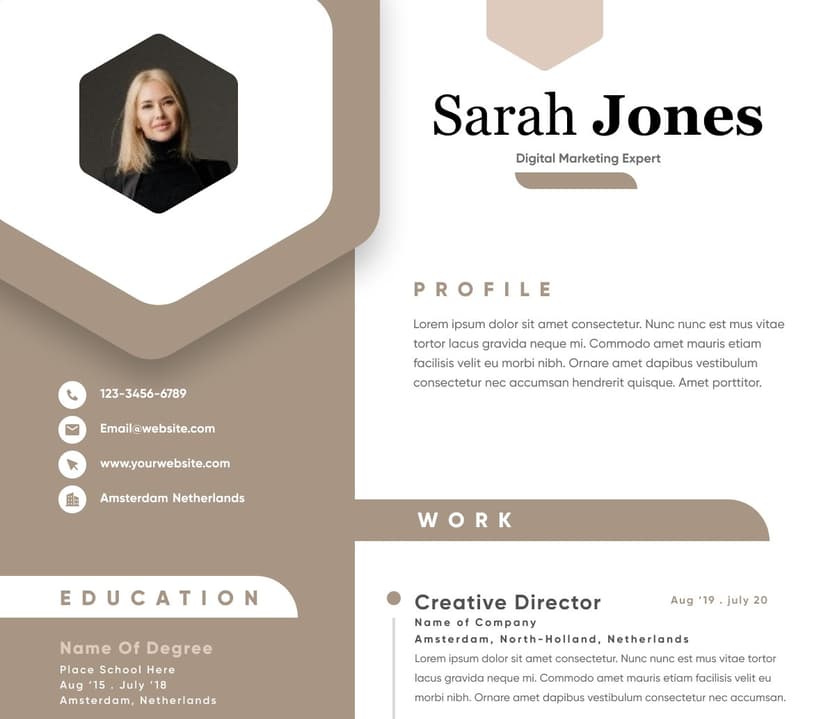
Use professional field-tested resume templates that follow the exact Resume rules employers look for.
Create Resume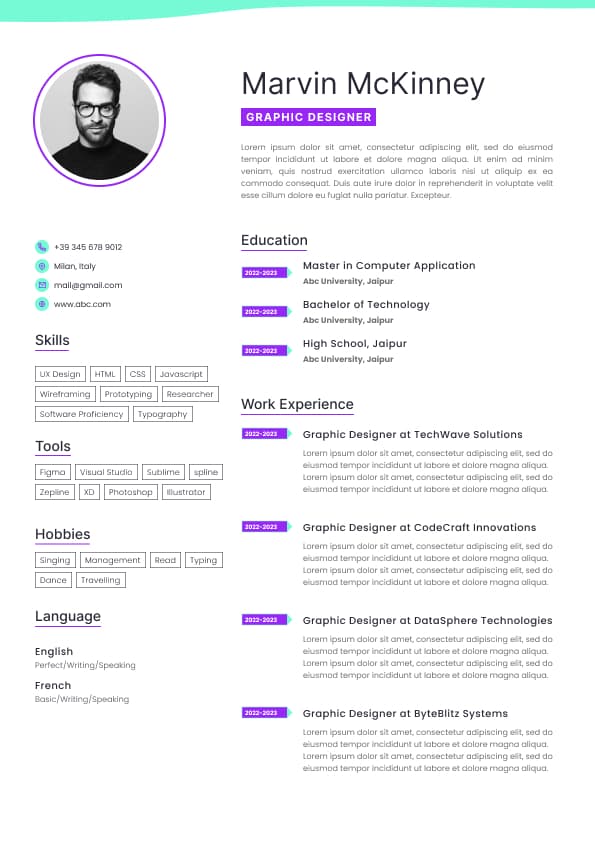
Use professional field-tested resume templates that follow the exact Resume rules employers look for.
Create ResumeAI resume writers can help Australian job seekers create resumes faster, improve wording, optimise ATS keywords, and structure content professionally. But most AI-generated resumes still fail during recruiter screening because they sound generic, inaccurate, inflated, or disconnected from real hiring expectations in Australia.
The best AI resume writers for Australia are the ones that help you position your actual experience strategically, not simply generate polished-looking content. Recruiters across Australia can usually identify fully AI-written resumes within seconds because they often overuse buzzwords, vague achievements, unnatural language, and US-style formatting that does not align with Australian hiring culture.
A strong AI-assisted resume should still sound human, specific, and credible. The real advantage of AI is speed, clarity, and structure, not replacing strategic thinking. Used properly, AI can significantly improve resume quality. Used poorly, it can damage credibility and reduce interview chances.
This guide explains:
Which AI resume writers work best in Australia
How recruiters assess AI-generated resumes
What ATS systems actually scan for
Common mistakes candidates make
Most Australian recruiters are not against AI-generated resumes. In fact, many candidates now use AI tools during resume preparation. The issue is not AI itself. The issue is poor execution.
Recruiters care about:
Relevance
Credibility
Positioning
Clarity
Results
Industry alignment
If AI helps improve those areas, it can be useful.
However, recruiters quickly reject resumes that:
Sound templated
How to use AI without sounding AI-generated
What separates interview-winning resumes from generic AI content
Overuse corporate jargon
Contain unrealistic achievements
Lack specificity
Use American terminology excessively
Include fake metrics or inflated claims
Repeat generic leadership phrases
Misrepresent technical capability
The reality is simple: AI helps with drafting, but hiring decisions still rely on human credibility.
In Australian recruitment, authenticity matters heavily. Hiring managers generally prefer candidates who communicate clearly and directly rather than sounding overly polished or exaggerated.
An AI resume writer is a tool that uses artificial intelligence to:
Generate resume content
Rewrite bullet points
Optimise wording
Improve formatting
Suggest keywords
Tailor resumes to job descriptions
Create summaries and achievement statements
Some tools are template-based. Others use generative AI models similar to large language models.
The quality varies dramatically.
Some tools mainly produce surface-level keyword stuffing. Others can genuinely improve structure and clarity when guided properly.
Not all AI resume tools work equally well for Australian resumes. Many are heavily US-focused and create resumes that feel unnatural in the Australian market.
Here are the strongest options currently used effectively by Australian candidates.
Best for:
Resume rewriting
Tailoring resumes
Achievement statements
Career transition positioning
Keyword optimisation
Strengths:
Highly flexible
Strong customisation potential
Useful for complex career backgrounds
Excellent for rewriting weak bullet points
Weaknesses:
Requires strong prompts
Can produce generic content if poorly guided
Easily creates exaggerated claims
Formatting still requires manual review
Recruiter insight:
Candidates who use ChatGPT properly often produce significantly stronger resumes. Candidates who copy raw AI output without editing are usually obvious immediately.
Best for:
ATS optimisation
Resume structure
Keyword alignment
Strengths:
ATS-focused
Good keyword guidance
Clean formatting
Strong for corporate applications
Weaknesses:
Can sound robotic
Generic phrasing appears frequently
Limited nuance for senior professionals
Best for:
Resume tracking
Job application management
Tailored resume versions
Strengths:
Strong organisational tools
Helpful keyword matching
Good workflow management
Weaknesses:
AI writing quality varies
Requires significant editing for Australian tone
Best for:
Visually polished resumes
Creative industries
Graduate applications
Strengths:
Easy formatting
Strong design flexibility
User-friendly
Weaknesses:
Some templates are ATS-unfriendly
Overdesigned layouts can hurt readability
Less effective for corporate and executive roles
Many candidates misunderstand ATS optimisation completely.
Australian ATS systems do not “score” resumes the way social media claims suggest.
Most ATS platforms primarily:
Parse information
Identify keywords
Categorise experience
Enable recruiter searching
Filter based on basic criteria
Recruiters still manually review resumes afterward.
The biggest ATS mistakes caused by AI resume tools include:
Keyword stuffing
Hidden text
Overcomplicated formatting
Excessive graphics
Tables that break parsing
Repetitive terminology
Generic role descriptions
Strong ATS performance usually comes from:
Clear job titles
Relevant keywords used naturally
Accurate skills alignment
Simple formatting
Consistent employment history
Strong relevance to the target role
ATS optimisation is really relevance optimisation.
Most AI resumes fail because they optimise for appearance instead of recruiter trust.
Recruiters look for evidence, not polished language alone.
Weak Example
“Results-driven professional with proven leadership skills and a track record of success.”
This says nothing meaningful.
“Managed a national portfolio of 42 enterprise clients across mining and infrastructure sectors, achieving 18% year-on-year revenue growth.”
Specificity creates credibility.
AI tools heavily overuse:
Dynamic
Synergistic
Strategic thinker
Innovative
Passionate
Team player
Go-getter
Australian hiring managers generally dislike excessive self-promotion.
Clear evidence performs better than inflated language.
This is becoming a major issue in Australian recruitment.
Candidates increasingly submit AI-generated achievements containing fabricated numbers.
Experienced recruiters often identify inconsistencies quickly during interviews.
If you cannot explain or defend a metric confidently, do not include it.
Many AI tools default to American resume conventions.
Examples include:
“Objective statement”
Overly sales-driven language
Excessive personal branding
Aggressive self-promotion
Long executive summaries
Australian resumes typically perform better when they are:
Direct
Clear
Practical
Evidence-based
Moderately confident rather than overly promotional
The strongest candidates use AI strategically rather than passively.
AI works best for:
Rewriting messy content
Improving readability
Clarifying achievements
Tailoring wording
Creating stronger summaries
It should not invent experience.
Poor input creates poor resumes.
Instead of:
“Write my resume”
Use:
“Rewrite these bullet points for an Australian senior project manager resume targeting infrastructure roles. Keep the tone concise, achievement-focused, and ATS-friendly.”
The quality difference is substantial.
Never submit raw AI output.
Review for:
Accuracy
Tone
Relevance
Repetition
Australian terminology
Natural phrasing
Credibility
Generic resumes rarely succeed in Australia’s current market.
AI can help tailor:
Keywords
Technical skills
Industry terminology
Leadership positioning
Project relevance
But relevance still matters more than keyword volume.
Recruiters are primarily evaluating whether:
The candidate fits the role
The experience appears credible
The resume reflects genuine capability
The communication feels authentic
The achievements align logically with seniority
The strongest AI-assisted resumes usually:
Sound human
Include detailed examples
Show measurable business impact
Avoid exaggerated wording
Match the target industry properly
AI is particularly useful for:
Structuring resumes
Writing achievement-oriented bullet points
Translating university experience into employability language
Improving professionalism
However, graduates often overinflate leadership claims using AI.
Recruiters notice this quickly.
This group benefits most from AI resume tools.
AI can help:
Quantify achievements
Improve positioning
Clarify career progression
Tailor resumes efficiently
The key is maintaining specificity.
Senior professionals should use AI cautiously.
Executive hiring relies heavily on:
Strategic credibility
Commercial impact
Leadership nuance
Stakeholder complexity
Generic AI language weakens executive positioning rapidly.
Senior resumes require far more customisation and strategic storytelling.
AI tools and professional resume writers solve different problems.
Best for:
Lower cost
Faster drafting
Resume updates
Basic optimisation
Tailoring multiple applications
Best for:
Executive positioning
Career transitions
Complex backgrounds
Government applications
Leadership branding
Strategic narrative development
A strong professional writer understands:
Australian hiring psychology
Recruiter screening behaviour
Industry expectations
ATS realities
Positioning strategy
AI still struggles with deep strategic positioning.
The biggest shift is not AI itself.
It is recruiter fatigue with generic resumes.
Hiring managers increasingly prioritise:
Specificity
Commercial relevance
Industry alignment
Practical outcomes
Clear communication
Candidates who rely too heavily on AI often blend together.
The candidates getting interviews are usually the ones whose resumes feel:
Real
Relevant
Commercially aware
Clearly aligned to the role
Instead of:
“Improved operational efficiency”
Use:
“Reduced warehouse dispatch delays by redesigning rostering processes across three distribution sites.”
Specificity instantly improves authenticity.
AI commonly repeats:
“Responsible for”
“Demonstrated ability to”
“Proven track record of”
Vary sentence structure naturally.
Australian hiring culture generally values clarity over corporate jargon.
Simple usually performs better.
Real detail signals genuine experience.
Include:
Team sizes
Systems used
Project scope
Stakeholder groups
Budget responsibility
Industry-specific tools
Generally, no disclosure is necessary.
Using AI for resume drafting is increasingly normal.
However:
Misrepresenting experience is unethical
Fabricating achievements creates interview risk
AI-generated inaccuracies can damage credibility severely
The resume still represents your professional claims.
Recruiters often review dozens of resumes for the same role.
Repeated AI phrasing becomes obvious.
Examples:
Massive revenue growth with no commercial role
Unrealistic cost savings
Inflated leadership scope
Technical claims unsupported by experience
Excessive keyword repetition hurts readability and credibility.
AI-generated sections often sound disconnected from genuine writing style.
This becomes obvious during interviews.
The highest-performing approach is:
Write a strong master resume first
Use AI to tailor individual applications
Adjust keywords naturally
Refine relevant achievements
Match the language of the job advertisement carefully
This creates:
Better ATS alignment
Higher recruiter relevance
Stronger interview conversion rates
AI resume writers are tools, not shortcuts to getting hired.
The candidates who benefit most from AI:
Already have solid experience
Understand their target role clearly
Use AI strategically
Edit carefully
Prioritise credibility over polish
The candidates who struggle most:
Depend entirely on AI
Use generic prompts
Submit unedited content
Overinflate achievements
Ignore Australian hiring expectations
In the Australian market, relevance and authenticity still outperform polished generic content every time.


 Upload Resume
 Import from Linkedin