
Choose from a wide range of NEWCV resume templates and customize your NEWCV design with a single click.

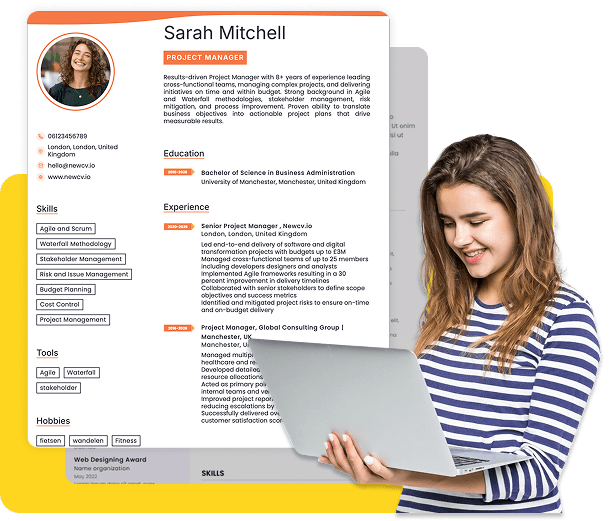
Use ATS-optimised Resume and resume templates that pass applicant tracking systems. Our Resume builder helps recruiters read, scan, and shortlist your Resume faster.

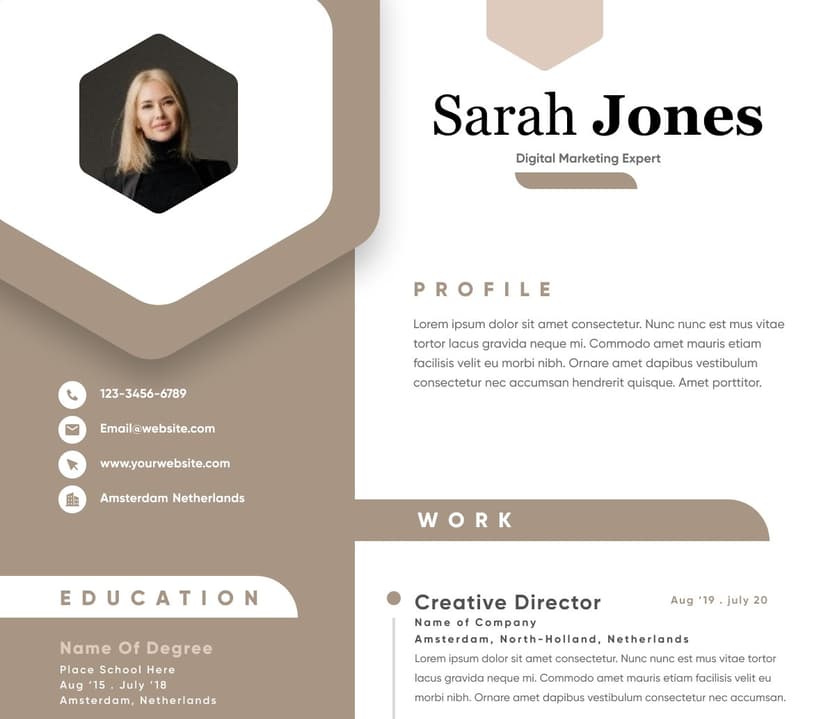
Use professional field-tested resume templates that follow the exact Resume rules employers look for.
Create Resume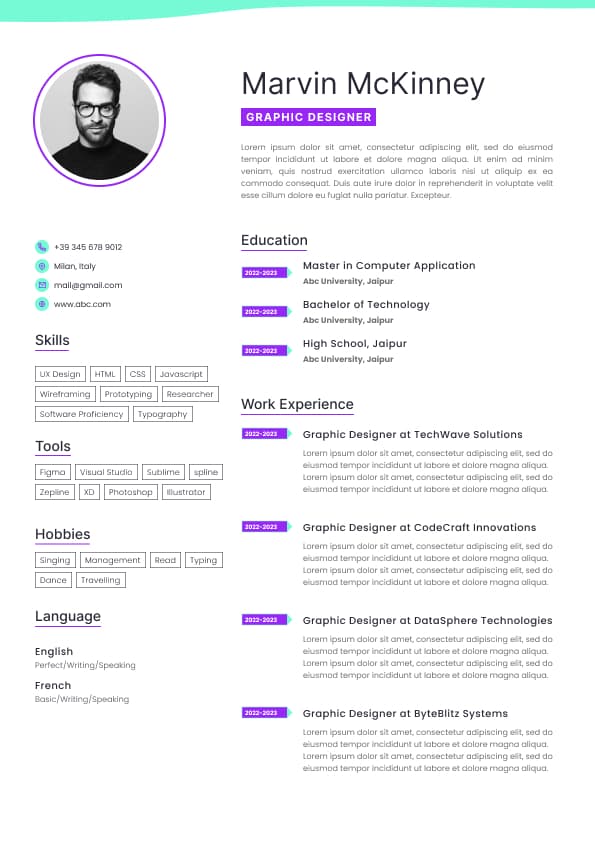
Use professional field-tested resume templates that follow the exact Resume rules employers look for.
Create ResumeIf your resume is not parsing correctly, your application can be rejected before a recruiter even sees it. In the Australian job market, most medium to large employers now use Applicant Tracking Systems (ATS) to screen, organise, and rank candidates. Resume parsing is the process where the ATS extracts information from your resume and converts it into searchable recruiter data.
A poorly formatted resume can cause major parsing errors. Your skills may not be recognised, job titles may disappear, dates can break, and important experience may never appear in recruiter searches. This is one of the biggest reasons qualified candidates fail to get interviews despite having strong backgrounds.
In Australia, resume parsing matters most for:
Corporate roles
Government applications
Healthcare organisations
Mining and engineering employers
Large enterprise companies
Recruitment agencies
Resume parsing is the technology used by ATS software to extract and categorise information from resumes automatically.
When you upload your resume online, the ATS attempts to identify:
Your name and contact details
Job titles
Employers
Employment dates
Skills
Qualifications
Certifications
Locations
Graduate programs
High-volume hiring environments
The reality is simple: if your resume cannot be parsed cleanly, your chances of getting shortlisted drop significantly.
Keywords
Industries
Software knowledge
The system then creates a structured candidate profile recruiters can search and filter.
Recruiters in Australia rarely read every application manually for high-volume roles. Instead, they search ATS databases using keywords, experience filters, locations, and qualifications. If the parser fails to extract your information correctly, you become far less visible.
Australian employers commonly use ATS platforms such as:
Workday
PageUp
SuccessFactors
Greenhouse
SmartRecruiters
Lever
Taleo
JobAdder
Bullhorn
iCIMS
Large organisations may receive hundreds or thousands of applications per role. Resume parsing allows recruiters to:
Filter candidates quickly
Search by skills or job titles
Identify mandatory qualifications
Rank applications
Manage compliance requirements
Reduce manual admin work
Government and enterprise employers in Australia are particularly ATS-heavy. Many recruitment agencies also rely heavily on parsed data because recruiters search candidate databases repeatedly long after the original application.
This means your resume is not just evaluated once. It may be searched months later for future opportunities.
One major misconception is that recruiters always view your original resume first.
In many ATS systems, recruiters initially see parsed fields such as:
Current job title
Years of experience
Skills extracted
Keywords matched
Employment history summary
Education
Certifications
If these fields are incomplete or inaccurate, your application can appear weaker than it actually is.
For example:
Weak Example
A graphic-heavy resume with icons, columns, and text boxes causes the ATS to misread employment dates and skills.
Result:
Recruiter search visibility drops
Experience appears fragmented
Keywords fail to match
Good Example
A clean, structured resume using standard headings and ATS-friendly formatting.
Result:
Accurate parsing
Strong keyword indexing
Higher recruiter visibility
This is why visually impressive resumes often perform poorly online.
The biggest ATS issue is over-designed resumes.
Common parsing problems include:
Text boxes
Tables
Multiple columns
Icons
Infographics
Header/footer content
Fancy timelines
Embedded graphics
Many ATS systems still struggle with these elements.
Australian recruiters consistently prefer resumes that are:
Clean
Structured
Easy to scan
ATS-compatible
Simple formatting almost always performs better.
ATS systems rely heavily on predictable section titles.
Avoid headings like:
My Journey
Career Snapshot
Why Me
Expertise Overview
Use standard headings instead:
Professional Experience
Employment History
Education
Skills
Certifications
Professional Summary
This improves parsing accuracy significantly.
Many candidates over-optimise resumes with excessive keyword repetition.
Recruiters can spot this immediately.
Keyword stuffing often creates:
Poor readability
Artificial language
Weak professional branding
Low recruiter trust
Modern ATS systems are becoming better at contextual matching, not just exact repetition.
Instead of stuffing keywords, align your experience naturally with the role requirements.
In Australia, PDF resumes are generally acceptable, but some ATS platforms still parse DOCX files more accurately.
Best practice:
Use DOCX unless the employer specifically requests PDF
Avoid scanned PDFs
Never upload image-based resumes
If the ATS cannot read the text layer properly, parsing fails.
Recruiters do not search ATS systems the same way candidates think.
They usually search:
Exact job titles
Technical systems
Certifications
Industry terminology
Mandatory licences
Compliance keywords
For example, an Australian HR recruiter may search:
“ER”
“Fair Work”
“Workday”
“Employee Relations”
“Industrial Relations”
A project manager recruiter may search:
“Prince2”
“Agile”
“PMO”
“Stakeholder Management”
“Infrastructure Projects”
If these terms are absent or buried, your visibility drops.
This is where most resume advice online completely misses the mark.
Recruiters rarely search broad terms.
Instead, they use combinations such as:
Job title + software
Industry + certification
Location + technical skill
Seniority + sector keyword
For example:
“Financial Accountant CPA Sydney”
“Civil Engineer Roads Brisbane”
“HR Advisor ER Melbourne”
“Business Analyst Salesforce”
Your resume needs to align with how recruiters actually search databases.
A strong ATS-friendly Australian resume usually follows this structure:
Include:
Full name
Mobile number
Professional email
LinkedIn URL
Australian location
Avoid:
Photos
Date of birth
Marital status
Full address
These are outdated in Australia.
Your summary should position you strategically for ATS and recruiter screening.
Strong summaries:
Match target job titles
Include core expertise
Mention years of experience
Align with employer priorities
Include both:
Technical skills
Industry-specific keywords
Do not create massive keyword dumps.
Group skills logically.
This section matters most for parsing.
Use:
Reverse chronological order
Clear job titles
Company names
Accurate dates
Bullet-point achievements
Avoid:
Paragraph-heavy formatting
Unclear promotions
Missing dates
Recruiters care heavily about career progression and stability in Australia.
Always include:
Qualification title
Institution
Completion year
Relevant certifications
For regulated industries, certifications are often ATS filter requirements.
A major mistake candidates make is optimising only for ATS.
Your resume must pass:
ATS parsing
Recruiter screening
Hiring manager review
A resume that is technically ATS-friendly but weak strategically still fails.
Australian recruiters evaluate:
Commercial relevance
Career progression
Stability
Industry alignment
Communication quality
Achievements
Cultural fit indicators
ATS optimisation alone does not get interviews.
Strategic positioning does.
The best resumes balance:
ATS compatibility
Recruiter readability
Strategic positioning
Commercial relevance
This is the difference between:
Being searchable
Being shortlisted
Many resumes parse correctly but still fail because they:
Sound generic
Lack measurable outcomes
Do not align with the role
Fail to position seniority properly
Government ATS systems are often stricter than private-sector systems.
Common issues include:
Missing keywords from selection criteria
Poorly structured experience
Lack of public-sector terminology
Weak capability alignment
Government recruiters often screen based on:
Capability frameworks
Mandatory criteria
Public-sector terminology
Policy and governance language
Resume parsing accuracy becomes especially important here because applications are frequently filtered heavily before review.
Many Australian candidates assume SEEK or LinkedIn applications bypass ATS systems.
They usually do not.
Applications from:
SEEK
Company career portals
Are often imported directly into ATS databases.
This means parsing issues still apply.
Your uploaded resume should always be ATS-optimised regardless of where you apply.
Common warning signs include:
Very low interview rates
No recruiter calls despite strong experience
Application portals displaying incorrect information
Broken employment dates
Missing skills after upload
Garbled formatting during application previews
A strong candidate with consistently poor response rates often has parsing problems.
You can improve resume parsing accuracy by:
Uploading your resume into ATS simulators
Testing DOCX and PDF versions
Checking how application portals extract your data
Reviewing parsed fields carefully
Comparing extracted keywords to target job ads
Never assume your formatting works correctly.
Always test it.
A common myth is that ATS systems automatically reject most resumes.
In reality, Australian recruiters usually configure ATS systems to:
Organise applications
Filter mandatory criteria
Search databases efficiently
Human recruiters still make final decisions.
However, parsing quality directly affects:
Search visibility
Keyword matching
Application ranking
Recruiter efficiency
Candidates with cleaner parsing gain a measurable advantage.
Based on real recruiter behaviour in Australia, the biggest factors are:
Clear positioning for a target role
ATS-friendly formatting
Strong keyword alignment
Relevant achievements
Accurate job titles
Industry-specific terminology
Commercially relevant experience
Easy readability
Candidates fail when resumes become:
Over-designed
Generic
Confusing
Keyword-heavy without strategy
Poorly structured
The most effective format is usually:
Clean single-column layout
Standard headings
Consistent fonts
Minimal graphics
Clear spacing
Logical structure
ATS-friendly DOCX file
Simple resumes consistently outperform heavily designed resumes in ATS environments.
Especially for:
Corporate roles
Professional services
Government
Healthcare
Mining
Engineering
Finance
Technology
Not online.
Visual resumes often parse poorly and reduce recruiter visibility.
Only when relevant and naturally integrated.
Keyword stuffing weakens credibility.
Recruiters still make hiring decisions.
ATS systems mainly improve workflow efficiency.
Not necessarily.
Some ATS systems still parse DOCX more accurately.
In Australian recruitment, clarity and relevance matter far more than visual styling.
The candidates who consistently secure interviews are not always the most experienced.
They are usually the candidates whose resumes:
Parse cleanly
Match recruiter searches
Position experience strategically
Align with role requirements
Communicate value quickly
Resume parsing is not just a technical issue.
It directly impacts your visibility, discoverability, and shortlist potential in the Australian job market.
A clean, strategically written, ATS-friendly resume gives recruiters confidence immediately. That confidence matters more than most candidates realise.


 Upload Resume
 Import from Linkedin