
Choose from a wide range of NEWCV resume templates and customize your NEWCV design with a single click.

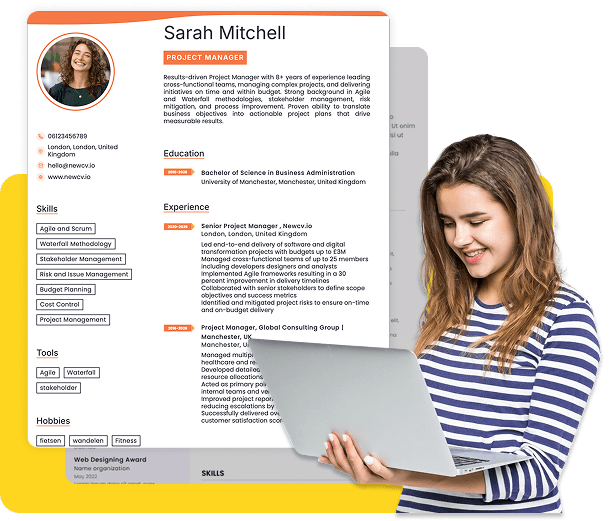
Use ATS-optimised Resume and resume templates that pass applicant tracking systems. Our Resume builder helps recruiters read, scan, and shortlist your Resume faster.

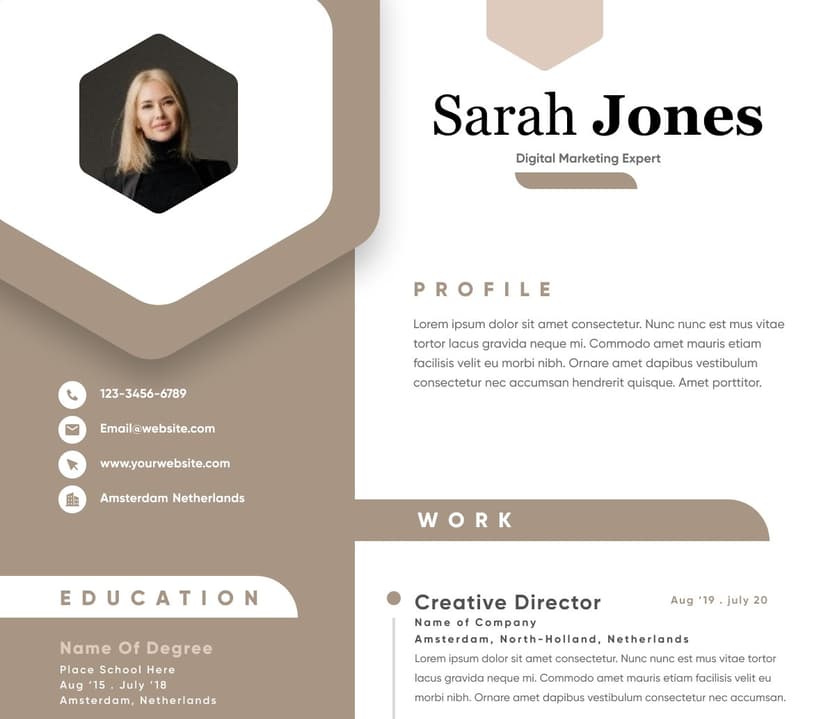
Use professional field-tested resume templates that follow the exact Resume rules employers look for.
Create Resume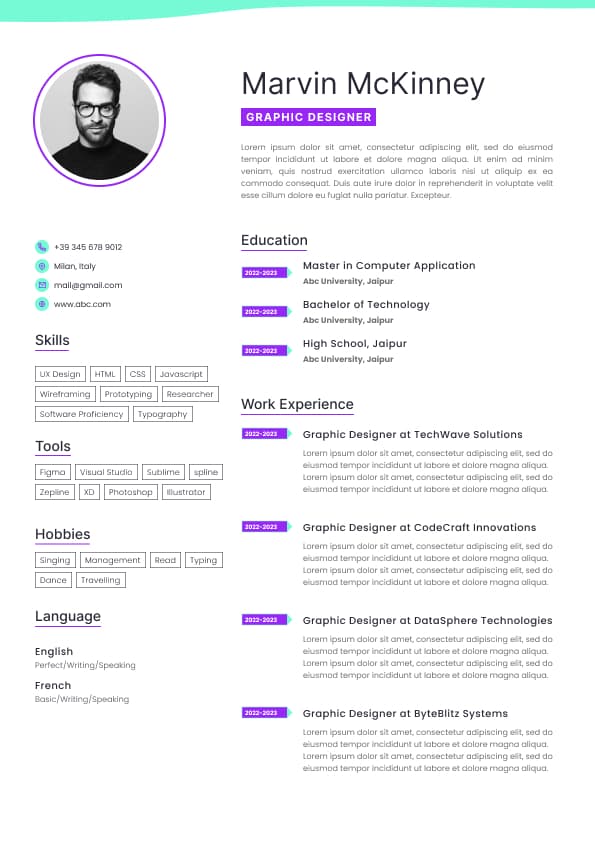
Use professional field-tested resume templates that follow the exact Resume rules employers look for.
Create ResumeThe impact depends on the role, the type of mistake, and how competitive the applicant pool is. A typo in a warehouse resume may not carry the same weight as a spelling mistake in a legal, government, marketing, administration, or client-facing role. But across almost every industry in Australia, repeated spelling mistakes reduce credibility and weaken recruiter confidence immediately.
The bigger issue is not usually the typo itself. It is what the typo signals to hiring managers:
• Lack of care
• Weak proofreading habits
• Poor communication standards
• Low professionalism
• Potential workplace risk in detail-heavy roles
If your resume contains spelling mistakes, many recruiters assume your work may contain mistakes too.
Australian hiring culture places a strong emphasis on professionalism without excessive formality. Recruiters generally expect resumes to be:
• Clear
• Well-structured
• Error-free
• Easy to scan quickly
• Written in strong professional English
Unlike some overseas markets where highly stylised resumes are common, Australian recruiters usually prioritise clarity, accuracy, and relevance over visual flair.
A spelling mistake disrupts that immediately.
In practical hiring terms, recruiters often spend less than 30 seconds on an initial resume scan. During that short window, obvious errors become disproportionately damaging because they are easy to notice.
Candidates often assume:
“I have strong experience, so a small typo won’t matter.”
Sometimes that is true.
But when recruiters compare two similarly qualified candidates, the cleaner and more polished resume almost always wins.
Most candidates misunderstand how resume screening actually works.
Recruiters are not sitting there trying to punish applicants for grammar.
They are trying to reduce hiring risk quickly.
When recruiters see spelling mistakes, they subconsciously ask:
• Will this person send error-filled client emails?
• Will they make mistakes in reports or documentation?
• Will they need excessive supervision?
• Did they rush this application?
• Do they genuinely care about this opportunity?
In Australia, hiring managers commonly view resumes as a reflection of workplace standards.
That is why spelling mistakes hurt more in:
• Administration
• Government
• Healthcare
• Legal
• Marketing
• Communications
• HR
• Executive support
• Project management
• Education
• Corporate professional services
In these industries, written communication is directly tied to job performance.
This is one of the biggest resume issues in Australia.
Candidates often unknowingly mix spelling systems throughout their resume.
Australian resumes should generally use:
• Organise instead of organize
• Analyse instead of analyze
• Behaviour instead of behavior
• Specialise instead of specialize
• Labour instead of labor
• Centre instead of center
• Programme in some contexts, depending on industry
Using American spelling is not always an automatic rejection, especially in tech or multinational companies. However, inconsistency creates a poor impression.
“Managed customer behavior and organised internal training programs.”
“Managed customer behaviour and organised internal training programmes.”
Consistency matters more than perfection.
Some mistakes are far more damaging because recruiters see them constantly.
This is one of the fastest ways to damage credibility.
“Excited to apply for the role at Wesfarmes.”
“Excited to apply for the role at Wesfarmers.”
Recruiters often interpret this as:
• Copy-paste applying
• Lack of genuine interest
• Carelessness
This creates instant doubt.
“Project Manger”
“Project Manager”
This happens more than candidates realise:
• Wrong email address
• Incorrect LinkedIn URL
• Incorrect phone number
• Broken hyperlinks
These mistakes are operationally damaging because recruiters may literally be unable to contact you.
Many candidates rely entirely on Microsoft Word or Grammarly.
That is not sufficient.
Spellcheck tools miss:
• Context errors
• Wrong word usage
• Industry terminology mistakes
• Formatting inconsistencies
• Australian English inconsistencies
“Managed pubic relations campaigns.”
Technically spelled correctly.
Disastrous in practice.
“Managed public relations campaigns.”
Human proofreading still matters.
Applicant Tracking Systems used across Australia can also be affected by spelling mistakes.
This is especially important for:
• Keywords
• Certifications
• Software names
• Technical skills
• Job titles
If you misspell a critical keyword, the ATS may not recognise it.
“Experiance with Microsoft Excell and Power BI.”
“Experience with Microsoft Excel and Power BI.”
This directly affects searchability inside recruiter databases.
A recruiter searching:
“Excel”
may never find your resume if the keyword is misspelled.
Certain sections receive more recruiter attention and therefore carry higher risk.
This is one of the first things recruiters scan.
Errors here damage first impressions immediately.
This section influences whether recruiters continue reading.
Poor spelling here signals weak communication quality.
Mistakes in software, certifications, or technical terms look especially concerning.
Errors in company names or role titles reduce credibility.
Incorrect spelling of qualifications can look careless or even dishonest.
Many resumes contain inconsistent language patterns that weaken professionalism.
•Switching between UK and US spelling
• Different date formats
• Inconsistent punctuation
• Random capitalisation
• Changing terminology across sections
“Managed Customer Service operations and improved customer behaviour.”
“Managed customer service operations and improved customer behaviour.”
Consistency creates professionalism.
Inconsistency creates friction during screening.
Sometimes yes.
But context matters.
A single minor typo will not automatically destroy every application.
However, recruiters evaluate resumes comparatively.
If recruiters have:
• 120 applicants
• 20 strong candidates
• Limited interview spots
Small quality differences suddenly matter a lot.
In high-volume Australian recruitment markets, spelling mistakes become an easy elimination factor.
This is particularly true for:
• Graduate roles
• Government jobs
• Entry-level corporate roles
• Remote jobs
• Highly competitive professional positions
Some industries care less about minor spelling errors than others.
Generally more forgiving:
• Warehousing
• Construction labour
• Some trades
• Delivery driving
• Manual labour roles
Generally less forgiving:
• Government
• Corporate roles
• Legal
• HR
• Healthcare administration
• Marketing
• Communications
• Education
• Executive support
• Consulting
That does not mean spelling mistakes are acceptable in any industry.
It means the hiring risk calculation changes depending on the role.
Most candidates proofread incorrectly.
Reading silently on the same screen where you wrote the resume is ineffective because your brain auto-corrects errors.
•Read the resume aloud slowly
• Print the resume physically
• Change the font temporarily
• Review section-by-section instead of all at once
• Proofread backwards line-by-line
• Check names and job titles separately
• Use Australian English language settings
• Ask another person to review it
The strongest resumes are usually reviewed multiple times by different people.
Australian recruiters repeatedly see the same avoidable issues.
•“Manger” instead of “Manager”
• “Experiance” instead of “Experience”
• “Recieve” instead of “Receive”
• “Communcation” instead of “Communication”
• Incorrect capitalisation of software names
• Mixing “organisation” and “organization”
• Misspelling employer names
• Inconsistent tense usage
These mistakes are common partly because candidates rush applications.
Mass-applying often reduces quality dramatically.
Many candidates focus on quantity over quality.
Australian recruiters can often identify rushed resumes immediately.
Common signs:
• Spelling mistakes
• Incorrect company names
• Generic summaries
• Broken formatting
• Inconsistent terminology
• Unfinished edits
• Leftover content from another application
A polished resume signals professionalism.
A rushed resume signals desperation.
Recruiters screen resumes.
Hiring managers imagine working with the person daily.
That distinction matters.
A hiring manager may think:
“If this candidate cannot proofread a two-page resume, what happens when they handle client work?”
This becomes especially important in:
• Client-facing environments
• Documentation-heavy roles
• Compliance-focused industries
• Leadership positions
Attention to detail is often inferred from resume quality before interviews even happen.
Not all spelling mistakes carry equal weight.
•One minor typo hidden deep in the resume
• Small punctuation inconsistencies
• Rare industry-specific terminology confusion
•Multiple spelling errors
• Errors in headings
• Errors in company names
• Errors in contact details
• Errors in job titles
• Obvious copy-paste mistakes
• Inconsistent language systems
Recruiters look for patterns.
One typo may be overlooked.
Five spelling mistakes create a credibility issue.
Strong candidates treat resumes like professional business documents.
A better quality-control process includes:
•Run Australian English spellcheck
• Review all headings separately
• Check all dates carefully
• Verify company names
• Confirm hyperlinks work
• Check PDF formatting on mobile and desktop
• Read the document aloud
• Remove inconsistent spacing or punctuation
• Save using a professional file name
“James_Smith_Project_Manager_Resume.pdf”
Not:
“Resume FINAL NEW FINAL2.pdf”
These details shape recruiter perception more than candidates realise.
AI tools can help identify:
• Typos
• Repetition
• Clarity issues
• Grammar problems
But AI tools also introduce risk.
Common AI-generated problems include:
• American spelling conversion
• Overwritten corporate language
• Robotic phrasing
• Incorrect industry terminology
• Generic wording that sounds artificial
Australian recruiters increasingly recognise over-processed AI resumes.
The best approach is:
• Use tools for assistance
• Apply human judgement afterwards
• Keep language natural and realistic
Most Australian recruiters are not looking for perfect literary writing.
They want:
• Clear communication
• Professional presentation
• Accuracy
• Relevance
• Easy scanning
• Credibility
• Attention to detail
A clean, error-free resume creates confidence.
Confidence gets interviews.


 Upload Resume
 Import from Linkedin