
Choose from a wide range of NEWCV resume templates and customize your NEWCV design with a single click.

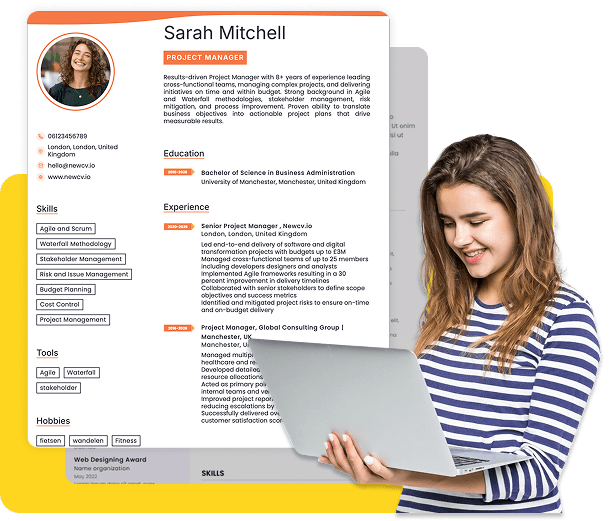
Use ATS-optimised Resume and resume templates that pass applicant tracking systems. Our Resume builder helps recruiters read, scan, and shortlist your Resume faster.

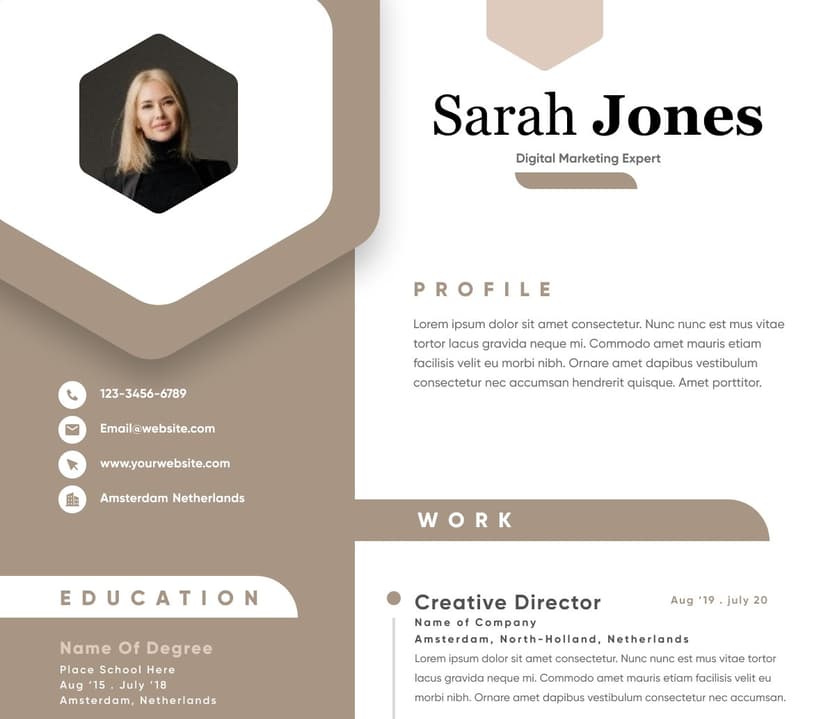
Use professional field-tested resume templates that follow the exact Resume rules employers look for.
Create Resume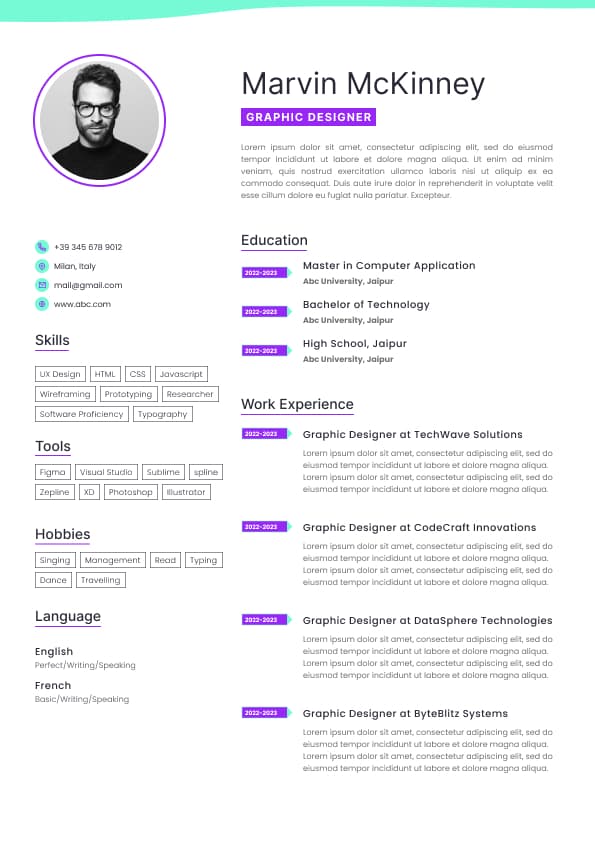
Use professional field-tested resume templates that follow the exact Resume rules employers look for.
Create ResumeMost Australian recruiters can spot resume fluff within seconds. Words like “hardworking”, “team player”, “results-driven”, and “go-getter” have become so overused that they now work against candidates rather than helping them.
The issue is not the words themselves. The issue is that most candidates use buzzwords instead of evidence.
Hiring managers across Australia are screening resumes quickly, especially in competitive sectors like administration, project management, sales, operations, tech, healthcare, and corporate services. They are looking for proof of capability, commercial value, and role relevance. Generic descriptors without measurable examples often signal weak self-awareness, low communication quality, or a lack of genuine achievements.
If your resume relies heavily on buzzwords, there is a strong chance it sounds similar to hundreds of other applicants.
The strongest Australian resumes replace vague claims with:
Clear outcomes
Specific achievements
Quantifiable impact
Practical examples
Australian hiring culture generally values direct communication, credibility, and practical capability over exaggerated self-promotion.
Recruiters are not impressed by inflated corporate language. In fact, many hiring managers actively distrust resumes filled with generic buzzwords because they often hide weak experience or unclear contributions.
A resume overloaded with buzzwords typically creates three problems:
When candidates describe themselves as:
“Dynamic”
“Innovative”
“Highly motivated”
“Results-oriented”
“Passionate professional”
without evidence, recruiters assume the claims are untested.
Australian employers usually prefer grounded, factual communication. Over-selling yourself can make your resume feel less trustworthy.
Industry-relevant language
Evidence of decision-making and ownership
This is where most candidates lose interviews before they even get shortlisted.
Your resume has limited attention time.
Many recruiters scan resumes for:
Relevant experience
Industry keywords
Achievements
Scope of responsibility
Commercial impact
Technical capability
Every vague buzzword replaces space that could demonstrate real value.
Most applicants use the same language because they copy resume templates online.
This creates resumes filled with identical phrases such as:
“Excellent communication skills”
“Works well independently and in a team”
“Fast learner”
“Problem solver”
“Detail-oriented”
Recruiters stop emotionally processing these phrases because they see them constantly.
The candidates who stand out are the ones who explain:
What they improved
What they delivered
What problems they solved
What outcomes they achieved
These words are not automatically fatal. The problem is that most candidates use them without proof.
This tells recruiters nothing measurable.
Every applicant claims to be hardworking.
Weak Example
“Hardworking administration professional with strong organisational skills.”
Good Example
“Managed high-volume scheduling and client coordination across 4 departments while maintaining 98% appointment accuracy.”
The second version proves work ethic through performance.
Australian employers do value collaboration. However, simply claiming to be a team player is meaningless without context.
Weak Example
“Excellent team player who works well with others.”
Good Example
“Collaborated with finance, operations, and procurement teams to reduce invoice processing delays by 30%.”
This demonstrates actual cross-functional collaboration.
This phrase appears on thousands of resumes every week.
If you are genuinely results-driven, show the result.
Weak Example
“Results-driven sales professional.”
Good Example
“Exceeded quarterly sales targets by 18% and secured $420K in new business revenue within 12 months.”
Recruiters trust evidence, not labels.
This phrase often feels forced and outdated in Australia.
It usually signals resume filler rather than capability.
Instead of claiming initiative, demonstrate it.
Weak Example
“Motivated go-getter with a positive attitude.”
Good Example
“Identified process inefficiencies in customer onboarding and introduced a revised workflow that reduced processing time from 5 days to 2.”
This is one of the biggest resume mistakes candidates make.
Communication skills should be obvious from:
Resume clarity
Writing quality
Stakeholder examples
Client interaction examples
Leadership examples
Do not tell recruiters you communicate well. Demonstrate it.
Weak Example
“Excellent communication and interpersonal skills.”
Good Example
“Prepared executive reports for senior leadership and managed client communications across 40+ active accounts.”
Many candidates use this phrase incorrectly.
True strategic work involves:
Decision-making
Commercial thinking
Planning
Forecasting
Operational improvement
Long-term business impact
Without evidence, the phrase sounds inflated.
Weak Example
“Strategic thinker with leadership qualities.”
Good Example
“Developed workforce scheduling strategy that reduced overtime costs by 22% during peak operational periods.”
Many candidates mistakenly believe ATS software ranks resumes based on generic corporate language.
Modern ATS systems primarily scan for:
Relevant job titles
Industry terminology
Technical skills
Certifications
Software platforms
Keywords from the job ad
Location relevance
Experience alignment
Words like:
“Passionate”
“Driven”
“Motivated”
“Synergistic”
“Innovative thinker”
usually provide no ATS advantage.
In many cases, they dilute keyword relevance because they take attention away from actual searchable skills and experience.
For example, this statement is weak for ATS and recruiters:
Weak Example
“Highly motivated professional with a passion for customer service.”
This version is stronger:
Good Example
“Delivered customer support across phone, email, and CRM channels while maintaining 94% customer satisfaction scores.”
The second version includes operational context and industry relevance.
Australian recruiters generally prioritise clarity over hype.
The strongest resumes answer four silent recruiter questions quickly:
Recruiters want evidence that you can improve outcomes, reduce risk, save time, generate revenue, support customers, or improve operations.
Focus on:
Efficiency improvements
Revenue outcomes
Cost reductions
Customer outcomes
Compliance improvements
Operational performance
Delivery success
Hiring managers assess:
Complexity handled
Stakeholder exposure
Industry knowledge
Systems used
Decision-making level
Accountability
Strong resumes make seniority obvious through scope and responsibility.
Australian hiring culture usually responds better to grounded confidence than exaggerated claims.
Candidates who sound overly corporate or inflated often create doubt.
Strong resumes feel:
Specific
Clear
Practical
Commercially aware
Outcome-focused
Resume writing itself is a communication test.
If your resume contains:
Buzzword-heavy language
Long vague summaries
Generic claims
Unclear achievements
Empty adjectives
recruiters may assume your workplace communication is also unclear.
The best resumes replace adjectives with evidence.
A simple framework works well:
Instead of saying:
“Reliable”
“Efficient”
“Organised”
“Leadership skills”
show evidence of reliability, efficiency, organisation, or leadership.
Metrics immediately increase credibility.
Useful metrics include:
Revenue generated
Cost savings
Time reductions
Team size
Customer satisfaction scores
Project budgets
Volume handled
Growth percentages
Compliance improvements
Even approximate commercial impact is stronger than generic language.
Strong bullet points usually follow this structure:
Action + Context + Result
For example:
“Implemented revised stock control procedures across two warehouse locations, reducing inventory discrepancies by 17%.”
This communicates:
Initiative
Operational capability
Business impact
without using buzzwords.
Some commonly criticised words are acceptable if they are backed by evidence.
For example:
Leadership
Analytical
Collaborative
Client-focused
Commercially minded
The key difference is whether the resume proves the claim.
“Strong leadership and organisational skills.”
“Led a team of 12 customer service staff across rotating shifts while maintaining SLA performance above target for 9 consecutive months.”
The second version validates leadership capability naturally.
Many candidates remove obvious buzzwords but still write vague content.
These subtle problems are extremely common in Australian resumes.
Statements like:
“Responsible for administration tasks”
“Handled customer enquiries”
“Managed projects”
lack depth and competitive value.
Recruiters want:
Scale
Complexity
Outcome
Environment
Impact
One of the weakest resume sections is often the summary at the top.
Most summaries sound interchangeable.
Weak Example
“Motivated and results-driven professional seeking a challenging opportunity.”
This says almost nothing.
Good Example
“Operations coordinator with 6 years’ experience across logistics and supply chain environments, specialising in workflow optimisation, supplier coordination, and inventory accuracy improvements.”
This creates positioning immediately.
Words like:
“Synergy”
“Thought leadership”
“Innovative solutions”
“Disruptive mindset”
“Value-add professional”
often damage credibility in Australian hiring environments.
Most hiring managers prefer practical language over corporate theatre.
Some industries tolerate corporate language more than others.
Consulting, finance, and enterprise environments may accept some strategic terminology.
However, even in these sectors, recruiters still expect measurable evidence.
Practical industries typically reject buzzword-heavy resumes quickly.
Hiring managers want:
Licences
Safety compliance
Technical competency
Productivity
Reliability
Equipment knowledge
Direct language performs better.
Tech recruiters often dislike generic soft-skill language unless supported by:
Technical outcomes
Delivery metrics
Product impact
Engineering contribution
Process improvements
Buzzwords around compassion and care are common but often overused.
Strong candidates demonstrate:
Patient outcomes
Compliance standards
Clinical environments
Caseload management
Stakeholder coordination
rather than relying on emotional descriptors alone.
Strong resumes usually feel:
Clear
Commercially aware
Specific
Grounded
Outcome-focused
Easy to scan
Credible
They avoid:
Excessive self-praise
Inflated corporate language
Generic descriptors
Empty claims
The best resumes sound like someone who understands their value without overselling it.
That balance matters heavily in Australian hiring culture.
“Highly motivated team player with excellent communication skills and a strong work ethic.”
“Supported daily operations across a fast-paced retail environment, consistently exceeding customer satisfaction targets while training new staff members on POS and inventory procedures.”
The second version demonstrates:
Communication
Teamwork
Reliability
Operational capability
Initiative
without using empty labels.
“Results-oriented project coordinator with leadership abilities.”
“Coordinated multi-site infrastructure projects valued at up to $1.8M, managing contractor schedules, stakeholder updates, and compliance documentation.”
This sounds significantly more credible and senior.
Most recruiters mentally test resumes using one simple question:
“Can this candidate prove what they are claiming?”
Buzzwords fail because they usually lack proof.
Strong resumes consistently provide:
Context
Evidence
Outcomes
Relevance
Credibility
When recruiters can clearly understand your capability quickly, your chances of progressing improve dramatically.


 Upload Resume
 Import from Linkedin