
Choose from a wide range of NEWCV resume templates and customize your NEWCV design with a single click.

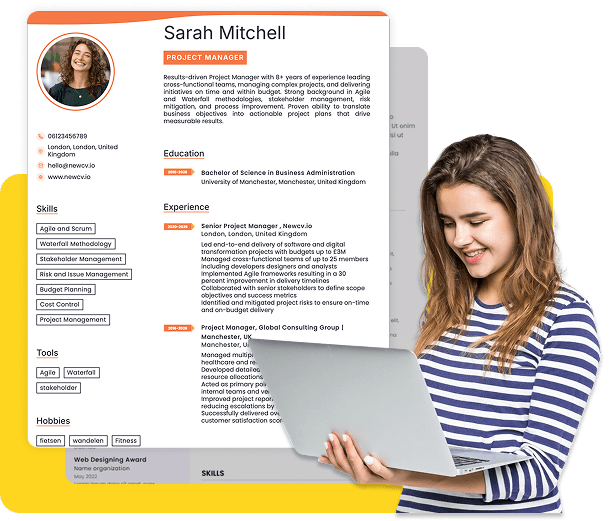
Use ATS-optimised Resume and resume templates that pass applicant tracking systems. Our Resume builder helps recruiters read, scan, and shortlist your Resume faster.

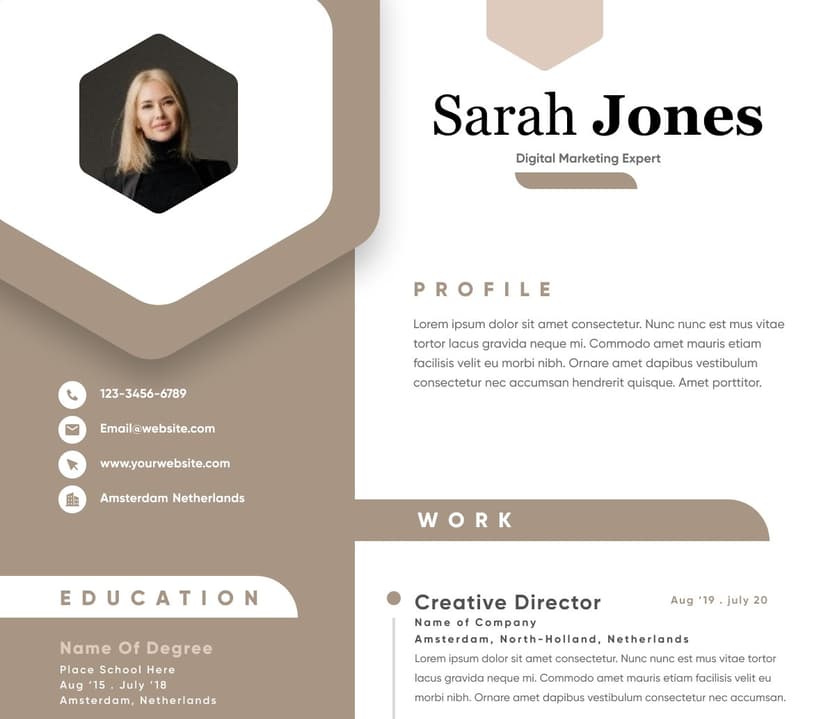
Use professional field-tested resume templates that follow the exact Resume rules employers look for.
Create Resume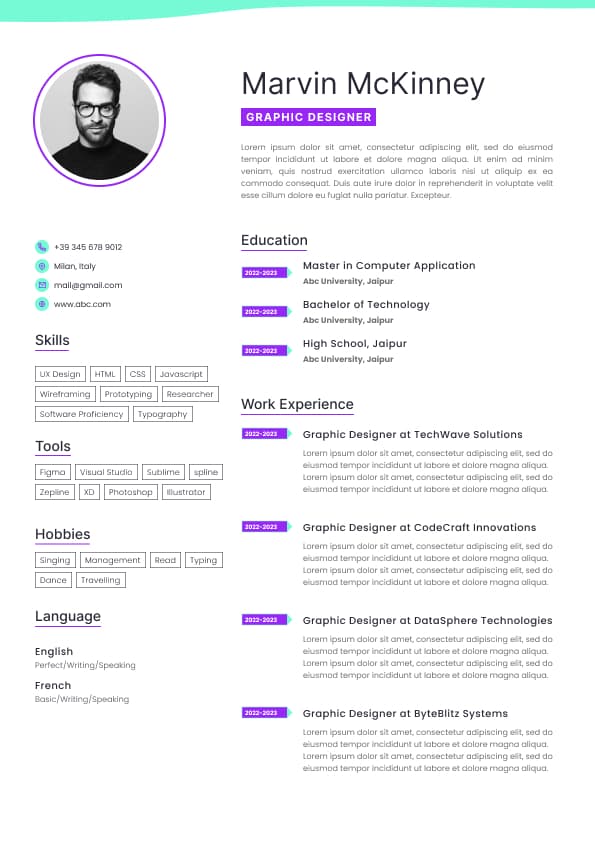
Use professional field-tested resume templates that follow the exact Resume rules employers look for.
Create ResumeA strong disability support worker resume in Australia needs to do three things immediately:
Prove you can safely support vulnerable clients
Show you understand person-centred care and NDIS expectations
Demonstrate reliability, emotional maturity, and practical support skills
Most applicants fail because their resumes are too generic. They list duties instead of outcomes, overload the resume with soft skills, or use aged care language that does not fully align with disability support roles.
Australian recruiters and disability service providers screen resumes fast. In many cases, your resume gets less than 30 seconds before a decision is made. Hiring managers are looking for evidence that you can work independently, handle complex behaviours professionally, communicate with families and care teams, and maintain proper documentation and compliance standards.
The strongest resumes are specific, practical, and aligned with the realities of frontline support work in Australia’s disability sector.
Disability support recruitment in Australia is highly practical. Employers are not hiring based on personality alone. They are assessing risk, client safety, reliability, and whether you can represent their organisation professionally in client homes and community settings.
Most recruiters evaluate resumes using these core criteria:
Relevant disability support experience
NDIS understanding and compliance awareness
Behavioural support capability
Manual handling or personal care experience
Communication and incident reporting skills
Reliability and availability
Emotional resilience and professionalism
Driver’s licence and transport access
Required certifications and checks
Hiring managers also look for evidence that you can work with minimal supervision. Many support workers operate independently in community settings, SIL homes, or client residences. Employers want confidence that you can make safe decisions without constant oversight.
The best format is a reverse chronological resume.
Australian disability employers generally prefer:
Clear professional summary
Key skills section
Work experience section with achievements and responsibilities
Certifications and compliance checks
Education and training
Avoid overly designed templates. Most disability providers use ATS systems or internal recruitment software. Fancy formatting often breaks resume parsing and creates readability issues.
Your resume should ideally be:
2 pages for most candidates
3 pages maximum for highly experienced workers
Easy to scan quickly
Written in plain professional language
Focused on practical capability
Your professional summary should immediately position you as safe, reliable, client-focused, and experienced in disability support environments.
Weak summaries are vague and generic.
Weak Example
“Hardworking support worker with good communication skills looking for a new opportunity.”
This says nothing meaningful.
Good Example
“Compassionate and reliable Disability Support Worker with 4+ years of experience supporting NDIS participants with intellectual disabilities, autism, psychosocial disabilities, and complex behaviours. Skilled in personal care, community access, medication assistance, behavioural support, and documentation. Known for building strong client relationships while maintaining professional boundaries and delivering person-centred support.”
This works because it gives:
Years of experience
Client types
Practical support capabilities
NDIS alignment
Professional positioning
The best disability support worker resumes balance technical support skills with practical frontline capability.
Strong examples include:
Personal care support
Manual handling
Medication assistance
Community access support
Behaviour support implementation
Autism support
Mental health support
Epilepsy management
Hoist transfers
Incident reporting
Progress notes and documentation
Person-centred care
NDIS compliance
Risk management
Behavioural de-escalation
Verbal and non-verbal communication support
Meal preparation
Social support and engagement
Mobility assistance
Client transport
Do not stuff your resume with every possible keyword. Recruiters can tell when candidates artificially load skills sections for ATS purposes.
The skills listed must match your actual experience.
This is where most resumes fail.
Many candidates simply list duties like:
Assisted clients with daily living
Helped with personal care
Supported community access
That tells recruiters almost nothing.
Strong resumes show context, complexity, and impact.
Hiring managers want to understand:
What types of clients you supported
How independently you worked
Whether you handled challenging situations
What environments you worked in
Whether you understand compliance and documentation
How you contributed to client outcomes
A high-performing bullet point usually includes:
Client type
Support type
Environment
Complexity level
Outcome or responsibility
Supported NDIS participants with autism, intellectual disabilities, and complex behavioural needs across SIL and community environments
Delivered personal care, medication assistance, meal preparation, and mobility support while maintaining dignity and client independence
Implemented positive behaviour support strategies in line with individual behaviour support plans and organisational protocols
Maintained accurate progress notes, incident reports, and medication documentation in compliance with NDIS practice standards
Assisted clients with community participation, appointments, shopping, and social engagement to improve confidence and independence
Managed challenging behaviours using trauma-informed and person-centred support approaches
Collaborated with allied health professionals, families, and support coordinators to ensure continuity of care
These bullets are stronger because they reflect real operational disability support work in Australia.
Sarah Mitchell
Melbourne, VIC
0400 123 456
Compassionate and dependable Disability Support Worker with over 5 years of experience supporting NDIS participants across community access, SIL homes, and in-home care environments. Skilled in personal care, behavioural support, manual handling, medication assistance, and trauma-informed support. Strong understanding of NDIS standards, documentation requirements, and person-centred care principles. Recognised for professionalism, reliability, and building positive client relationships while maintaining clear boundaries.
Personal care and hygiene support
Community access support
Behavioural support implementation
Manual handling and hoist transfers
Medication assistance
Autism and intellectual disability support
Mental health support
Incident reporting and documentation
NDIS compliance
Risk assessment awareness
Communication support strategies
Meal preparation and domestic assistance
Positive behaviour support
Client transport and appointment assistance
Disability Support Worker
LifePath Support Services – Melbourne VIC
January 2022 – Present
Support NDIS participants with intellectual disabilities, autism spectrum disorder, psychosocial disabilities, and mobility impairments across SIL and community settings
Deliver personal care, medication prompts, meal preparation, transport assistance, and community participation support
Implement behaviour support strategies in accordance with individual support plans and organisational procedures
Maintain accurate daily progress notes, incident reports, and medication documentation using internal reporting systems
Support clients to achieve independence goals related to social participation, daily living, and community engagement
Respond professionally to behavioural escalation using trauma-informed communication and de-escalation techniques
Collaborate with support coordinators, families, and allied health professionals to ensure consistent care delivery
Support Worker
CarePlus Disability Services – Melbourne VIC
March 2020 – December 2021
Assisted clients with daily living activities including showering, dressing, meal preparation, and mobility support
Supported community access activities including medical appointments, shopping, and recreational outings
Worked independently in client homes while maintaining client safety and professional boundaries
Assisted with manual handling and transfer support using approved equipment and procedures
Built strong rapport with clients and families through consistent, respectful, and person-centred support
Certificate III in Individual Support (Disability)
NDIS Worker Screening Check
Working With Children Check
First Aid and CPR Certificate
Manual Handling Training
Medication Administration Training
Certificate III in Individual Support (Disability)
TAFE Victoria
Many larger providers use Applicant Tracking Systems.
ATS systems scan for:
Relevant job titles
NDIS terminology
Certifications
Skills alignment
Compliance requirements
However, ATS optimisation is often misunderstood.
Keyword stuffing does not improve hiring outcomes.
Recruiters still manually review resumes after ATS screening. If your resume reads unnaturally, it creates distrust immediately.
Instead, naturally include terms commonly used in disability support job ads:
NDIS participants
Person-centred care
Community access
Behaviour support
SIL
Manual handling
Medication assistance
Progress notes
Complex behaviours
Positive behaviour support
The goal is semantic alignment, not keyword repetition.
Many resumes rely heavily on vague phrases like:
Caring
Passionate
Friendly
Team player
These do not differentiate candidates.
Recruiters care far more about demonstrated capability.
Disability support and aged care overlap, but they are not identical sectors.
A disability-focused resume should emphasise:
Independence support
Community participation
Behavioural support
Capacity building
NDIS alignment
Person-centred outcomes
Not just physical care tasks.
Some resumes fail simply because mandatory checks are missing.
Always include:
NDIS Worker Screening Check
Working With Children Check if relevant
First Aid and CPR
Driver’s licence if applicable
These are major hiring filters in Australia.
Recruiters do not need excessive detail about unrelated jobs from 10 years ago.
Prioritise relevance.
Older unrelated roles can be shortened significantly.
Many disability providers hire entry-level support workers, especially due to workforce shortages.
However, entry-level resumes still need positioning strategy.
If you lack formal experience, highlight:
Placement experience
Volunteer work
Mental health support exposure
Community services experience
Relevant transferable skills
Communication capability
Emotional resilience
Reliability
The key is demonstrating suitability for frontline support environments.
“Recent Certificate III in Individual Support (Disability) graduate with practical placement experience supporting clients with mobility and communication needs. Strong understanding of person-centred care, professional boundaries, and NDIS support environments. Seeking to contribute compassionate, reliable, and client-focused support within a disability services organisation.”
This works because it sounds employable and realistic.
There are several resume red flags disability employers rarely say publicly.
Excessive emotional wording can raise professionalism concerns.
Avoid phrases like:
“I love helping people”
“My passion is caring for everyone”
“I treat clients like family”
Professional care work requires boundaries and emotional regulation.
If recruiters cannot understand:
Client types
Support environments
Responsibilities
Risk exposure
They often assume limited experience.
Frequent short-term roles are common in disability support, but unexplained instability can still create concern.
If applicable, clarify:
Casual agency work
Contract-based roles
Study-related scheduling
Many recruiters are now spotting generic AI language immediately.
Overly polished, repetitive, or unnatural wording reduces trust.
Strong resumes sound specific, grounded, and operationally realistic.
Different disability employers prioritise different capabilities.
Focus on:
Behavioural support
Documentation
Medication administration
Shift work capability
Crisis management
Focus on:
Independence support
Transport
Communication skills
Social participation support
Focus on:
De-escalation
Trauma-informed support
Positive behaviour support
Incident reporting
Focus on:
Psychosocial disability support
Emotional regulation support
Recovery-oriented approaches
Professional boundaries
Tailoring matters because recruiters screen based on operational fit, not just general experience.
For disability support jobs in Australia, cover letters are often optional but still valuable.
A strong cover letter can help if:
You are entry-level
You are changing industries
You have gaps in employment
You are applying for behavioural or complex support roles
However, the resume still carries most of the hiring weight.
If your resume is weak, the cover letter will not save the application.
The best disability support worker resumes in Australia feel practical, trustworthy, and operationally credible.
Recruiters are not looking for perfect corporate writing.
They are looking for candidates who appear:
Safe
Reliable
Professional
Calm under pressure
Capable of independent support work
Aligned with person-centred care principles
Your resume should make it easy for employers to visualise you supporting clients safely and professionally from day one.
That is what gets interviews.
Supported non-verbal clients using communication aids and alternative communication strategies


 Upload Resume
 Import from Linkedin