
Choose from a wide range of NEWCV resume templates and customize your NEWCV design with a single click.

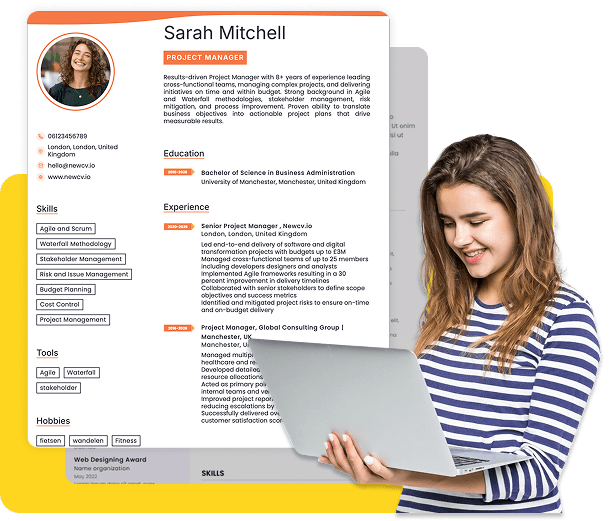
Use ATS-optimised Resume and resume templates that pass applicant tracking systems. Our Resume builder helps recruiters read, scan, and shortlist your Resume faster.

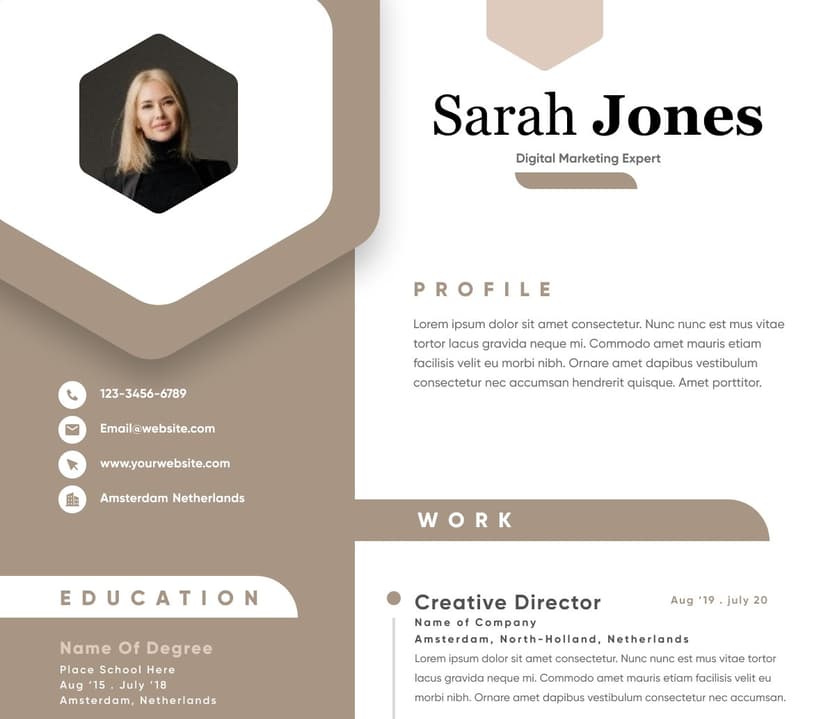
Use professional field-tested resume templates that follow the exact Resume rules employers look for.
Create Resume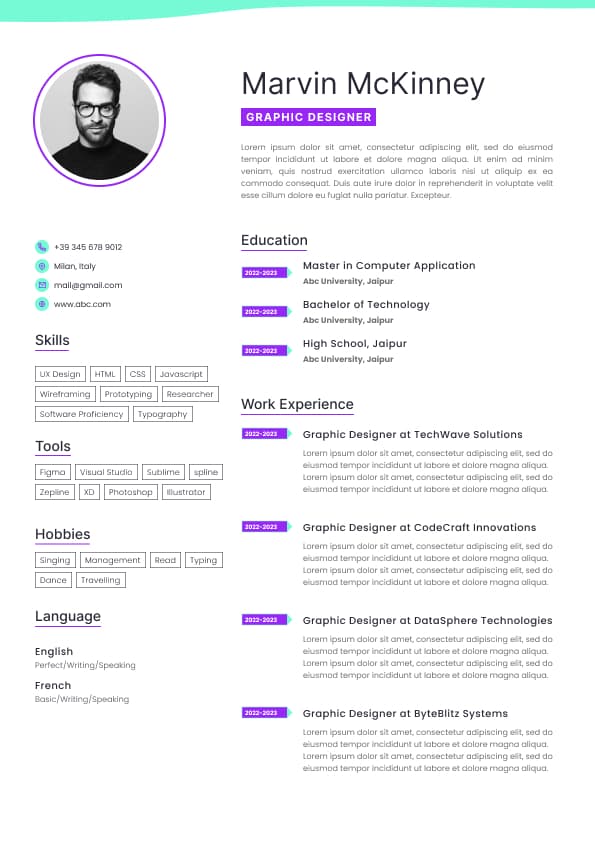
Use professional field-tested resume templates that follow the exact Resume rules employers look for.
Create ResumeMost Australian employers now use Applicant Tracking Systems (ATS) to filter resumes before a recruiter or hiring manager ever sees them. That means the keywords on your resume directly affect whether you get shortlisted or rejected.
But most candidates misunderstand how resume keywords actually work.
Stuffing resumes with random buzzwords does not improve ATS performance. In fact, poorly targeted keyword usage is one of the fastest ways to make a resume look generic, junior, or AI-generated. In the Australian job market, recruiters are looking for keyword relevance, role alignment, and evidence of capability, not keyword density.
The strongest resumes use strategically selected keywords that match:
The exact job title
Core responsibilities
Required systems and tools
Industry terminology
Resume keywords are the specific words, phrases, skills, systems, qualifications, and industry terms employers use to identify suitable candidates.
These keywords are usually pulled directly from:
Job ads
Position descriptions
ATS search filters
Recruiter sourcing searches
Hiring manager requirements
Industry-standard terminology
In Australia, resume keywords typically fall into several categories:
These help ATS systems and recruiters quickly understand role alignment.
Examples:
Seniority level
Australian hiring language
This guide explains how resume keywords work in Australia, how recruiters actually evaluate them, how ATS systems screen resumes, and how to identify the right keywords for your role without sounding robotic or keyword-stuffed.
Project Manager
Registered Nurse
Civil Engineer
Customer Success Manager
HR Business Partner
Business Analyst
Your title matters more than many candidates realise. If your current title is internal or unclear, recruiters may struggle to match your experience to the role.
These are among the highest-weighted ATS keywords.
Examples:
Salesforce
Xero
MYOB
SAP
AutoCAD
Power BI
Jira
Python
Azure
Workday
Australian recruiters often search directly by systems because they reduce onboarding risk.
These show sector familiarity and practical experience.
Examples:
WHS compliance
Stakeholder engagement
Financial reporting
Agile delivery
Contract administration
Case management
NDIS
Procurement
Payroll processing
Especially important in regulated Australian industries.
Examples:
CPA Australia
White Card
First Aid Certificate
AHPRA registration
Cert IV
Bachelor of Nursing
Chartered Accountant
These should support evidence, not exist as standalone filler.
Weak:
Better:
Australian recruiters prefer demonstrated soft skills rather than vague descriptors.
One of the biggest misconceptions is that ATS systems “score” resumes based purely on keyword volume.
Modern ATS platforms used in Australia are more nuanced.
Popular ATS platforms include:
Workday
PageUp
SuccessFactors
Greenhouse
Lever
SmartRecruiters
JobAdder
Most systems primarily do three things:
Parse resume information
Organise candidates
Support recruiter keyword searches
The recruiter still makes the hiring decision.
This matters because many candidates optimise for “robots” while forgetting the resume still needs to convince a human.
Recruiters commonly search ATS databases using combinations like:
“Business Analyst” AND “Agile”
“Power BI” AND “SQL”
“Civil Engineer” AND “12D”
“Payroll” AND “Chris21”
“HR Advisor” AND “ER/IR”
If your resume lacks those terms entirely, you may never appear in recruiter searches.
But keyword matching alone is not enough.
A recruiter also evaluates:
Career progression
Stability
Industry relevance
Seniority alignment
Scope of responsibility
Commercial impact
Communication quality
A keyword-heavy resume with weak substance rarely gets shortlisted.
This is one of the fastest ways to make your resume look manufactured.
Recruiters immediately notice resumes that mirror job ads line-for-line.
It creates concerns about:
Authenticity
Real capability
AI-generated content
Lack of actual experience
Use job ads to identify themes and terminology, not to duplicate content.
Overusing keywords damages readability and recruiter trust.
Weak Example
“Experienced project manager with project management experience managing projects using project management methodologies.”
This sounds unnatural and signals low-quality resume writing.
Good Example
“Led cross-functional infrastructure projects valued at $8M+ using Agile and hybrid delivery frameworks across government and private-sector clients.”
This naturally incorporates relevant keywords while showing practical impact.
Australian recruiters notice terminology differences immediately.
Examples:
“CV” is acceptable in some sectors, but “resume” is more common in corporate Australia
“University degree” is more natural than “college degree”
“Labor” should be “labour”
“Program” vs “programme” depends on context
“Customer service representative” may be less relevant than “Customer Service Officer”
Local terminology improves relevance and readability.
Many candidates create long skill lists with no proof.
Weak:
Leadership
Communication
Teamwork
Problem-solving
Recruiters ignore unsupported skill lists.
Instead, integrate skills into achievements.
Better:
This demonstrates leadership naturally.
Do not rely on one job ad.
Instead:
Review 15–20 Australian job ads for your target role
Identify repeated terminology
Look for recurring systems, qualifications, and responsibilities
Prioritise keywords appearing consistently
This reveals the actual market language recruiters use.
Not all keywords carry equal weight.
High-value keywords usually include:
Exact job titles
Core systems
Industry software
Mandatory certifications
Technical competencies
Regulatory knowledge
Example for an Accountant:
BAS
Xero
Reconciliation
Financial reporting
Payroll
CPA
MYOB
Month-end close
Example for a Project Manager:
Agile
PMO
Stakeholder engagement
Risk management
Change management
Jira
Governance
Budget management
Review profiles of professionals already working in your target role.
Look for:
Common terminology
Skills sections
Repeated systems
Industry-specific phrasing
Certification naming conventions
This helps align your resume with real hiring-market language.
Keyword placement matters almost as much as keyword selection.
Your headline strongly influences recruiter perception within seconds.
Weak Example
“Experienced professional seeking opportunities”
Good Example
“Senior Financial Accountant | CPA | SAP & Power BI Experience”
This immediately improves role clarity and ATS relevance.
Your summary should reinforce:
Target role alignment
Industry experience
Core strengths
High-value technical keywords
Avoid generic intros.
Weak:
“Hardworking team player with excellent communication skills.”
Better:
“Operations Manager with 10+ years’ experience leading multi-site logistics operations across FMCG and retail supply chain environments.”
This is where keywords become credible.
Recruiters trust keywords inside real achievements far more than isolated skills lists.
Good structure:
Action
Scope
Technical keyword
Commercial outcome
Example:
“Implemented Salesforce CRM workflows that reduced customer response times by 28% across a national support team.”
Your skills section should reinforce:
Systems
Platforms
Methodologies
Technical tools
Industry expertise
Avoid bloated lists.
Prioritise:
Relevance
Specificity
Current capability
Most candidates think keywords exist only for ATS systems.
That is incorrect.
Recruiters use keywords psychologically to assess:
Professional identity
Industry fluency
Seniority
Credibility
Commercial relevance
For example:
A senior HR candidate who never mentions:
ER/IR
Workforce planning
Fair Work
Change management
Stakeholder management
…immediately appears less experienced in the Australian market.
Likewise, a data analyst resume without:
SQL
Power BI
Tableau
Reporting
Data visualisation
…creates immediate doubt.
Keywords help recruiters quickly determine whether a candidate “sounds like” someone already operating successfully in the role.
That perception matters enormously during first-pass screening.
The strongest approach is strategic alignment, not keyword volume.
Your resume should:
Match the target role naturally
Reflect Australian market terminology
Include relevant systems and tools
Demonstrate practical outcomes
Show evidence behind keywords
Read fluently to humans
A well-optimised resume feels specific, credible, and commercially relevant.
A poorly optimised resume feels generic, forced, and over-engineered.
Recruiters can tell the difference immediately.
Common keywords:
Stakeholder engagement
Financial analysis
Business partnering
Governance
Risk management
Compliance
Change management
Common keywords:
AWS
Azure
Cybersecurity
DevOps
Agile
Scrum
Python
SQL
CI/CD
SaaS
Common keywords:
AHPRA
Patient care
Clinical assessment
Medication administration
Care planning
NDIS
Mental health
Infection control
Common keywords:
WHS
AutoCAD
Civil 3D
Site management
Contract administration
Procurement
Estimation
Project delivery
Common keywords:
Policy development
Stakeholder consultation
Ministerial correspondence
Procurement
Governance
Public sector
Regulatory compliance
Government resumes often require stronger alignment with selection criteria terminology.
There is no perfect number.
The goal is natural relevance.
A strong Australian resume usually includes:
Core role keywords throughout the document
Repeated alignment with the target role
Technical terminology in context
Industry language used naturally
If the resume reads awkwardly, repetitive, or robotic, you have gone too far.
The best test:
Would this still sound credible if read aloud in an interview?
If not, rewrite it.
Australian hiring managers increasingly reject resumes that:
Feel AI-generated
Use inflated corporate jargon
Overuse buzzwords
Lack measurable outcomes
Sound generic across industries
What performs best now:
Clear positioning
Specific experience
Commercial outcomes
Relevant systems knowledge
Industry familiarity
Concise communication
Keyword optimisation should support clarity, not replace it.
That distinction separates strong candidates from keyword-stuffed resumes that never convert into interviews.
A mid-level candidate using executive-level language can create distrust.
Examples:
“Directed enterprise transformation strategy”
“Global operational leadership”
If your actual scope was team coordination, recruiters notice the mismatch immediately.
Your keywords should support a coherent story.
If your resume includes:
Marketing keywords
HR keywords
Finance keywords
Operations keywords
…without a clear narrative, recruiters struggle to position you.
Clarity wins.
Examples:
WHS instead of OSHA terminology
ER/IR instead of “employee relations only”
BAS
AHPRA
NDIS
APS
Local alignment matters.
Recruiters heavily weight recent experience.
A system used eight years ago carries far less value than one used currently.
Focus keyword strength around:
Current role
Last 5–7 years
Recent technical capability


 Upload Resume
 Import from Linkedin