
Choose from a wide range of NEWCV resume templates and customize your NEWCV design with a single click.

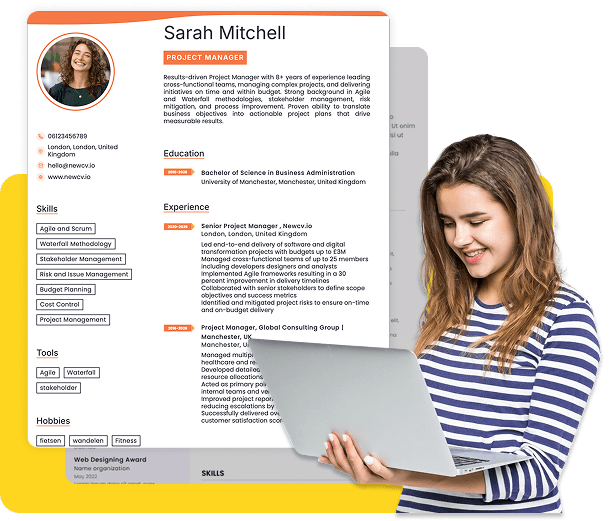
Use ATS-optimised Resume and resume templates that pass applicant tracking systems. Our Resume builder helps recruiters read, scan, and shortlist your Resume faster.

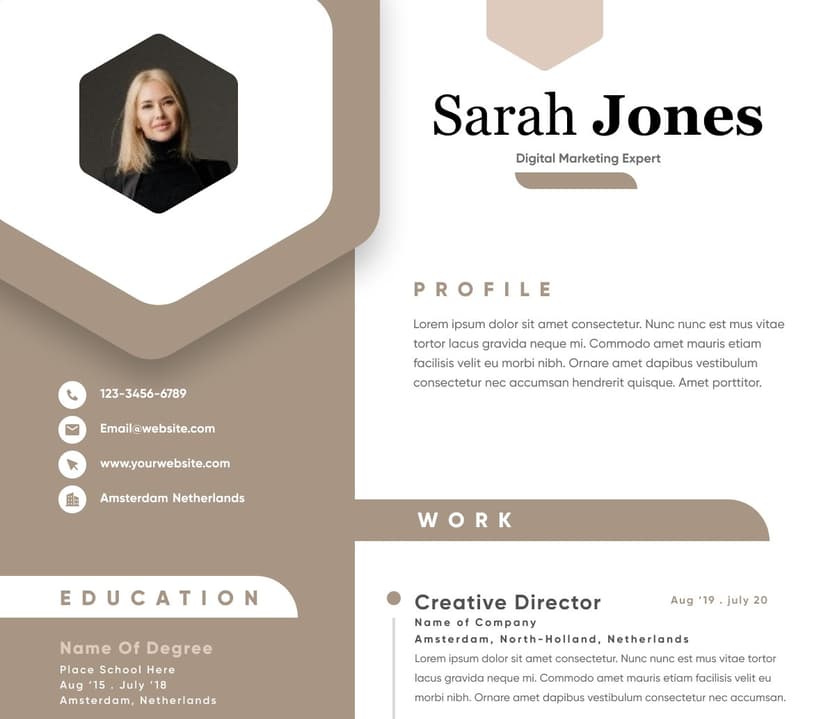
Use professional field-tested resume templates that follow the exact Resume rules employers look for.
Create Resume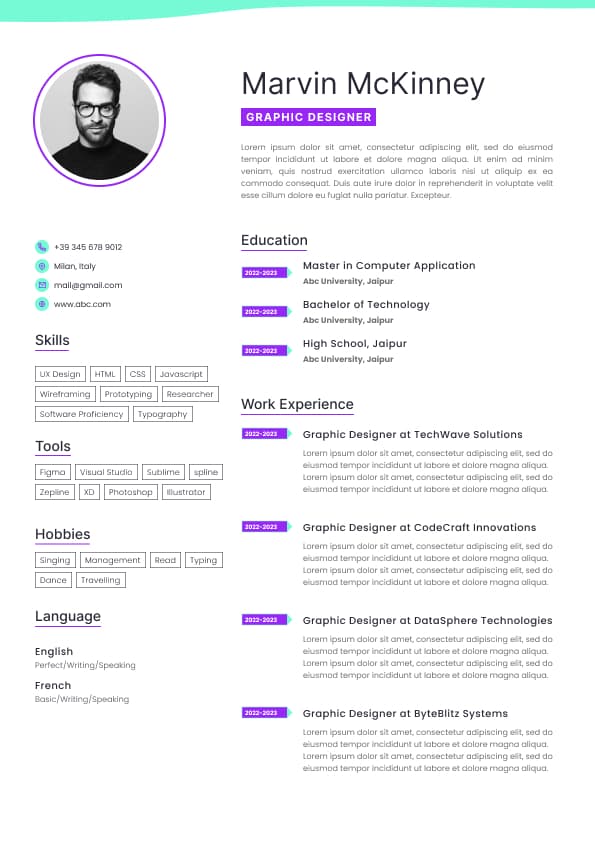
Use professional field-tested resume templates that follow the exact Resume rules employers look for.
Create ResumeAn ATS-friendly resume in Australia is a resume designed to pass Applicant Tracking Systems while still convincing recruiters and hiring managers to shortlist you. Most Australian employers now use ATS software to filter applications before a human ever sees them. If your resume has poor formatting, missing keywords, incompatible file structures, or unclear positioning, it can be rejected even when you are qualified.
The biggest mistake Australian candidates make is assuming ATS optimisation means keyword stuffing or robotic formatting. It does not. Modern ATS systems are designed to parse resumes accurately, but recruiters still make the final hiring decision. A strong ATS-friendly resume must do two things at once:
Be easily readable by ATS software
Clearly communicate value to recruiters within seconds
That balance is where most resumes fail.
A properly structured ATS-friendly resume improves your chances of:
Passing automated screening
An ATS-friendly resume is a resume formatted and written so recruitment software can accurately scan, categorise, and evaluate your information.
ATS platforms used in Australia commonly include:
Workday
PageUp
SAP SuccessFactors
Greenhouse
Lever
SmartRecruiters
JobAdder
iCIMS
These systems scan resumes to extract:
Most online advice about ATS systems is outdated or exaggerated.
Australian recruiters are not sitting behind software that instantly rejects resumes because they used a line divider or a specific font. However, ATS systems absolutely influence visibility and ranking.
Here is how ATS screening usually works in practice.
The system extracts information from your resume into searchable fields.
Poor formatting can cause issues such as:
Job titles merging into company names
Dates being unreadable
Skills failing to populate correctly
Missing contact details
Entire sections being skipped
This is why formatting matters.
Ranking higher in recruiter searches
Getting shortlisted faster
Avoiding parsing errors
Making your experience easier to assess
This guide explains how ATS screening actually works in Australia, what recruiters look for, which formatting choices help or hurt your application, and how to structure a resume that performs in real hiring environments.
Contact details
Job titles
Employment history
Skills
Qualifications
Certifications
Keywords relevant to the role
The ATS itself usually does not “reject” resumes the way candidates imagine. In most Australian recruitment environments, the system helps recruiters organise and search candidates more efficiently.
The real issue is this:
If your resume is difficult to parse, lacks role-specific terminology, or fails to align with the job requirements, recruiters may never properly find or assess your application.
The ATS compares your resume against the job advertisement and recruiter search queries.
It looks for alignment between:
Skills
Job titles
Industry terms
Technologies
Certifications
Responsibilities
This does not mean stuffing keywords unnaturally.
Recruiters can immediately spot resumes that were written for software instead of humans.
This is where most decisions happen.
Recruiters search databases using terms such as:
“Project Coordinator construction”
“Registered Nurse aged care”
“Financial Analyst CPA”
“HR Advisor ER IR”
If your resume lacks the language recruiters use, you may not appear in search results.
Australian recruiters typically spend very little time on the first review.
Often:
5 to 15 seconds initially
Longer only if your profile appears relevant immediately
An ATS-friendly resume must therefore be:
Technically readable
Fast to scan
Strategically positioned
Clearly relevant to the role
A large amount of ATS advice online is inaccurate, especially content copied from US SEO blogs without real recruitment experience.
In reality, recruiters usually control filtering decisions.
ATS systems organise candidates. Recruiters decide who moves forward.
Modern systems understand related terminology reasonably well.
However, exact alignment still matters for highly specific skills, certifications, and software.
For example:
Weak Example
“Handled financial systems”
Good Example
“Managed SAP finance reporting and month-end reconciliation”
Specificity improves search visibility and recruiter confidence.
Not always.
The issue is not visual design itself. The issue is compatibility.
Many Canva-style templates fail because they use:
Text boxes
Tables
Columns
Graphics
Icons
Embedded design layers
These elements can break parsing.
Simple professional formatting performs far better.
This is one of the fastest ways to damage credibility.
Recruiters immediately notice resumes overloaded with repetitive keywords.
Australian hiring managers value clarity, relevance, and evidence over forced optimisation.
The safest and most effective ATS-friendly structure is a reverse chronological resume.
This format aligns with how Australian recruiters evaluate candidates.
Include:
Full name
Mobile number
Professional email
LinkedIn URL if relevant
Location (suburb optional, city/state sufficient)
Do not include:
Date of birth
Photo
Marital status
Nationality unless visa status is strategically relevant
This is one of the most important sections.
A strong summary should quickly communicate:
Years of experience
Industry background
Key strengths
Relevant specialisations
Career positioning
Weak Example
“Hardworking professional seeking opportunities for growth.”
This says nothing meaningful.
Good Example
“Project Coordinator with 5+ years’ experience delivering commercial construction projects across Sydney. Strong background in subcontractor coordination, contract administration, stakeholder communication, and project scheduling within Tier 2 environments.”
That gives recruiters immediate context.
Use a concise skills section aligned with the target role.
Example:
Stakeholder Management
Financial Reporting
Contract Administration
Payroll Processing
WHS Compliance
CRM Systems
SAP
Microsoft Excel
Project Scheduling
Avoid massive keyword blocks with no structure.
This section carries the most weight.
For each role include:
Job title
Company name
Location
Employment dates
Achievements and responsibilities
Focus heavily on outcomes and relevance.
Recruiters look for:
Scope
Complexity
Impact
Progression
Industry alignment
Include:
Qualification
Institution
Graduation year if recent
Do not overload this section unless you are an early-career candidate.
Highly important in many Australian industries.
Examples:
CPA
White Card
First Aid
PRINCE2
Agile Certification
AHPRA Registration
HR Licence
Formatting mistakes still cause major problems.
The safest approach is professional simplicity.
Good options include:
Calibri
Arial
Helvetica
Cambria
Avoid decorative fonts.
Use:
Clear headings
Consistent spacing
Standard bullet points
Logical section hierarchy
Most Australian ATS platforms handle both correctly.
However:
Some government portals still prefer DOCX
Some older systems struggle with heavily designed PDFs
If unsure, DOCX is usually safest.
Avoid:
Text boxes
Multiple columns
Graphics
Icons
Infographics
Skill bars
Tables for core content
These frequently break ATS parsing.
Use recognised headings such as:
Professional Experience
Education
Skills
Certifications
Do not rename sections creatively.
For example:
Weak Example
“My Career Journey”
Good Example
“Professional Experience”
ATS systems and recruiters both prefer clarity.
Candidates often optimise for software while forgetting the recruiter.
That is a major mistake.
Australian recruiters generally assess resumes in this order:
First question:
“Does this person look aligned to the position?”
Recruiters look for:
Logical career movement
Promotions
Increased responsibility
Industry consistency
Responsibilities alone are weak.
Outcomes matter more.
Weak Example
“Responsible for customer service.”
Good Example
“Managed customer escalations across a portfolio of 120+ accounts while maintaining a 96% client satisfaction rating.”
Dense resumes lose attention quickly.
If recruiters struggle to identify your value fast, they move on.
The best ATS optimisation mirrors real job language naturally.
Analyse:
Required skills
Technical tools
Certifications
Job titles
Responsibilities
Industry terminology
If the job ad says:
“Stakeholder engagement”
“ERP systems”
“Contract administration”
Use those terms where genuinely relevant.
Sometimes your internal title differs from market language.
For example:
Internal title:
“Customer Happiness Specialist”
Market-recognised title:
“Customer Service Consultant”
You can position it strategically:
Customer Happiness Specialist (Customer Service Consultant)
This improves ATS alignment and recruiter clarity.
Highly designed resumes often perform worse in Australian hiring environments.
Especially in:
Corporate roles
Government
Healthcare
Engineering
Finance
Mining
Professional services
Simple, structured resumes usually outperform visually flashy ones.
Recruiters immediately lose interest when summaries are vague.
Avoid phrases like:
“Team player”
“Hardworking”
“Results-driven”
“Passionate professional”
Without evidence, these mean nothing.
This is one of the biggest reasons strong candidates get rejected.
Australian recruiters expect reasonable alignment with the role.
You do not need a completely different resume each time, but you should tailor:
Keywords
Summary
Skills section
Relevant achievements
Tasks explain what you did.
Achievements explain why it mattered.
Recruiters shortlist candidates who demonstrate impact.
This sounds minor, but recruiters notice it constantly.
Weak Example
resume_final_v7_NEW.pdf
Good Example
Simar-Kaur-Project-Coordinator-Resume.pdf
Professional presentation matters.
There is no perfect universal length.
However, typical expectations in Australia are:
1 to 2 pages for early-career candidates
2 to 3 pages for experienced professionals
Longer only for executive, academic, or government CVs
The real issue is relevance, not page count.
A concise, highly relevant 3-page resume often performs better than a vague 1-page resume.
Keyword strategy should reflect your actual target role.
Common ATS keywords include:
Stakeholder Management
Financial Analysis
Compliance
Risk Management
Strategic Planning
Process Improvement
Data Analysis
Relevant keywords often include:
WHS
AutoCAD
Project Delivery
Site Coordination
Civil Works
Contract Administration
Estimation
Frequently searched terms include:
AHPRA
Patient Care
Clinical Documentation
Medication Administration
Care Planning
Infection Control
Common ATS terms include:
Cybersecurity
Cloud Infrastructure
Agile
DevOps
SQL
Python
AWS
SaaS
Australian government resumes often require stronger alignment with:
Selection criteria
Stakeholder engagement
Policy
Governance
Public sector frameworks
Government hiring processes are usually more structured and keyword-sensitive than private sector hiring.
In most cases, cautiously.
Many Canva templates look impressive but create parsing problems.
They often use:
Columns
Icons
Embedded graphics
Non-standard layouts
These can cause ATS extraction errors.
For Australian job applications, especially competitive corporate roles, a cleaner Word-based format is usually safer and more effective.
Design should support readability, not dominate it.
Before submitting your resume, check:
Is the formatting simple and readable?
Are section headings standard?
Does the resume match the target role clearly?
Have you used relevant industry terminology naturally?
Is the professional summary specific and credible?
Are achievements outcome-focused?
Is the file name professional?
Is the resume free from graphics and text boxes?
Have you tailored the resume for the role?
Can a recruiter understand your value in 10 seconds?
If the answer to the final question is no, your resume still needs work.
Most candidates over-focus on ATS tricks and under-focus on recruiter decision-making.
In reality, Australian recruiters shortlist resumes that demonstrate:
Clear alignment to the role
Relevant industry experience
Commercial or operational impact
Strong communication
Career consistency
Credibility
Easy readability
Evidence of results
ATS optimisation simply helps ensure your resume gets seen properly.
The actual shortlist decision still depends on whether your resume makes hiring managers confident you can perform the role.
That is the real goal.


 Upload Resume
 Import from Linkedin