
Choose from a wide range of NEWCV resume templates and customize your NEWCV design with a single click.

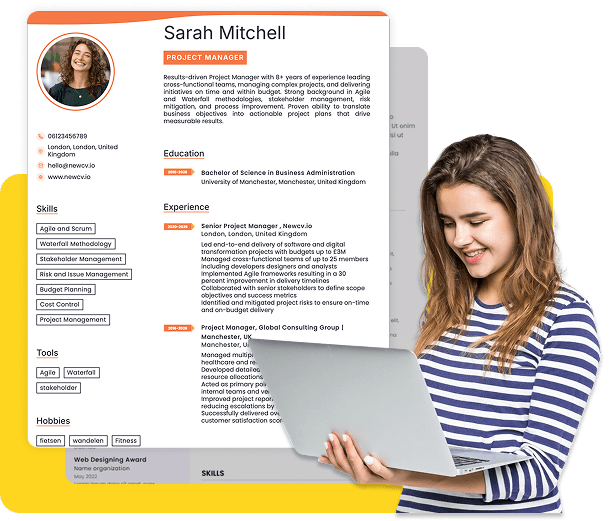
Use ATS-optimised Resume and resume templates that pass applicant tracking systems. Our Resume builder helps recruiters read, scan, and shortlist your Resume faster.

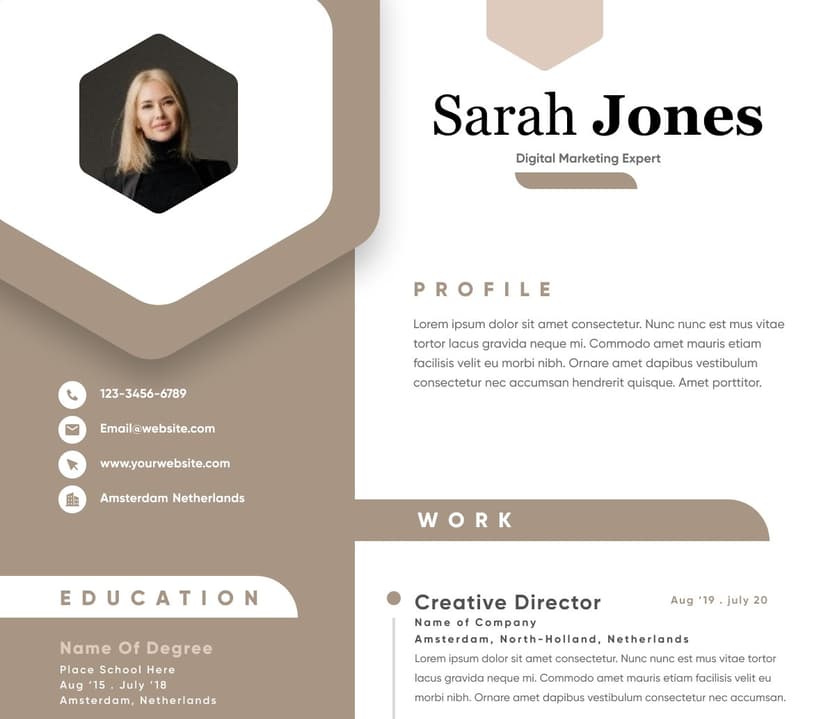
Use professional field-tested resume templates that follow the exact Resume rules employers look for.
Create Resume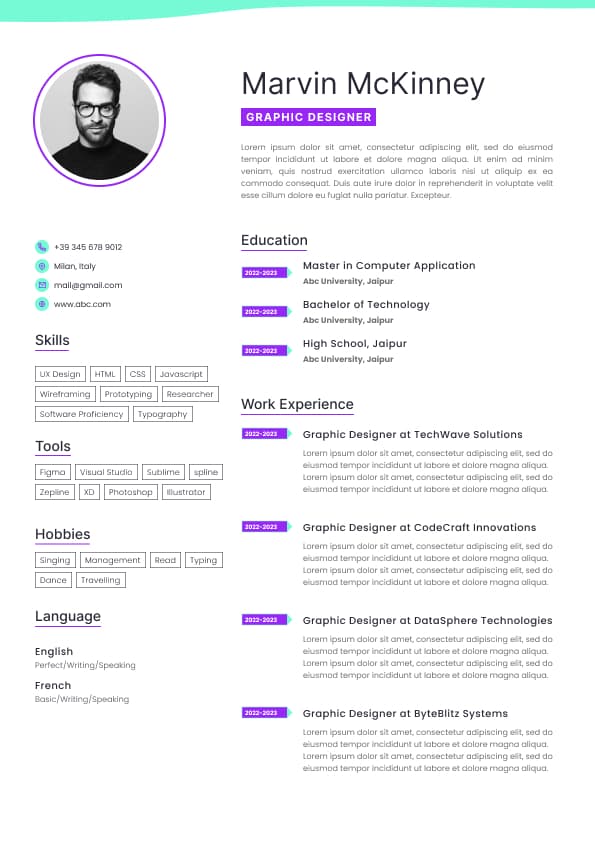
Use professional field-tested resume templates that follow the exact Resume rules employers look for.
Create ResumeYour work experience section is usually the most important part of your resume in Australia. It is the section recruiters and hiring managers spend the most time reviewing because it shows whether you can do the job in a real workplace, not just on paper.
In the Australian job market, employers are not looking for generic job descriptions copied from SEEK ads. They want evidence of outcomes, responsibility, commercial impact, and relevance to the role they are hiring for. A strong work experience section helps recruiters quickly answer three key questions:
Can this candidate perform at the required level?
Have they solved similar problems before?
Are they likely to fit this role and workplace?
Most resumes fail because candidates list duties instead of demonstrating value. The strongest Australian resumes position work experience strategically, using measurable achievements, clear progression, and role-relevant impact.
Australian recruiters often screen resumes very quickly during the first review stage. In competitive industries, a recruiter may spend less than 30 seconds deciding whether a resume moves forward.
Your work experience section heavily influences:
ATS keyword matching
Recruiter shortlist decisions
Salary positioning
Seniority assessment
Interview selection
Hiring manager confidence
For experienced professionals, work experience carries more weight than education. Even for graduates, internships, placements, casual work, volunteering, and project-based experience can significantly affect outcomes.
Australian employers generally value:
Recruiters are not reading your resume line by line in the first screening stage. They scan for signals.
The strongest resumes make those signals obvious immediately.
The first thing recruiters assess is relevance.
They compare your previous roles against the advertised position and ask:
Have you worked in a similar environment?
Have you handled similar responsibilities?
Do you understand this industry?
Have you worked at the required level?
If relevance is not obvious within seconds, many resumes are rejected even if the candidate could technically do the job.
This is why tailoring your work experience matters.
Australian employers increasingly expect achievement-focused resumes.
Practical capability
Reliability and consistency
Commercial awareness
Team contribution
Communication skills
Results and accountability
Relevant industry exposure
This means your work experience section must go beyond listing tasks.
Weak resumes describe activity.
Strong resumes describe outcomes.
Weak Example
“Responsible for customer service and handling enquiries.”
Good Example
“Managed high-volume customer enquiries across phone and email channels, consistently maintaining a 96% customer satisfaction rating.”
The second version demonstrates:
Scale
Performance
Credibility
Measurable impact
That immediately creates stronger recruiter confidence.
Recruiters also look for progression patterns.
This does not always mean promotions. It can include:
Increased responsibility
Larger projects
Leadership exposure
More complex stakeholders
Higher revenue accountability
Team management
Industry specialisation
Even lateral moves should show strategic progression.
If your resume looks stagnant for years with no visible growth, recruiters may question motivation or capability.
Australian employers often care about stability more than candidates realise.
Frequent short-term roles can create concerns around:
Reliability
Performance issues
Cultural fit
Commitment
Risk of turnover
Short tenures are not always a problem, especially in contracting, tech, startups, or project environments. However, your resume should still show logical career movement.
Your work experience section should be easy to scan quickly.
Most recruiters prefer this structure:
Use the exact or closely aligned title where possible.
If your internal title was vague, clarify it.
Weak Example
“Consultant II”
Good Example
“Business Analyst | Digital Transformation”
Include:
Company name
City and state
Optional short descriptor if the employer is not well known
Example:
ABC Logistics, Melbourne VIC
National transport and supply chain company
Australian resumes typically use:
Month Year – Month Year
Example:
March 2021 – January 2025
Do not hide dates unless there is a strategic reason.
Recruiters notice missing dates immediately.
For mid-level and senior candidates, a short summary can help frame the role.
Example:
“Managed end-to-end recruitment across corporate and operational divisions during a major national growth phase.”
This gives context before achievements.
This is where most resumes succeed or fail.
The best format is concise bullet points focused on outcomes, not task lists.
High-performing bullet points generally follow this pattern:
Action + Context + Outcome
Example:
“Reduced invoice processing time by 35% by implementing automated approval workflows across finance operations.”
This works because it explains:
What you did
Where you applied it
What changed as a result
Use direct, commercially credible action verbs such as:
Led
Improved
Reduced
Delivered
Managed
Increased
Streamlined
Coordinated
Developed
Negotiated
Implemented
Analysed
Optimised
Avoid passive wording.
Numbers create credibility.
Strong metrics include:
Revenue growth
Cost savings
Team size
Customer satisfaction
Project budgets
Efficiency improvements
KPI performance
Time savings
Sales targets
Compliance rates
Even approximate metrics are better than vague claims when realistic.
This depends on your experience level.
Include:
Internships
Casual work
Part-time work
Volunteer roles
University placements
Relevant projects
Even hospitality or retail roles can help demonstrate transferable skills.
Focus primarily on the last 10 to 15 years.
Older roles can usually be shortened unless highly relevant.
Prioritise strategic relevance over complete history.
Executives often make the mistake of overloading resumes with outdated detail.
Older roles can be condensed into a short “Earlier Career Experience” section.
Most Australian resumes should cover:
Approximately 10 to 15 years in detail
Earlier experience only if strategically relevant
Very old experience can dilute positioning.
Recruiters care most about recent capability.
Technology, systems, compliance standards, and workplace expectations evolve quickly.
This is the biggest issue recruiters see.
If your bullet points sound like generic job descriptions, your resume becomes forgettable.
Avoid meaningless phrases like:
“Hardworking team player”
“Go-getter”
“Results-driven professional”
“Dynamic individual”
These add no evidence.
Recruiters do not need:
Every task you performed
Every software platform used
Outdated responsibilities
Long paragraphs
Strong resumes are selective.
Dense paragraphs reduce readability.
Most recruiters scan.
If your work experience section looks visually overwhelming, important information gets missed.
A resume should not stay identical for every application.
The strongest candidates adjust:
Keywords
Achievements
Emphasis areas
Industry terminology
Commercial relevance
This improves ATS performance and recruiter alignment.
Most medium and large Australian employers use ATS software.
Your work experience section should naturally include:
Job-specific terminology
Relevant systems and tools
Industry language
Core competencies
Technical keywords
However, keyword stuffing is obvious and ineffective.
The best ATS optimisation mirrors the language used in the job advertisement naturally.
If the role mentions:
Stakeholder engagement
Project delivery
Vendor management
Risk mitigation
Your experience section should reflect genuine examples of those capabilities where accurate.
Hiring managers often review resumes differently from recruiters.
Recruiters focus on filtering.
Hiring managers focus on practical fit.
They usually look for:
Evidence of problem-solving
Relevant operational exposure
Industry understanding
Communication capability
Leadership potential
Commercial judgement
This means your bullet points should show thinking, not just activity.
“Partnered with operations leaders to redesign workforce rostering processes, reducing overtime costs by approximately $180K annually.”
This demonstrates:
Collaboration
Commercial thinking
Operational impact
Business awareness
That is far more persuasive than generic task descriptions.
Yes, if presented strategically.
Contracting is common in Australia, especially in:
Technology
Construction
Government
Mining
Project management
Consulting
The key is clarity.
Avoid creating the appearance of instability.
Group related contracts together where appropriate.
Example:
Senior Project Manager | Contract Roles | Sydney NSW
January 2021 – Present
Then list major clients or projects underneath.
This reduces visual job-hopping concerns.
Employment gaps are less damaging than poorly explained resumes.
Many recruiters understand gaps caused by:
Redundancies
Parenting
Health issues
Study
Relocation
Career transitions
Economic conditions
Problems arise when resumes look misleading or inconsistent.
Be transparent but concise.
Example:
Career Break | 2023
Travel and professional development
Or:
Career Break | Family Responsibilities
Simple explanations are usually enough.
Only if it supports your positioning.
Volunteer experience is valuable when it demonstrates:
Leadership
Community involvement
Governance
Industry relevance
Communication skills
Team coordination
For graduates and career changers, volunteer work can strengthen credibility significantly.
Career changers should focus heavily on transferable achievements.
Recruiters need help connecting the dots.
Highlight:
Relevant capabilities
Overlapping responsibilities
Industry-adjacent experience
Stakeholder management
Technical exposure
Leadership experience
Do not rely on recruiters to interpret relevance themselves.
Make it obvious.
There is no universal rule, but generally:
Early career resumes: 1 to 2 pages total
Mid-level professionals: 2 to 3 pages total
Senior executives: 3 pages maximum in most cases
Your work experience section should contain enough detail to demonstrate value without becoming repetitive.
More content does not automatically improve outcomes.
Better positioning does.
The strongest resumes create instant clarity.
Within seconds, recruiters should understand:
What level you operate at
What industries you know
What problems you solve
What outcomes you deliver
Why you are relevant to this role
The best work experience sections feel commercially credible, concise, and outcome-focused.
Weak resumes describe employment history.
Strong resumes sell capability.
Many candidates think resumes are evaluated objectively.
In reality, hiring decisions are heavily influenced by perceived risk.
Recruiters and hiring managers ask themselves:
Does this candidate look credible?
Can I confidently shortlist them?
Is there evidence they can succeed here?
Will the hiring manager trust this profile?
A strong work experience section reduces uncertainty.
That is why measurable achievements, clarity, relevance, and professional positioning matter so much.
The goal is not simply to explain what you did.
The goal is to make employers feel confident hiring you.


 Upload Resume
 Import from Linkedin