
Choose from a wide range of NEWCV resume templates and customize your NEWCV design with a single click.
Use ATS-optimised Resume and resume templates that pass applicant tracking systems. Our Resume builder helps recruiters read, scan, and shortlist your Resume faster.

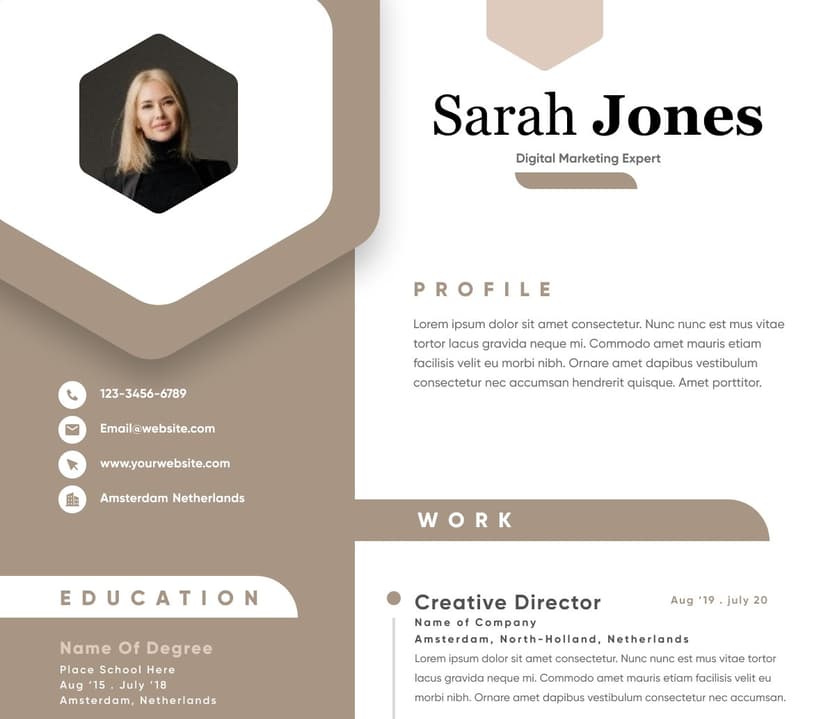
Use professional field-tested resume templates that follow the exact Resume rules employers look for.
Create Resume
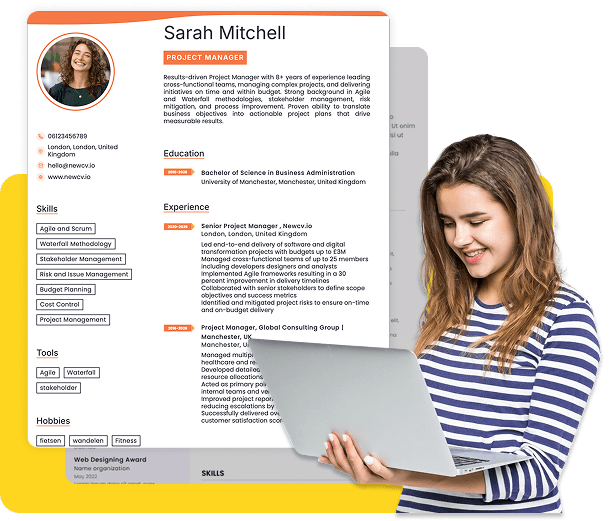
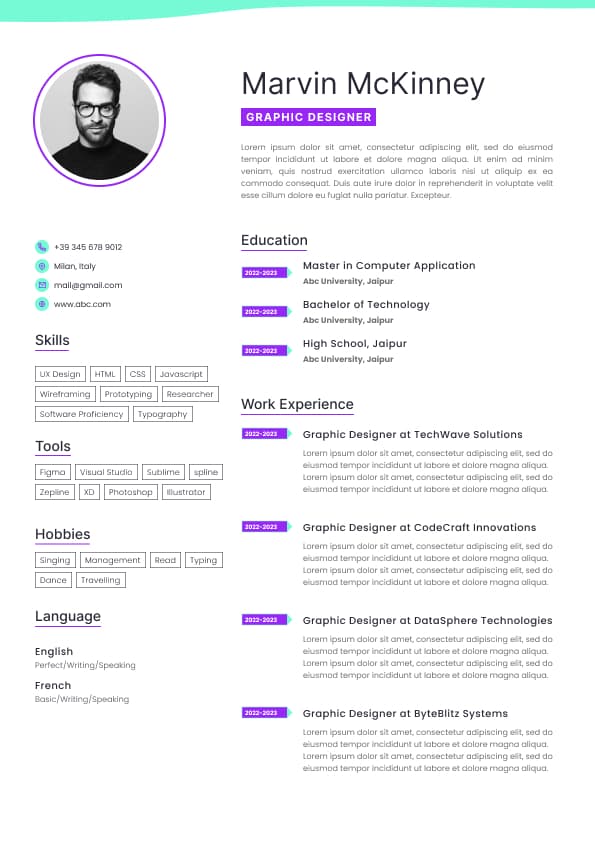
Use professional field-tested resume templates that follow the exact Resume rules employers look for.
Create ResumeThe biggest shift in the Australian job market in 2026 is not just about job availability. It is about hiring quality, competition, and candidate positioning. Employers are still hiring across healthcare, construction, infrastructure, renewable energy, technology, education, defence, logistics, and skilled trades, but recruiters and hiring managers are becoming far more risk-aware after years of unstable economic conditions.
Candidates who get interviews in 2026 are not necessarily the most experienced. They are the candidates who can clearly prove business impact, commercial value, adaptability, and role alignment quickly.
At the same time, many applicants are still using outdated job search strategies, generic resumes, weak LinkedIn positioning, and AI-generated applications that recruiters can spot immediately.
This guide breaks down what is actually happening in the Australian job market in 2026, which industries are growing, where hiring is slowing, what recruiters are prioritising, salary expectations, and how candidates can position themselves competitively in a much more selective market.
Australia’s labour market in 2026 remains relatively strong compared to many global economies, but it is significantly more competitive than it was during the post-pandemic hiring surge.
Several major shifts are shaping the market:
Employers are hiring more cautiously
Permanent recruitment processes are slower
Mid-level roles are becoming highly competitive
Skills shortages still exist in technical and frontline industries
Employers expect candidates to be productive quickly
AI and automation are changing hiring workflows
Salary growth has stabilised in many white-collar sectors
Not all sectors are growing equally. Some industries are experiencing genuine expansion, while others are hiring only for replacement roles.
Healthcare remains one of the strongest employment sectors in Australia.
Demand continues across:
Registered nurses
Aged care workers
Allied health professionals
Mental health specialists
Occupational therapists
Disability support workers
Contract and project-based hiring continues to rise
One of the biggest misconceptions candidates have in 2026 is assuming that a “skills shortage” means easy hiring. That is not how Australian employers are operating now.
Most employers still want:
Low-risk hires
Proven performers
Strong communication skills
Industry-specific experience
Fast onboarding capability
Cultural alignment
Commercial awareness
Even in shortage sectors, hiring managers are often rejecting candidates who look too generic, too broad, or poorly aligned to the actual role.
Healthcare administrators
An ageing population, NDIS demand, workforce shortages, and regional healthcare gaps continue driving recruitment activity.
Recruiters are seeing especially high demand in:
Regional Australia
Community-based care
Home care services
Mental health support
Specialist nursing
Candidates with both clinical skills and patient communication ability are significantly outperforming technically strong but interpersonal-weak applicants.
Large-scale infrastructure investment continues creating strong demand across:
Project managers
Site managers
Civil engineers
Estimators
Surveyors
WHS professionals
Skilled trades
Electricians
Plumbers
Construction supervisors
However, employers are becoming stricter around:
Safety compliance
Project delivery experience
Stakeholder management
Cost control
Commercial project exposure
The days of easily moving into higher-paying construction leadership roles without proven project outcomes are fading quickly.
Renewable energy is no longer a niche sector in Australia.
Major hiring demand exists in:
Solar infrastructure
Battery storage
Grid modernisation
Sustainability consulting
Environmental engineering
ESG reporting
Energy project management
Candidates with crossover skills between engineering, infrastructure, compliance, and sustainability are especially competitive.
Australia’s defence expansion continues driving demand across:
Cybersecurity
Engineering
Logistics
Procurement
Defence project management
Intelligence
ICT infrastructure
Security clearances are becoming increasingly valuable.
Candidates who already hold baseline or NV1 clearances often move faster through hiring processes because employers want reduced onboarding risk.
Trade shortages remain severe in many parts of Australia.
High-demand trades include:
Electricians
HVAC technicians
Diesel mechanics
Fitters and turners
Boilermakers
Heavy vehicle mechanics
Refrigeration technicians
One major trend in 2026 is employers prioritising reliability and attendance history just as heavily as technical ability.
Hiring managers are increasingly rejecting candidates with unstable work histories, even during skill shortages.
Not every sector is expanding aggressively.
Generic administration and support roles are becoming increasingly competitive because:
Automation is reducing some tasks
Businesses are consolidating teams
AI tools are improving operational efficiency
Offshore support models continue expanding
Candidates applying for administrative roles now need:
Systems expertise
Process improvement capability
Stakeholder management skills
Project coordination ability
Commercial understanding
Basic admin experience alone is often no longer enough.
Entry-level marketing roles are experiencing oversupply in many Australian cities.
Hiring managers are prioritising candidates who can demonstrate:
Measurable campaign outcomes
Paid media knowledge
SEO understanding
Content strategy
Analytics capability
CRM platform experience
Generic “creative” resumes without commercial metrics are performing poorly.
Technology hiring still exists, but the market is more selective than during the rapid hiring periods of 2021 to 2023.
Employers are now heavily focused on:
AI integration capability
Business impact
Product thinking
Commercial alignment
System scalability
Security awareness
Developers and tech professionals who only list tools without demonstrating outcomes are struggling more in 2026.
One of the biggest recruiter shifts in 2026 is reduced focus on years of experience alone.
Hiring managers increasingly care about:
Business outcomes
Revenue impact
Efficiency improvements
Team leadership
Risk reduction
Project delivery
Process optimisation
A candidate with four years of strong measurable achievements will often outperform someone with twelve years of vague experience.
Recruiters across Australia are increasingly identifying generic AI-written resumes and cover letters.
Common signs include:
Overly polished generic language
No specific achievements
Repetitive corporate jargon
Lack of industry nuance
Unrealistic phrasing
No clear commercial outcomes
The issue is not AI usage itself. The problem is low-quality AI-generated applications that sound identical to hundreds of others.
Candidates who personalise their applications properly are standing out significantly more.
Employers are under pressure to reduce onboarding costs.
This means candidates who clearly demonstrate:
Industry familiarity
Relevant systems knowledge
Stakeholder experience
Regulatory understanding
Local market awareness
often move ahead faster.
Recruiters are increasingly asking:
“Can this person contribute quickly with minimal ramp-up?”
That question is heavily influencing shortlisting decisions.
Salary growth in Australia has become more uneven.
Strong salary movement continues in:
Healthcare
Cybersecurity
Skilled trades
Infrastructure
Renewable energy
Defence-related roles
Mining and resources
Salary growth is slowing across:
General corporate roles
Marketing
Mid-level tech
Internal recruitment
Administrative support
Many employers are shifting compensation strategies toward:
Flexibility
Hybrid work
Bonus structures
Additional leave
Retention incentives
rather than large fixed salary increases.
Most candidates misunderstand how recruiters screen applications.
Recruiters are not reading every line deeply during initial review.
They are scanning for:
Role alignment
Commercial relevance
Clear achievements
Industry fit
Stability
Communication quality
Evidence of results
Candidates lose opportunities quickly when resumes are:
Too generic
Too long
Poorly structured
Filled with responsibilities instead of achievements
Overwritten with AI-style wording
Not tailored to the role
High-performing applicants in 2026 typically:
Tailor resumes properly
Quantify achievements
Show business impact
Align with the actual job description
Understand the employer’s environment
Prepare strategically for interviews
Build strong LinkedIn credibility
Most importantly, they position themselves clearly.
Recruiters should understand within seconds:
What the candidate does
What level they operate at
Which industries they suit
What value they bring
Remote and hybrid work still exists widely, but expectations have changed.
Many employers now prefer:
Hybrid arrangements
Structured office attendance
Team collaboration days
Flexible but accountable work models
Fully remote roles remain highly competitive.
One major recruiter observation is that candidates still applying only for fully remote roles are significantly narrowing their opportunities.
In 2026, flexibility matters more than rigid remote-only positioning.
Sydney remains highly competitive for:
Corporate roles
Finance
Technology
Consulting
Marketing
Executive positions
Salary levels are often higher, but competition is intense.
Melbourne continues performing strongly across:
Professional services
Healthcare
Education
Creative industries
Infrastructure
However, candidate supply is also very high.
Brisbane continues growing rapidly due to:
Infrastructure investment
Population growth
Olympic-related development
Construction expansion
Many employers are actively relocating talent interstate.
Mining, energy, engineering, and resources continue driving strong employment demand in Perth.
Candidates with FIFO experience remain highly sought after.
Several recurring mistakes are hurting otherwise capable candidates.
Many applicants are applying for:
Too many unrelated roles
Different seniority levels
Multiple industries without clear positioning
This weakens both resume quality and recruiter perception.
Strong candidates position themselves narrowly and strategically.
A generic resume now performs poorly in most professional sectors.
Recruiters expect:
Targeted positioning
Relevant achievements
Industry alignment
Clear value proposition
LinkedIn continues influencing hiring decisions heavily in Australia.
Recruiters commonly review:
Profile credibility
Career consistency
Industry engagement
Professional branding
Recommendations
Activity quality
An outdated LinkedIn profile can damage otherwise strong applications.
Many candidates still prepare for interviews by memorising answers rather than understanding evaluation criteria.
Australian hiring managers often assess:
Communication clarity
Commercial thinking
Problem-solving
Team fit
Stakeholder management
Adaptability
Accountability
Candidates who speak only theoretically often perform poorly.
Your market positioning should answer:
What do you specialise in?
Which problems do you solve?
Which industries suit you best?
What level are you operating at?
Why should employers hire you over competitors?
Ambiguous candidates struggle in tighter markets.
Employers increasingly want evidence.
Strong candidates show:
Revenue impact
Cost savings
Project outcomes
Efficiency improvements
Customer growth
Compliance improvements
Operational improvements
Even non-technical roles increasingly require:
AI tool familiarity
Digital literacy
Data interpretation
Systems adaptability
Candidates resisting technological change are becoming less competitive.
Communication remains one of the biggest differentiators in hiring.
Candidates with strong technical ability but poor communication often lose opportunities to slightly less technical but commercially stronger applicants.
Several long-term trends are likely to continue shaping the market:
AI-assisted workplaces
Greater skills-based hiring
Increased contract work
More project-based careers
Higher emphasis on adaptability
Stronger focus on productivity
Greater demand for commercial thinking
Continued healthcare and infrastructure growth
The candidates who adapt fastest to changing employer expectations will continue outperforming competitors.
The Australian job market in 2026 is not weak, but it is far more selective.
Employers are still hiring, skills shortages still exist, and opportunities remain strong across multiple industries. However, recruiters and hiring managers are becoming more strategic, risk-aware, and commercially focused in how they assess candidates.
The strongest candidates are no longer simply the most experienced.
They are the candidates who:
Position themselves clearly
Demonstrate measurable impact
Communicate commercial value
Adapt to changing workplace expectations
Align closely with employer needs
Show credibility quickly
Candidates relying on outdated job search tactics, generic resumes, mass applications, or weak interview preparation are finding the market increasingly difficult.
In 2026, precision beats volume.


 Upload Resume
 Import from Linkedin