
Choose from a wide range of NEWCV resume templates and customize your NEWCV design with a single click.

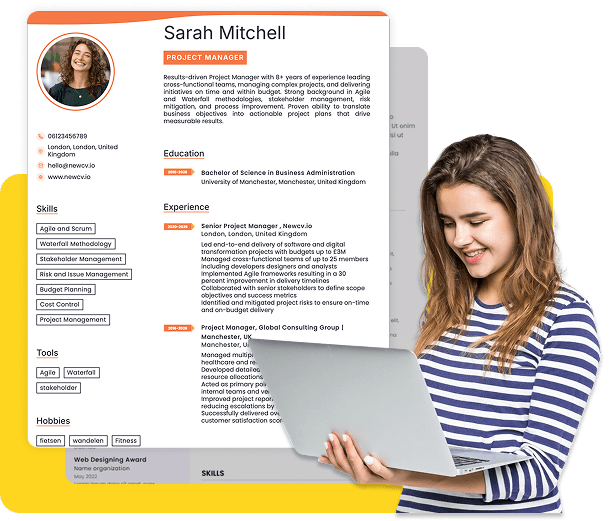
Use ATS-optimised Resume and resume templates that pass applicant tracking systems. Our Resume builder helps recruiters read, scan, and shortlist your Resume faster.

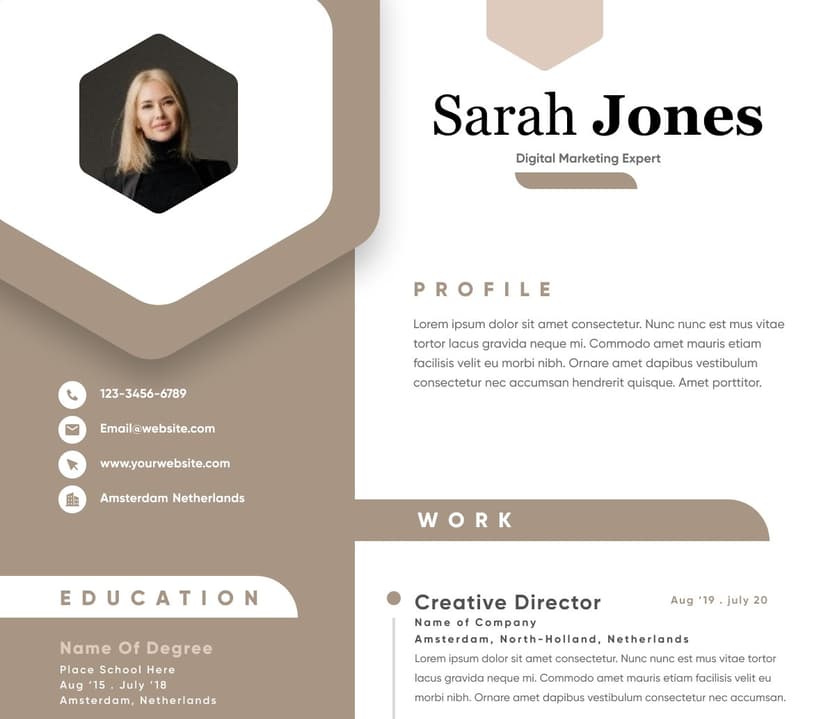
Use professional field-tested resume templates that follow the exact Resume rules employers look for.
Create Resume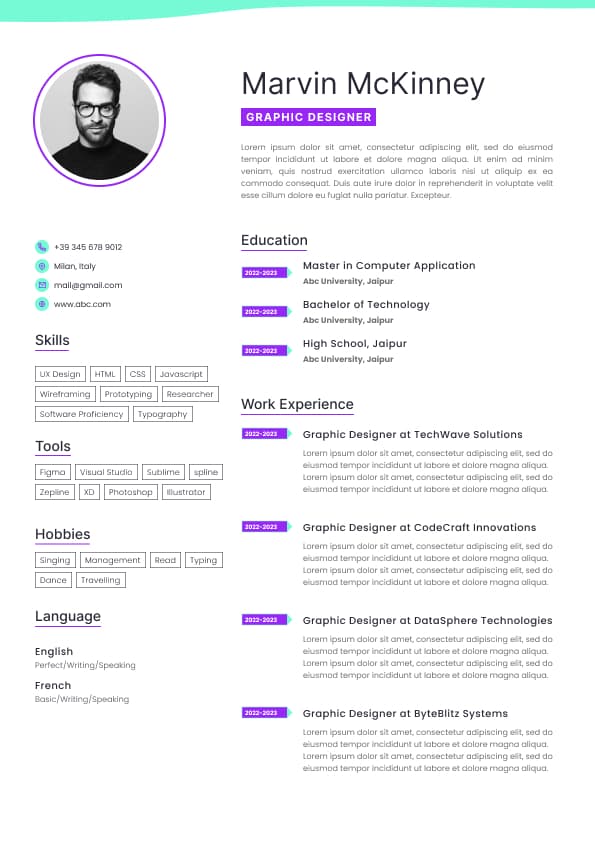
Use professional field-tested resume templates that follow the exact Resume rules employers look for.
Create ResumeA strong graduate resume in Australia is not about “looking impressive”. It is about making a recruiter immediately confident that you can perform in a real workplace despite limited professional experience.
Most graduate resumes fail because they are too generic, too academic, or too focused on responsibilities instead of outcomes. Australian recruiters are screening for employability signals: communication, initiative, reliability, commercial awareness, teamwork, and evidence that you can adapt quickly in a professional environment.
For most graduate roles, recruiters spend less than 30 seconds on the first resume scan. Your resume must quickly answer three questions:
Can this person do the job?
Will they fit into a workplace team?
Have they shown initiative beyond university coursework?
A competitive graduate resume in Australia should be concise, achievement-focused, ATS-friendly, and tailored to the specific role and industry. The best resumes position university projects, internships, casual jobs, volunteering, and extracurricular activities as evidence of workplace capability, not just experience fillers.
Graduate hiring in Australia is heavily potential-based.
Recruiters know graduates often lack extensive industry experience. What they care about is whether your resume demonstrates employability, maturity, and transferable capability.
The strongest graduate resumes consistently show:
Clear communication
Evidence of initiative
Practical problem-solving
Accountability
Team collaboration
Professional presentation
Attention to detail
For most Australian graduate applications, the ideal resume length is:
1 page for students with minimal experience
2 pages maximum for graduates with internships, placements, leadership, or multiple relevant roles
A modern Australian graduate resume should follow this structure:
Include:
Full name
Mobile number
Professional email address
LinkedIn profile if updated and relevant
Commercial or organisational awareness
Adaptability
Genuine interest in the industry
Many graduates wrongly assume recruiters only care about academic performance. In reality, unless you are applying for highly competitive graduate programs in consulting, law, engineering, or investment banking, your GPA is usually secondary to your practical positioning.
A graduate with average marks and strong workplace indicators often outperforms a high-achieving student with a poorly structured resume.
City and state
Do not include:
Photo
Date of birth
Marital status
Nationality
Full residential address
Photos are uncommon in Australian resumes outside some creative industries.
A professional summary is optional for graduates, but when done properly, it can improve recruiter engagement.
The mistake most graduates make is writing vague, meaningless summaries.
“Motivated and hardworking graduate seeking an opportunity to grow and develop skills.”
This says nothing.
“Recent Bachelor of Commerce graduate with internship experience in financial analysis and stakeholder reporting. Strong background in Excel, data interpretation, and client communication developed through university consulting projects and part-time retail leadership experience.”
The second version immediately communicates:
Qualification
Relevant exposure
Practical capability
Transferable skills
Industry relevance
That is what recruiters want.
One of the biggest graduate resume mistakes in Australia is overloading the education section.
Your degree matters, but recruiters do not need half a page explaining subjects unless they are directly relevant to the role.
Degree title
University name
Graduation date
GPA only if strong or requested
Relevant honours or awards
Relevant coursework only if strategically valuable
Every unit studied
High school information if you have completed university
Long academic descriptions
Generic university achievements
Recruiters care more about applied capability than theoretical learning.
Australian graduate recruiters do not expect extensive full-time experience.
What matters is how you frame the experience you do have.
Relevant experience can include:
Internships
Casual work
Retail jobs
Hospitality
University projects
Volunteer work
Student leadership
Clubs and societies
Freelance work
Placements
Sports leadership
The key is translating these experiences into employability evidence.
“Worked at Coles serving customers.”
“Delivered high-volume customer service in a fast-paced retail environment while handling cash transactions, resolving customer issues, and supporting team operations during peak trading periods.”
The second version communicates:
Communication
Pressure management
Responsibility
Teamwork
Workplace professionalism
Recruiters hire capability signals, not job titles.
Your bullet points should focus on contribution, outcomes, and capability.
Avoid task-heavy descriptions.
Action + Context + Outcome
“Responsible for social media.”
“Created and scheduled social media content that increased student society event attendance by 35% across one university semester.”
This demonstrates measurable impact.
Even if your experience is limited, you can still show initiative, ownership, and results.
Most medium and large Australian employers use Applicant Tracking Systems.
An ATS does not “reject” resumes the way many graduates think, but it does influence searchability and recruiter filtering.
Your resume should include:
Relevant keywords from the job ad
Clear section headings
Standard formatting
Simple fonts
Consistent structure
Role-specific terminology
Avoid:
Graphics
Tables
Excessive design elements
Text boxes
Keyword stuffing
Overly creative formatting
Many graduate resumes fail because they prioritise aesthetics over readability and ATS compatibility.
Graduate programs and direct-entry jobs are evaluated differently.
Large graduate programs usually assess:
Leadership
Initiative
Academic consistency
Extracurricular involvement
Communication
Commercial awareness
Team contribution
Adaptability
These resumes should highlight:
University leadership
Volunteering
Projects
Competitions
Internships
Soft skills evidence
Direct-entry jobs often prioritise:
Practical capability
Reliability
Industry exposure
Immediate contribution
Technical competency
These resumes should focus more heavily on:
Practical experience
Technical skills
Industry tools
Work achievements
Relevant projects
Tailoring matters because recruiters screen differently depending on hiring context.
Many graduates unintentionally sound inexperienced because they frame everything academically.
Recruiters hire future employees, not university students.
Professional language matters.
Words like:
Hardworking
Motivated
Passionate
Team player
Mean nothing without evidence.
Always demonstrate skills through examples and achievements.
This is one of the biggest reasons graduates struggle to secure interviews.
Australian recruiters can immediately tell when a resume has not been tailored.
At minimum, tailor:
Keywords
Professional summary
Skills section
Relevant experience emphasis
Recruiters already know what retail assistants, interns, and hospitality workers do.
Your resume should focus on:
Contribution
Performance
Responsibility
Initiative
Results
Messy formatting creates an immediate negative impression.
Common formatting mistakes include:
Inconsistent spacing
Tiny fonts
Overdesigned templates
Excessive colours
Dense text blocks
Multiple font styles
A clean, readable resume consistently performs better in Australian recruitment processes.
Most graduate resumes look almost identical.
The candidates who secure interviews usually differentiate themselves through evidence of initiative and real-world engagement.
Strong differentiators include:
Internships
Leadership positions
Industry projects
Portfolio work
Technical certifications
Volunteering
Professional networking
Freelance experience
Competitions
Client-facing work
Even small experiences become powerful when positioned strategically.
For example:
A hospitality job can demonstrate:
Customer communication
Conflict resolution
Time management
Team coordination
Performance under pressure
Recruiters often value these workplace behaviours more than academic theory alone.
Most graduates misunderstand resume screening.
Hiring managers are not deeply reading every line initially.
They scan for confidence indicators.
Typical recruiter scanning behaviour:
They check:
Degree relevance
Resume presentation
Experience relevance
Professionalism
Clarity
They assess:
Transferable skills
Initiative
Achievements
Communication ability
Overall employability
If your resume survives this stage, it is read more thoroughly.
That means clarity and positioning matter more than excessive detail.
Skills sections should support the resume, not carry it.
Strong graduate resumes include both:
Technical skills
Workplace capability indicators
Excel
Power BI
Python
AutoCAD
Adobe Creative Suite
CRM systems
Data analysis
Financial modelling
Stakeholder communication
Team collaboration
Presentation delivery
Client support
Problem-solving
Project coordination
Avoid generic skill dumping without evidence elsewhere in the resume.
For many Australian graduate roles, yes.
Especially when:
The role is competitive
The industry is relationship-driven
You are changing direction
Your experience is limited
You need to explain context
A strong cover letter should explain:
Why this role
Why this employer
Why you are a strong fit
Evidence supporting your capability
Most graduate cover letters fail because they are generic and self-focused.
Recruiters want relevance, not autobiography.
Modern Australian resumes should be:
Clean
Minimal
Professional
ATS-friendly
Easy to skim
Recommended formatting:
Font size between 10 and 12
Clear section headings
Consistent spacing
Black text on white background
PDF format unless otherwise requested
Avoid overly American-style resume trends such as:
Headshots
Graphic-heavy templates
Skill bars
Multi-column layouts
These often reduce ATS readability.
In Australia, “resume” is the standard term for most private-sector jobs.
“CV” is more common in:
Academia
Research
Medicine
Government
Some education roles
For most graduates applying to corporate, retail, business, technology, engineering, or commercial roles, a resume is expected.
The graduates who secure interviews fastest are usually not the most qualified academically.
They are the candidates who:
Position themselves professionally
Show initiative
Demonstrate employability
Tailor applications properly
Understand employer expectations
Communicate clearly
Present evidence of workplace readiness
Your resume should reduce hiring risk.
Every section should help a recruiter feel confident that you can step into a professional environment, learn quickly, and contribute effectively.
That is what gets graduates hired in Australia.


 Upload Resume
 Import from Linkedin