
Choose from a wide range of NEWCV resume templates and customize your NEWCV design with a single click.

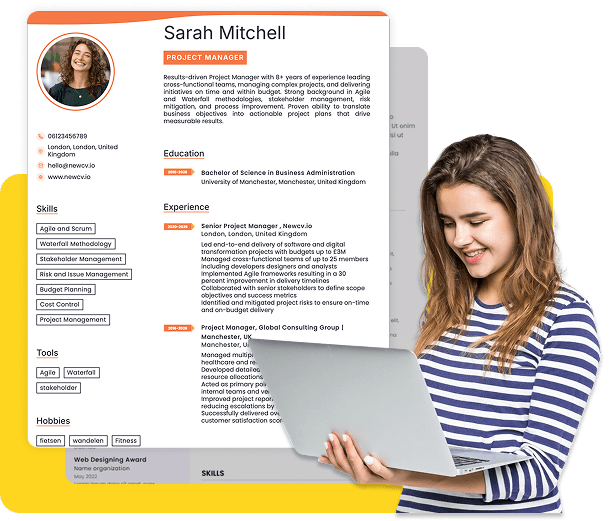
Use ATS-optimised Resume and resume templates that pass applicant tracking systems. Our Resume builder helps recruiters read, scan, and shortlist your Resume faster.

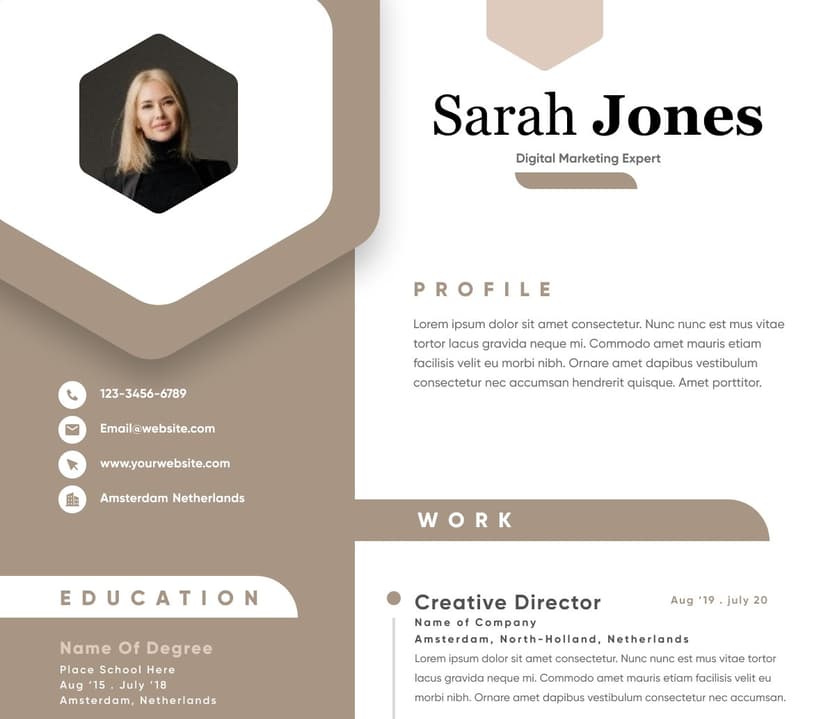
Use professional field-tested resume templates that follow the exact Resume rules employers look for.
Create Resume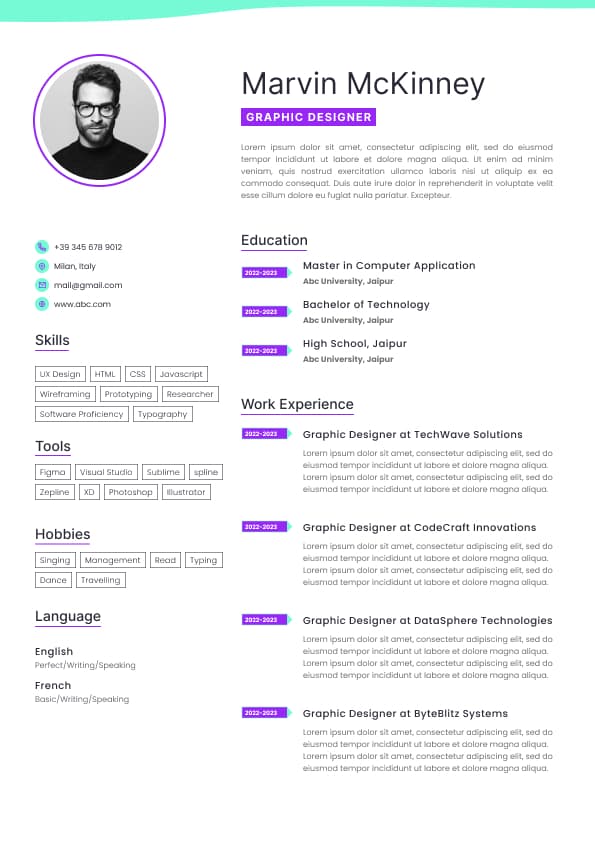
Use professional field-tested resume templates that follow the exact Resume rules employers look for.
Create ResumeIf you are applying for jobs in Australia that offer visa sponsorship, your resume needs to do more than show experience. It must reduce hiring risk.
Australian employers sponsoring overseas candidates are assessing three things at the same time:
Can you perform the role immediately?
Are you worth the sponsorship cost and compliance effort?
Will you integrate smoothly into an Australian workplace?
Most overseas applicants fail because their resume reads like a standard international CV rather than a sponsorship-ready Australian resume.
A strong visa sponsorship resume clearly demonstrates:
Immediate job relevance
Industry alignment with Australian standards
Stable employment history
A normal resume focuses on qualifications and achievements.
A visa sponsorship resume must also address employability risk.
When an Australian employer sponsors a worker, they take on:
Financial cost
Legal obligations
Immigration compliance responsibilities
Recruitment justification requirements
Onboarding risk
Potential relocation uncertainty
Because of this, recruiters screen sponsored candidates more aggressively than local applicants.
Your resume must answer concerns before they are raised.
This changes how you position:
Communication capability
Eligibility for sponsorship pathways
Low onboarding risk
Hiring managers do not want to “figure out” your suitability. Your resume must make the sponsorship decision feel commercially safe, practical, and justified.
This guide breaks down exactly how Australian recruiters assess sponsorship resumes, what employers want to see, common rejection triggers, and how to position yourself competitively in the Australian market.
Location
Work rights
Industry experience
Skills relevance
Stability
Salary expectations
Communication ability
The best sponsorship resumes remove uncertainty quickly.
The most common mistake is submitting a generic international CV.
Australian recruiters immediately notice:
Overly long resumes
Dense paragraphs
Excessive personal details
Generic responsibilities instead of outcomes
Weak ATS structure
No mention of visa status
No alignment to Australian terminology
Poor readability
Another major problem is applying for sponsorship without proving shortage-level value.
Sponsorship is usually reserved for:
Hard-to-fill roles
Highly specialised expertise
Regional shortages
Experienced professionals
Candidates with niche technical capability
If your resume reads like hundreds of interchangeable applicants, sponsorship becomes difficult to justify.
Most candidates assume recruiters begin by reading achievements.
They usually do not.
For sponsorship resumes, recruiters first scan for elimination factors.
The screening process often looks like this:
Recruiters immediately look for:
Current visa status
Work rights
Sponsorship requirement
Australian location status
If this information is missing, many recruiters reject automatically.
They assess:
Industry match
Similar environments
Comparable company scale
Technical alignment
Seniority fit
International experience only helps if it translates clearly into Australian market relevance.
Recruiters ask:
Is this candidate difficult to replace locally?
Are they experienced enough?
Will sponsorship approval likely succeed?
Is the hiring manager likely to support sponsorship?
Australian employers place significant weight on:
Clear communication
Concise writing
Commercial awareness
Team fit
Practicality
A cluttered or overly formal resume can create concerns about workplace integration.
This is one of the most important sections.
Do not hide your sponsorship requirement.
Recruiters dislike ambiguity because it wastes screening time.
Place visa information near the top of the resume, usually under your contact details or professional summary.
Visa Status: Eligible for employer sponsorship under the Temporary Skill Shortage (Subclass 482) visa.
Work Rights: Currently residing in Melbourne on a Subclass 485 visa with full working rights until March 2028.
“Visa information available upon request.”
This creates friction and uncertainty.
For most industries, the best format is:
Reverse chronological
ATS-friendly
Achievement-focused
Clean and concise
Recommended length:
2 to 3 pages for most professionals
3 to 4 pages only for highly technical or executive roles
Australian recruiters generally prefer:
Clear section headings
Simple formatting
Minimal graphics
Easy scanning
Strong achievements
Commercial outcomes
Avoid:
Photos
Date of birth
Marital status
National ID numbers
Religious information
Excessive colours or design-heavy templates
This section is critical for sponsorship applications.
Your summary should establish:
Occupation
Years of experience
Industry expertise
Key strengths
Sponsorship status
Australian market relevance if applicable
Experienced Civil Engineer with 9+ years of infrastructure and road construction experience across major transport projects. Skilled in project delivery, contractor coordination, and compliance management within high-volume environments. Currently seeking employer-sponsored opportunities in Australia and available for relocation immediately.
This works because it:
Positions seniority quickly
Shows commercial relevance
Uses Australian terminology
Mentions sponsorship naturally
Many sponsorship resumes fail because skills are too generic.
Avoid broad phrases like:
Hardworking
Team player
Motivated professional
Instead, use job-specific capability.
Financial modelling
AWS cloud infrastructure
Underground mining operations
SAP S/4HANA implementation
High-volume acute care nursing
Diesel diagnostics and repair
Civil 3D drafting
Forklift operations
Stakeholder engagement
Use terminology found in Australian job ads.
This is where sponsorship decisions are heavily influenced.
Australian recruiters care about:
Scope
Scale
Complexity
Outcomes
Transferability
Your bullet points should demonstrate business impact.
Strong resumes quantify outcomes because they reduce hiring uncertainty.
Yes, but carefully.
You should adapt terminology without misrepresenting experience.
Examples:
“CV” can become “resume” for most private-sector jobs
“Marks” can become “grades”
“University modules” can become “subjects”
“Line manager” is acceptable
“Holiday leave” may become “annual leave”
Do not falsely claim Australian experience.
Instead, translate your experience into familiar business language.
Different sectors evaluate sponsorship candidates differently.
Healthcare employers focus heavily on:
Registration eligibility
Clinical standards
Communication skills
Shift flexibility
Regional willingness
Mention:
AHPRA eligibility if applicable
Hospital type
Patient volumes
Specialisations
Engineering recruiters assess:
Project scale
Technical software
Compliance standards
Infrastructure exposure
Sector experience
Strong engineering resumes often include:
Budget sizes
Team sizes
Asset values
Technical systems
Tech sponsorship resumes should focus on:
Specialisation depth
Platforms
Programming languages
Certifications
Commercial outcomes
Australian tech recruiters prefer specificity over buzzwords.
For trades:
Licences matter enormously
Safety compliance matters
Machinery competency matters
Site experience matters
Mention:
White Card
Relevant tickets
Equipment types
Shift environments
FIFO experience if relevant
Australian employers commonly use ATS systems to filter sponsorship applicants.
Important keyword areas include:
Job title variations
Technical systems
Certifications
Industry tools
Compliance standards
Licences
Software platforms
However, keyword stuffing is obvious and ineffective.
The goal is natural semantic relevance.
For a sponsored Accountant role, relevant terms may include:
BAS
Financial reporting
MYOB
Xero
Payroll reconciliation
Tax compliance
ERP systems
Forecasting
Management reporting
Your resume should sound commercially authentic, not artificially optimised.
This is where many articles stay superficial.
Recruiters are evaluating behavioural risk just as much as technical skill.
They quietly assess:
Will this person actually relocate?
Are salary expectations realistic?
Will they stay long term?
Will onboarding be difficult?
Do they understand Australian workplace culture?
Are communication skills strong enough for clients and teams?
This affects resume decisions more than candidates realise.
Resumes that signal professionalism, clarity, and practical expectations perform better.
Many applicants overinflate titles.
Australian recruiters compare:
Company scale
Team size
Revenue
Reporting lines
Technical depth
Inflated positioning damages trust quickly.
Responsibilities alone do not justify sponsorship.
Employers sponsor impact, not task lists.
Communication concerns become magnified when sponsorship is involved.
Even technically strong candidates may be rejected if:
Writing is unclear
Sentences are difficult to follow
Formatting is messy
Information is inconsistent
Frequent short-term jobs without explanation can create sponsorship hesitation.
Employers want confidence that:
Relocation will succeed
Retention risk is manageable
Sponsorship investment is worthwhile
Yes.
Especially if you are offshore.
This reduces uncertainty and shows seriousness.
Relocating to Sydney in August 2026. Available for virtual interviews immediately.
Open to regional relocation and employer-sponsored opportunities across Australia.
This can help significantly for regional shortage roles.
You need to reduce:
Relocation uncertainty
Communication concerns
Availability concerns
Strong additions include:
Flexible relocation
Time zone availability
International project experience
Immediate interview availability
If already in Australia:
Mention location clearly
Mention current visa
Highlight local experience
Mention local certifications
Australian experience often dramatically improves interview conversion rates.
Yes, more often than for local applications.
A sponsorship cover letter can clarify:
Why Australia
Why this role
Relocation plans
Visa eligibility
Long-term intent
But keep it concise.
Recruiters do not want immigration essays.
The cover letter should reinforce commercial value, not focus emotionally on migration goals.
Most articles oversimplify sponsorship.
In reality, sponsorship decisions are usually driven by one of these:
The role is difficult to fill locally
The candidate has niche expertise
The candidate has proven industry experience
The employer urgently needs capability
The candidate already aligns closely with operations
The hiring manager strongly advocates for the candidate
Your resume must support one of these narratives clearly.
Australian hiring culture generally values:
Direct communication
Practicality
Confidence without arrogance
Clarity
Commercial thinking
Avoid:
Excessive self-promotion
Overly corporate jargon
Extremely formal language
Buzzword-heavy summaries
Strong resumes feel credible, practical, and results-focused.
A high-performing sponsorship resume typically follows this structure:
Contact details
Visa/work rights status
Professional summary
Core skills
Professional experience
Education
Certifications/licences
Technical tools
Additional information if relevant
The most important factor is not the format itself.
It is how clearly the resume answers:
“Why should we sponsor this person instead of hiring locally?”


 Upload Resume
 Import from Linkedin