
Choose from a wide range of NEWCV resume templates and customize your NEWCV design with a single click.

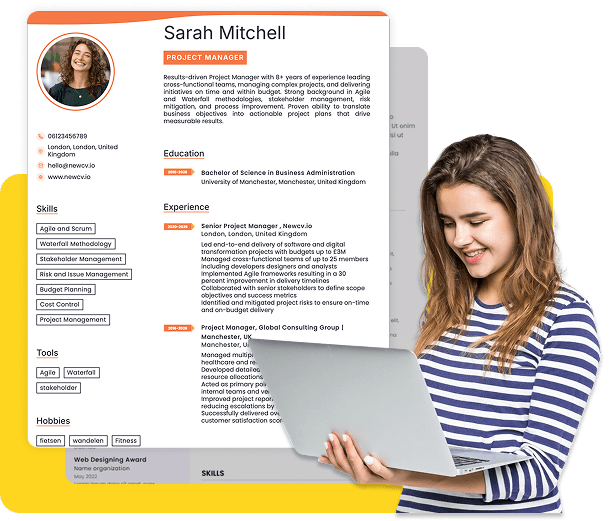
Use ATS-optimised Resume and resume templates that pass applicant tracking systems. Our Resume builder helps recruiters read, scan, and shortlist your Resume faster.

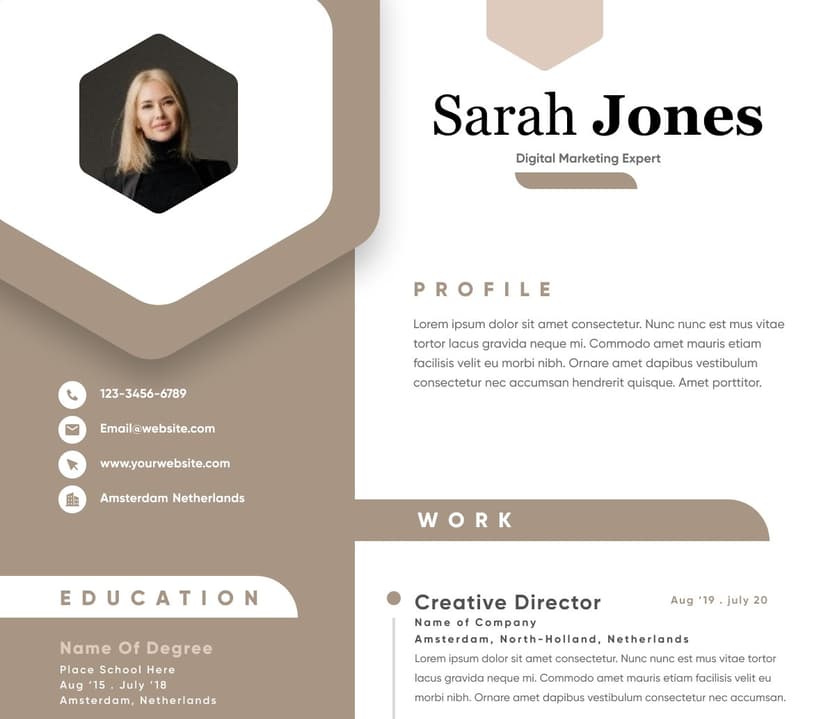
Use professional field-tested resume templates that follow the exact Resume rules employers look for.
Create Resume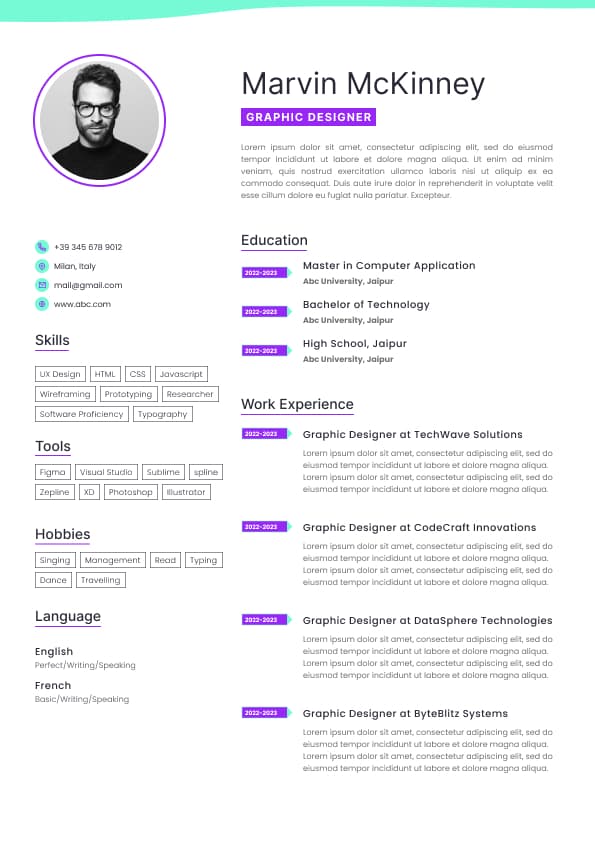
Use professional field-tested resume templates that follow the exact Resume rules employers look for.
Create ResumeIf you’re applying for jobs in Australia using a UK CV, there’s a strong chance your application is underperforming even if you’re qualified.
Australian recruiters and hiring managers evaluate resumes differently from UK employers. The biggest issue is not usually experience. It’s presentation, positioning, relevance, and alignment with Australian hiring expectations.
In Australia, resumes are expected to be:
Highly targeted to the role
Achievement-focused rather than duty-focused
Commercially relevant
Easy to scan quickly
Clear about outcomes and impact
A UK CV often feels too formal, too generic, too dense, or too responsibility-heavy for the Australian market.
The result is predictable:
The biggest difference is intent.
A UK CV is often written to document professional history comprehensively.
An Australian resume is written to sell suitability for a specific role.
That distinction changes everything:
Structure
Tone
Content selection
Length
Achievement framing
Keyword strategy
Professional summary style
Recruiters struggle to identify fit quickly
Your experience looks less relevant than it actually is
ATS systems rank your application lower
Hiring managers assume you don’t understand the local market
The good news is that most UK candidates do not need to rebuild their entire resume. They need to adapt it strategically for Australian hiring culture.
This guide breaks down the real differences between an Australian resume and a UK CV, what Australian recruiters actually look for, and how to adjust your application so it performs properly in the local market.
Recruiter readability
Australian recruiters are usually screening resumes at speed. In many industries, the first review lasts less than 30 seconds.
The question is not:
“Is this candidate experienced?”
The question is:
“Is this person clearly relevant for this role right now?”
That’s why Australian resumes prioritise:
Relevance over completeness
Results over responsibilities
Commercial value over job descriptions
Readability over formality
Australian hiring managers generally expect resumes to feel practical, direct, and evidence-based.
Strong Australian resumes typically include:
A tailored professional summary
Clear alignment to the advertised role
Quantified achievements
ATS-friendly formatting
Concise role descriptions
Industry-specific keywords
Modern formatting with strong spacing and readability
What recruiters dislike:
Long personal profiles
Generic career objectives
Dense paragraphs
Overly formal language
Excessive responsibilities without outcomes
Irrelevant early-career detail
Multi-page academic-style CVs for commercial roles
Many UK CVs fail because they read like career histories rather than hiring documents.
One of the biggest misconceptions is resume length.
Australian resumes are often slightly longer than UK CVs, but the extra length must add value.
Typical expectations in Australia:
Early career: 2 pages
Mid-level professionals: 2 to 4 pages
Senior leadership: 3 to 5 pages
Government or academic roles: potentially longer
However, Australian recruiters tolerate longer resumes only when:
Information is highly relevant
Achievements are meaningful
Content is easy to scan
A weak 4-page resume performs worse than a sharp 2-page document.
UK candidates often make one of two mistakes:
They compress too aggressively and remove valuable evidence
They include too much generic detail without strategic positioning
Australian hiring managers want enough information to justify an interview, not a complete autobiography.
UK CVs often begin with broad career statements.
Australian resumes usually perform better with a targeted positioning summary.
A strong Australian summary answers:
What level are you?
What industries do you work in?
What value do you bring?
What problems do you solve?
What environments suit your experience?
“Hard-working professional with excellent communication skills seeking a challenging opportunity.”
This says almost nothing.
“Project Manager with 8+ years’ experience delivering commercial construction projects across healthcare and infrastructure sectors. Experienced managing subcontractors, budgets exceeding $15M, and multi-site stakeholder coordination in fast-paced delivery environments.”
The second version helps recruiters immediately classify fit.
This is one of the largest recruiter-level differences.
UK CVs frequently describe:
Responsibilities
Daily duties
Team participation
Administrative functions
Australian resumes need stronger evidence of impact.
Recruiters want to see:
Revenue growth
Cost savings
Efficiency improvements
Team leadership outcomes
Project delivery results
Operational improvements
Compliance achievements
Customer or stakeholder impact
“Responsible for managing customer enquiries and complaints.”
“Reduced customer complaint escalation rates by 32% through implementation of revised service response procedures and staff training.”
The second example creates commercial credibility.
Australian recruiters respond strongly to measurable contribution.
This catches many UK applicants off guard.
In Australia, resumes generally should NOT include:
Date of birth
Marital status
Religion
Nationality
Passport details
Full home address
Photograph
Including these details can feel outdated and occasionally creates unconscious bias concerns.
Australian resumes usually only require:
Name
Mobile number
Email address
LinkedIn profile
City and state
One major Australian-specific difference is work rights visibility.
Recruiters often need to know immediately whether you can legally work in Australia.
If applicable, include:
Australian citizenship
Permanent residency
Full working rights
Relevant visa status
This is especially important for:
Skilled migrants
UK expats
Working holiday visa holders
Sponsored candidates
Failing to clarify work rights can reduce interview rates even when experience is strong.
Australian hiring culture is generally less formal than the UK.
This affects resume language significantly.
Australian resumes perform better when they sound:
Direct
Commercial
Clear
Practical
Outcome-oriented
UK CVs sometimes sound:
Overly corporate
Too polite
Indirect
Bureaucratic
Formal to the point of vagueness
Phrases like:
“I was fortunate to…”
“Assisted with…”
“Involved in…”
“Supported the delivery of…”
can weaken perceived ownership.
Australian recruiters prefer clearer accountability:
“Led”
“Delivered”
“Implemented”
“Managed”
“Reduced”
“Improved”
“Coordinated”
This does not mean exaggerating.
It means communicating contribution confidently.
Many Australian employers use Applicant Tracking Systems aggressively, especially in:
Corporate recruitment
Government
Mining
Healthcare
Banking
Technology
Logistics
A UK CV that lacks:
Relevant keywords
Australian terminology
Industry-standard phrasing
may never reach a human reviewer.
For example:
“CV” is acceptable, but “resume” is more common in Australia outside academia
“Stakeholder engagement” is heavily used in Australian corporate hiring
“WHS” is preferred over some UK health and safety terminology
“Procurement” and “commercial delivery” often carry strong weighting in ATS filtering
Many UK applicants unknowingly use terminology that weakens ATS relevance.
One of the biggest hidden screening factors is perceived local readiness.
Hiring managers ask themselves:
Will this person adapt quickly?
Do they understand Australian workplace culture?
Can they operate independently here?
Are their achievements transferable locally?
Will clients and teams relate to them?
Your resume needs to reduce uncertainty.
That means:
Using familiar terminology
Highlighting transferable environments
Showing adaptability
Clarifying work rights
Positioning achievements in commercially recognisable terms
UK candidates often underestimate how much recruiters look for local alignment signals.
Australian recruiters lose interest quickly when resumes read like HR-generated job descriptions.
Large paragraphs reduce scanability.
Australian recruiters prefer:
Short paragraphs
Bullet-point achievements
Strong spacing
Clear hierarchy
Older or less relevant roles should be condensed.
Australian resumes prioritise recent relevance heavily.
Listing tasks without outcomes creates low differentiation.
Career objectives often feel outdated unless highly strategic.
This damages ATS performance and recruiter recognition.
Australia is highly competitive in major cities like Sydney and Melbourne.
Generic resumes perform poorly.
Tailor it to the exact role type and Australian market expectations.
Focus on:
Results
Improvements
Delivery outcomes
Leadership impact
Commercial value
Use Australian industry language where appropriate.
Avoid:
Tables
Complex graphics
Excessive columns
Text-heavy layouts
This is critical.
Sound credible and commercially confident rather than excessively polished.
The Australian vs UK formatting gap becomes more important in:
Australian employers expect commercially sharp resumes.
ATS optimisation and compliance language matter heavily.
Selection criteria and structured relevance are critical.
Local compliance terminology and credential clarity matter.
Project outcomes and safety language carry strong weighting.
Australian tech hiring strongly prioritises impact metrics and delivery outcomes.
Not every sector expects the same style.
A more traditional UK CV structure can still work in:
Academia
Research
Medicine
Senior executive appointments
Some legal environments
However, even in these industries, Australian employers still expect:
Relevance
Clarity
Readability
Local alignment
Strong Australian resumes typically use:
Clean fonts
Consistent spacing
Simple layouts
Clear section headings
ATS-friendly structure
Achievement-led bullet points
Best-performing resumes usually avoid:
Photos
Skill bars
Heavy colours
Icons
Infographics
Decorative templates
Many visually designed UK CV templates actually perform poorly with Australian ATS systems.
Most Australian recruiters unconsciously assess resumes using three questions:
Your experience and achievements answer this.
Your communication style and positioning answer this.
Your clarity, local alignment, and relevance answer this.
The best Australian resumes reduce friction.
They make the recruiter’s decision easier.
That is ultimately why some UK CVs fail despite strong candidates behind them.
An Australian resume is not simply a UK CV with different spelling.
It reflects a different hiring mindset.
Australian employers generally prioritise:
Commercial relevance
Practical value
Clear outcomes
Fast readability
Local alignment
Confidence without excessive formality
Most UK applicants already have transferable experience.
The issue is usually translation, not qualification.
When you adapt your CV to Australian hiring expectations properly, recruiters can recognise your value faster, ATS systems rank you more effectively, and hiring managers see less risk in progressing your application.
That shift alone can dramatically improve interview rates.


 Upload Resume
 Import from Linkedin