
Choose from a wide range of NEWCV resume templates and customize your NEWCV design with a single click.

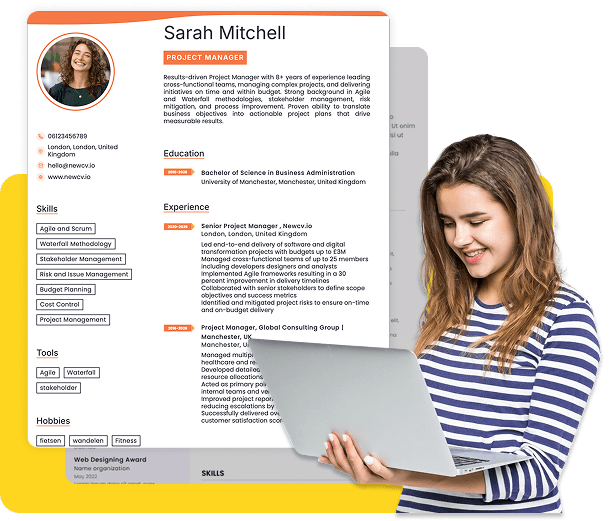
Use ATS-optimised Resume and resume templates that pass applicant tracking systems. Our Resume builder helps recruiters read, scan, and shortlist your Resume faster.

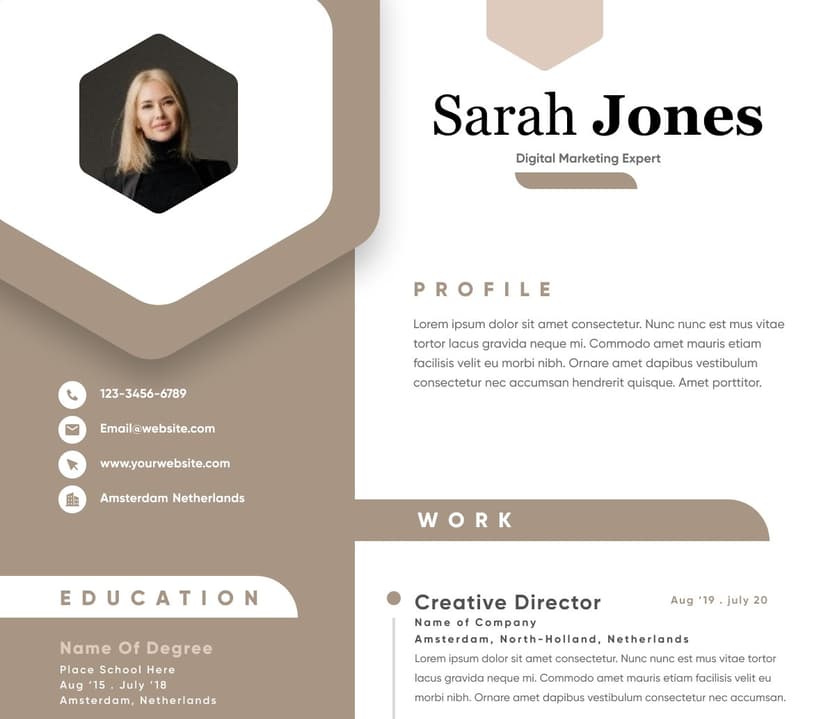
Use professional field-tested resume templates that follow the exact Resume rules employers look for.
Create Resume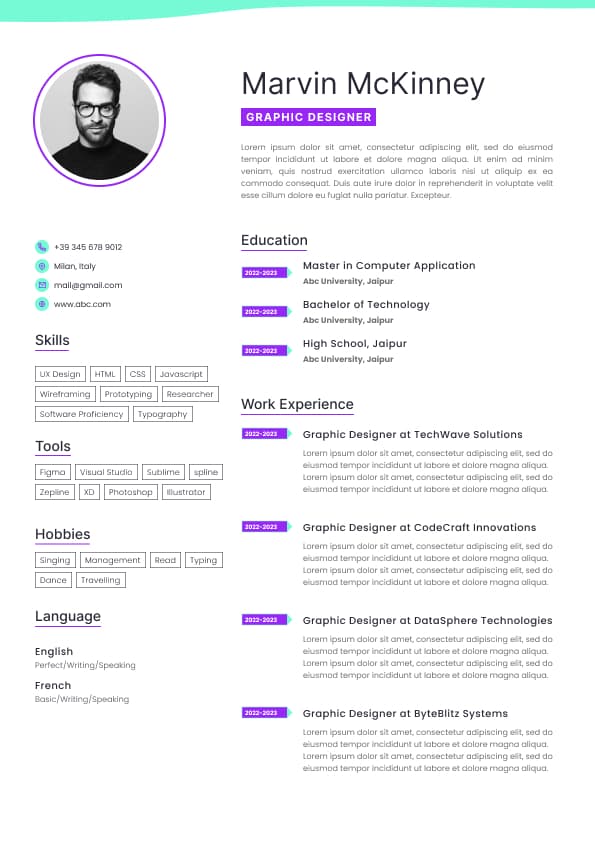
Use professional field-tested resume templates that follow the exact Resume rules employers look for.
Create ResumeThe best ATS resume format in Australia is a clean, reverse chronological resume with simple formatting, keyword alignment, clear section headings, and no design elements that break Applicant Tracking Systems. Most Australian recruiters spend less than 30 seconds on an initial resume scan, and if your formatting blocks ATS parsing, your application can be rejected before a hiring manager even sees it.
For most Australian industries in 2026, the highest-performing ATS-friendly resume format includes:
Reverse chronological structure
Single-column layout
Standard headings like “Professional Experience” and “Education”
ATS-readable fonts
No tables, graphics, icons, or text boxes
Strong keyword alignment with the job ad
An ATS resume format is a resume structure designed to be accurately read by Applicant Tracking Systems used by employers and recruiters.
Most medium and large Australian employers use ATS software to:
Store applications
Search resumes by keywords
Rank candidates against job criteria
Filter unsuitable applicants
Organise hiring workflows
Popular ATS platforms used in Australia include:
Workday
Greenhouse
Clear achievements tied to business outcomes
The mistake many candidates make is assuming ATS resumes must look bland or robotic. That is not how Australian hiring works. The best ATS resumes balance technical readability with strong recruiter usability. Your resume still needs to persuade a human after it passes the ATS.
This guide breaks down exactly what works in the Australian market, what recruiters actually look for, and how to structure your resume to maximise interview conversion.
Lever
SAP SuccessFactors
PageUp
SmartRecruiters
ATS software does not “reject” resumes the way many online myths suggest. In reality, recruiters use ATS platforms to search and shortlist candidates efficiently. Poor formatting creates parsing problems, while weak keyword alignment reduces discoverability.
That distinction matters.
An ATS-friendly resume is not about gaming software. It is about making your experience searchable, readable, and easy to evaluate.
For almost every professional role in Australia, the best ATS resume format is:
This format lists your most recent experience first and works best because it aligns with how Australian recruiters assess candidates.
Recruiters typically evaluate resumes in this order:
Current or most recent role
Job title relevance
Industry alignment
Years of experience
Scope of responsibility
Achievements and outcomes
Career progression
Stability and consistency
Reverse chronological resumes support this evaluation process naturally.
Australian hiring managers usually care less about flashy formatting and more about:
Relevance
Clarity
Commercial impact
Communication skills
Career consistency
Evidence of results
A reverse chronological format allows recruiters to assess these quickly.
Functional resumes and highly creative layouts often create suspicion because they can hide employment gaps, weak experience, or inconsistent progression.
Unless you work in highly visual creative industries, simple always performs better.
The highest-performing ATS resume formats in Australia usually follow this structure:
Include:
Full name
Mobile number
Professional email address
LinkedIn profile
City and state only
Do not include:
Full home address
Date of birth
Photo
Marital status
Nationality
Gender
Australian resumes do not require personal details beyond contact information.
Your professional summary should immediately position you for the role.
This is not a career objective.
It should communicate:
Years of experience
Core expertise
Industry alignment
Key strengths
Commercial value
“Hardworking team player seeking opportunities to grow my career.”
This says nothing meaningful.
“Project Manager with 8+ years’ experience delivering large-scale infrastructure and technology projects across mining and construction environments. Strong background in stakeholder management, risk mitigation, contractor coordination, and multi-site delivery.”
The second example creates immediate relevance and keyword alignment.
This section is critical for ATS keyword matching.
Use skills directly aligned with the target role.
Examples:
Stakeholder Management
Financial Analysis
Contract Negotiation
Project Delivery
Data Visualisation
Workforce Planning
Regulatory Compliance
Agile Delivery
CRM Management
Change Management
Avoid generic filler like:
Team player
Hard worker
Good communicator
Fast learner
Recruiters assume these traits by default.
This is the most important section of your resume.
Australian recruiters prioritise outcomes over responsibilities.
That means your resume should show:
Business impact
Results
Scope
Complexity
Scale
Leadership
Commercial contribution
For each role include:
Job title
Company name
Location
Dates of employment
Brief role overview
Achievement-focused bullet points
Responsible for managing projects
Worked with stakeholders
Assisted with reporting
This is vague and low-value.
Delivered $4.2M infrastructure project three weeks ahead of schedule while maintaining compliance across multiple contractors
Reduced reporting turnaround times by 35% through automation and process redesign
Managed stakeholder engagement across operations, finance, engineering, and executive leadership teams
Specificity increases recruiter confidence.
Many ATS articles online exaggerate formatting risks.
Modern ATS platforms are more sophisticated than people think.
However, certain formatting issues still cause genuine parsing problems.
Multi-column resumes often break ATS parsing.
A single-column structure remains the safest and most effective option.
Best headings include:
Professional Summary
Skills
Professional Experience
Education
Certifications
Avoid creative alternatives like:
Career Journey
My Story
What I Bring
ATS systems and recruiters both prefer predictable structure.
Best fonts include:
Calibri
Arial
Helvetica
Cambria
Use 10–12pt font size for body text.
Most Australian employers accept both formats.
However:
DOCX is safest for ATS compatibility
PDF works well if formatting is simple
Complicated PDFs can still create parsing issues.
When in doubt, use DOCX.
This is where most ATS advice online becomes disconnected from real hiring.
Passing ATS screening alone does not get interviews.
Your resume must also convince recruiters quickly.
Australian recruiters typically look for:
Recruiters want immediate relevance.
If you apply for a Business Analyst role, your resume should clearly position you as one.
Not:
“Experienced professional”
“Versatile leader”
“Multi-skilled operator”
Generic positioning weakens shortlisting chances.
Australian hiring culture strongly values practical outcomes.
Recruiters trust measurable impact more than responsibilities.
Strong resumes show:
Revenue growth
Cost savings
Efficiency gains
Delivery outcomes
Team leadership
Compliance success
Client retention
Operational improvements
Frequent short-term roles without explanation can create concern.
If you have contract experience, label it clearly.
Example:
“Senior Business Analyst | Contract”
This prevents recruiters assuming instability.
Keyword stuffing is one of the biggest mistakes candidates make.
Modern ATS systems are increasingly semantic.
That means recruiters and software look for contextual relevance, not just repeated phrases.
Use keywords naturally across:
Professional summary
Skills section
Job titles
Achievement bullets
Include terminology from the job ad where relevant.
If the job ad mentions:
Stakeholder engagement
Agile delivery
Change management
Your resume should naturally include these terms if they genuinely apply to your experience.
Do not force keywords unnaturally.
Recruiters spot this immediately.
Heavy graphics, icons, progress bars, and design elements often reduce readability.
Australian recruiters generally prefer clean, professional formatting.
Simple resumes consistently outperform heavily designed templates outside creative industries.
Generic summaries destroy positioning.
Recruiters want immediate clarity.
Within seconds, they should understand:
Your profession
Your seniority
Your industry
Your core strengths
Your relevance to the role
This is one of the biggest reasons resumes fail.
Most candidates describe tasks.
Strong candidates demonstrate outcomes.
That difference heavily impacts shortlist decisions.
One generic resume rarely performs well across multiple roles.
High-performing candidates tailor:
Keywords
Summary positioning
Skill emphasis
Achievement relevance
Even small adjustments can significantly improve interview conversion.
In Australia:
Early career candidates: 1–2 pages
Mid-level professionals: 2–3 pages
Senior executives: 3–4 pages if justified
The ideal resume length is not about page count.
It is about relevance density.
Recruiters prefer concise resumes with strong information quality.
A shorter, highly relevant resume beats a bloated resume every time.
Usually no, unless heavily simplified.
Many Canva templates create ATS parsing problems because they rely on:
Text boxes
Graphics
Columns
Layered elements
They may look visually impressive but perform poorly in recruiter workflows.
This is especially true for corporate, government, mining, engineering, finance, healthcare, and technology roles in Australia.
If using Canva:
Keep layouts extremely simple
Avoid icons and graphics
Export carefully
Test readability thoroughly
Best format:
Clean reverse chronological
Achievement-focused
Minimal design
Strong commercial metrics
Industries include:
Finance
Consulting
HR
Marketing
Operations
Government resumes often require:
Strong keyword alignment
Clear capability evidence
Detailed achievement examples
APS or state framework alignment
These resumes are often longer and more structured.
Recruiters prioritise:
Project scale
Site experience
Compliance
Safety systems
Certifications
Technical competency
Simple formatting works best.
Tech resumes should emphasise:
Platforms
Tools
Technical environments
Delivery outcomes
Agile methodologies
Business impact
Keyword relevance matters heavily in tech recruitment.
Your file name matters more than many candidates realise.
Use:
Firstname_Lastname_Resume.pdf
Or:
Firstname_Lastname_[JobTitle].docx
Avoid:
Resume_Final_v8
CV_NEWEST
Untitled_document
Professional presentation influences perception.
Most recruiters do not read resumes top to bottom initially.
They scan strategically.
Typical scan order:
Current title
Current employer
Dates
Summary
Keywords
Relevant achievements
Career consistency
This means your most relevant information must appear early and clearly.
Dense paragraphs reduce readability and lower engagement.
The best ATS strategy is not technical manipulation.
It is strategic alignment.
The strongest resumes achieve three things simultaneously:
The resume can be parsed accurately.
The recruiter immediately understands your value.
The resume feels highly aligned to the target role.
Candidates who focus only on ATS optimisation often create robotic resumes.
Candidates who ignore ATS entirely often create visually impressive resumes that perform poorly.
The best-performing resumes balance both.
High-performing resumes typically share these characteristics:
Clear positioning
Strong role alignment
Commercial outcomes
Clean formatting
Easy scanning
Relevant keywords
Professional credibility
Concise communication
What stands out is not design.
It is clarity and relevance.
Australian recruiters value practical competence over flashy presentation.
The best ATS resume format in Australia is a clean, reverse chronological resume designed for both software readability and recruiter decision-making.
Most resumes fail because they are:
Too generic
Poorly positioned
Overdesigned
Keyword weak
Focused on duties instead of outcomes
A strong ATS resume does not just pass software screening.
It quickly convinces recruiters that you are relevant, credible, and worth interviewing.
That is the real goal.
If your resume is easy to scan, clearly aligned to the role, achievement-focused, and professionally structured, you are already ahead of most applicants in the Australian market.


 Upload Resume
 Import from Linkedin