
Choose from a wide range of NEWCV resume templates and customize your NEWCV design with a single click.

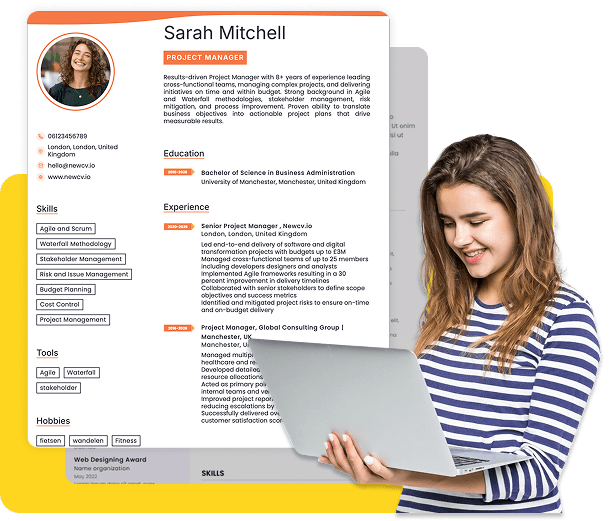
Use ATS-optimised Resume and resume templates that pass applicant tracking systems. Our Resume builder helps recruiters read, scan, and shortlist your Resume faster.

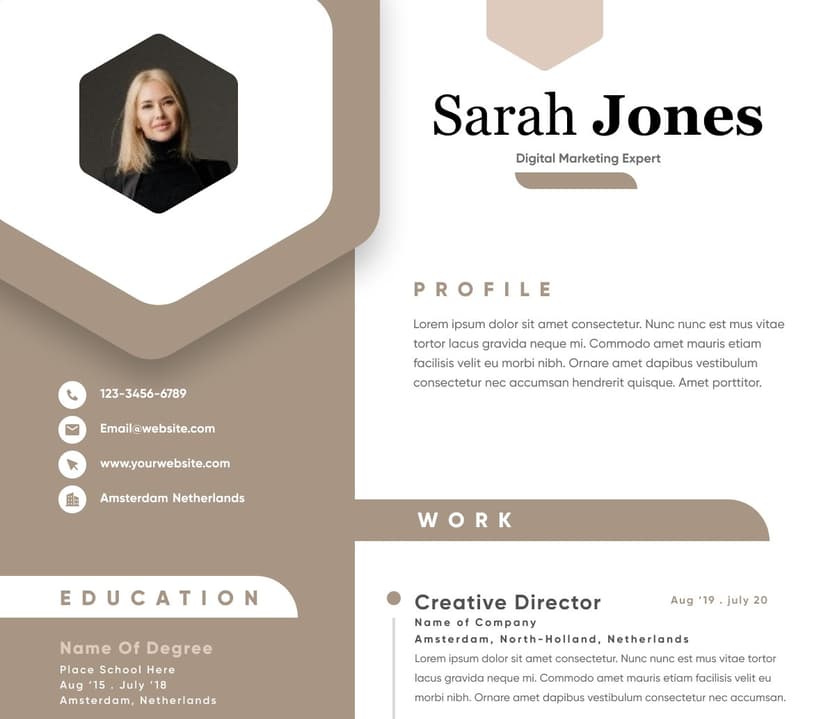
Use professional field-tested resume templates that follow the exact Resume rules employers look for.
Create Resume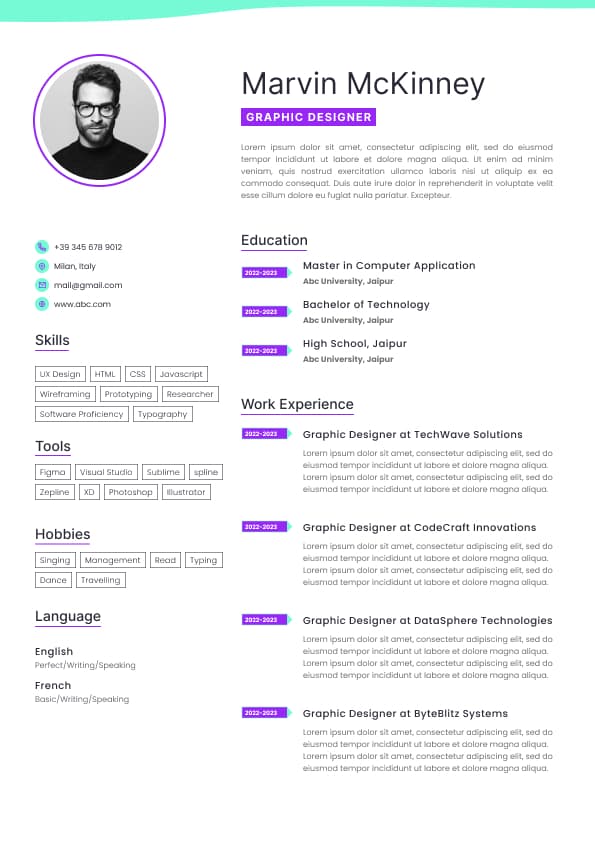
Use professional field-tested resume templates that follow the exact Resume rules employers look for.
Create ResumeMost Australian employers use behavioural interview questions to assess how you think, communicate, solve problems, and work with others. The STAR method is still the most effective way to answer these questions because it gives hiring managers evidence instead of vague claims.
But most candidates use STAR badly.
They either:
Ramble with too much background
Give generic teamwork stories
Skip measurable outcomes
Sound rehearsed and robotic
Focus on responsibilities instead of actions
Strong STAR answers are specific, outcome-focused, and clearly show your decision-making process. In the Australian job market, hiring managers are not looking for perfect textbook answers. They want practical examples that prove you can operate effectively in a real workplace.
The STAR method is a structured framework used to answer behavioural interview questions.
STAR stands for:
Situation — The context or challenge
Task — Your responsibility in that situation
Action — What you personally did
Result — The outcome you achieved
Australian employers use behavioural interviewing heavily because past behaviour is considered one of the strongest predictors of future performance.
Typical behavioural interview questions include:
“Tell me about a time you dealt with conflict.”
“Describe a situation where you had to meet a tight deadline.”
Most candidates think STAR is about storytelling.
It is not.
Recruiters and hiring managers are evaluating:
How you think under pressure
Whether you take ownership
Your communication style
Decision-making ability
Commercial awareness
Teamwork and stakeholder management
Problem-solving capability
This guide explains exactly how to structure high-quality STAR responses, what recruiters actually evaluate during behavioural interviews, and strong STAR method examples tailored to Australian hiring expectations.
“Give an example of when you solved a difficult problem.”
“Tell me about a time you handled competing priorities.”
“Describe a mistake you made and what you learned.”
Without a structured approach, candidates often lose clarity halfway through the answer. STAR keeps responses focused, logical, and evidence-based.
Self-awareness
Results orientation
The strongest candidates explain:
Why they made decisions
How they prioritised
What trade-offs existed
What changed because of their actions
Weak candidates only describe what happened.
That distinction matters enormously.
Good STAR responses usually:
Stay concise and structured
Focus heavily on the Action section
Include measurable or visible outcomes
Show personal ownership
Sound natural instead of memorised
Match the seniority of the role
Weak answers often:
Spend too long explaining background
Use “we” constantly without clarifying personal contribution
Give generic examples anyone could claim
Avoid difficult situations
Skip the outcome entirely
Sound scripted and artificial
A high-performing STAR answer usually follows this balance:
Situation: 10–15%
Task: 10%
Action: 60–70%
Result: 15–20%
The Action section is where hiring decisions are influenced most.
This is where recruiters assess:
Judgement
Initiative
Communication
Leadership
Technical capability
Stakeholder management
Most poor STAR answers fail because candidates spend too much time on setup and not enough time explaining what they actually did.
“Tell me about a time you dealt with conflict in the workplace.”
“We had a disagreement in the team about how to complete a project. I spoke to everyone and we managed to work it out in the end.”
Why this fails:
No specifics
No evidence of leadership
No explanation of actions
No measurable outcome
Sounds generic and forgettable
“In my previous role as a project coordinator at a logistics company in Melbourne, two team members disagreed over how we should prioritise urgent client deliveries during a high-volume period before Christmas.
As the coordinator responsible for delivery scheduling, I needed to resolve the issue quickly because delays were already affecting response times.
I organised a short meeting with both staff members individually first to understand their concerns. One was focused on operational efficiency, while the other was prioritising key client relationships. After identifying the underlying issue, I restructured the delivery allocation process using priority tiers based on client urgency and delivery deadlines.
I then presented the revised process to the broader team and implemented a shared tracking system so everyone could see delivery priorities in real time.
Within two weeks, delivery delays dropped by 18%, team communication improved noticeably, and we completed the peak period without losing any major client accounts.”
Why this works:
Specific workplace context
Clear ownership
Strong Action section
Demonstrates problem-solving and communication
Includes measurable outcome
Sounds realistic and credible
“Describe a time you had to meet a challenging deadline.”
“While working as a marketing executive for a Brisbane-based retail company, we unexpectedly lost two team members during a major EOFY campaign rollout.
I was responsible for coordinating campaign assets across paid social, email, and in-store promotions, and the launch date could not move because advertising bookings were already locked in.
I immediately reviewed all deliverables and identified which tasks were business-critical versus lower priority. I then redistributed work across the remaining team, negotiated revised timelines with one external supplier, and personally took over the email automation setup to remove bottlenecks.
To keep everything on track, I introduced short daily check-ins and used a shared progress dashboard so issues were identified early.
The campaign launched on schedule, exceeded sales targets by 11%, and senior management later adopted the workflow process for future campaigns.”
Why this answer stands out:
Shows prioritisation ability
Demonstrates commercial thinking
Includes initiative and ownership
Reflects realistic workplace pressure
Highlights process improvement, not just hard work
“Tell me about a difficult problem you solved.”
“In my role as an IT support analyst in Sydney, we experienced repeated outages with an internal reporting platform that several departments relied on daily.
The issue had been escalated multiple times previously without a permanent fix, and staff frustration was growing because reporting delays were affecting client deadlines.
I reviewed previous incident reports and noticed the outages consistently occurred during peak data-processing periods. After analysing system logs, I identified that automated overnight jobs were overlapping with high-volume morning usage.
I proposed adjusting the processing schedule and worked with the infrastructure team to stagger the automated tasks outside peak operating hours. I also created a monitoring alert system so we could identify performance spikes earlier.
After implementation, system outages reduced by more than 80% over the following two months, and support tickets relating to the platform dropped significantly.”
Why this works:
Demonstrates analytical thinking
Shows initiative beyond standard duties
Includes technical reasoning
Proves business impact
Reflects genuine problem-solving capability
One major mistake candidates make is assuming leadership examples require a management title.
Australian employers often assess informal leadership just as heavily.
“Tell me about a time you showed leadership.”
“While working as a senior customer service officer in Perth, our team experienced a sudden increase in complaints after a system migration caused delays in customer response times.
Although I was not formally managing staff, I noticed newer team members were struggling to handle frustrated customers consistently.
I created a simple escalation guide with recommended response frameworks and organised informal coaching sessions during quieter periods. I also shared recurring customer issues with management so we could improve internal communication around system updates.
Over the following month, complaint escalation rates reduced, average handling times improved, and my manager later asked me to assist with onboarding future staff.”
Why this performs strongly:
Shows initiative without authority
Demonstrates influence
Reflects practical leadership
Shows awareness of operational impact
Feels authentic and believable
The best STAR examples are:
Relevant to the role
Recent where possible
Specific and measurable
Personally driven
Professionally appropriate
Complex enough to demonstrate judgement
Strong examples usually involve:
Conflict
Pressure
Ambiguity
Stakeholder management
Difficult decisions
Process improvement
Mistakes and recovery
Problem-solving
Weak examples usually involve:
Minor tasks with low stakes
Overly personal situations
University group work when professional examples exist
Stories where your contribution is unclear
Examples with no measurable impact
One of the fastest ways to lose an interviewer is overexplaining context.
Most strong STAR answers take:
1.5 to 3 minutes
Slightly longer for senior leadership roles
If your Situation section takes two minutes alone, your structure is failing.
Australian interview culture generally values:
Confidence
Clarity
Authenticity
Direct communication
Over-rehearsed STAR answers sound unnatural very quickly.
Good preparation means:
Knowing your examples
Understanding your structure
Speaking naturally in the moment
Not memorising paragraphs word-for-word.
Recruiters constantly hear:
“We worked together…”
“The team completed…”
“We delivered…”
But they still need to understand:
What YOU did
What YOU decided
What YOU influenced
Collaborative language is good, but ownership still matters.
Safe examples rarely differentiate candidates.
For example:
“I helped organise files.”
“I answered customer emails.”
“I attended meetings.”
These do not demonstrate judgement, pressure handling, or business impact.
Higher-quality examples involve:
Difficult stakeholders
Operational challenges
Commercial pressure
Process failures
Conflict resolution
Leadership moments
High accountability
Strong examples often involve:
Stakeholder management
Process improvement
Project delivery
Client communication
Commercial outcomes
Cross-functional collaboration
Hiring managers often prioritise:
Communication
Emotional intelligence
Escalation handling
Patient or client outcomes
Decision-making under pressure
Team coordination
Strong STAR responses usually demonstrate:
Safety awareness
Problem-solving
Reliability
Efficiency improvements
Team coordination
Risk management
If you lack professional experience, acceptable examples can include:
University projects
Internships
Volunteer work
Casual jobs
Sporting leadership
Community involvement
But the example still needs:
Responsibility
Decision-making
Measurable outcomes
Clear ownership
Many Australian employers use scoring frameworks during interviews.
Interviewers often assess:
Relevance of example
Clarity
Communication ability
Decision-making quality
Complexity of situation
Evidence of ownership
Outcome achieved
Alignment with role requirements
This is why vague answers perform poorly even if the candidate seems experienced.
Specificity creates credibility.
Before interviews, prepare 6 to 10 adaptable STAR examples covering:
Conflict
Leadership
Failure or mistake
Tight deadlines
Problem-solving
Teamwork
Stakeholder management
Process improvement
Difficult customers or clients
Prioritisation
For each example, identify:
The challenge
The risk
Your actions
Your reasoning
The measurable outcome
What you learned
This prevents panic during behavioural interviews because you can adapt examples across multiple questions.
The strongest candidates do not just answer the question.
They strategically position themselves.
For example:
A leadership answer can also demonstrate commercial awareness
A conflict example can show stakeholder management
A problem-solving answer can demonstrate initiative and communication
A deadline example can reinforce prioritisation and resilience
High-performing STAR responses subtly reinforce multiple desirable traits at once.
That is often what separates shortlisted candidates from average applicants.
Do not memorise scripts.
Instead:
Practise speaking naturally
Record yourself answering questions
Focus on clarity and structure
Reduce unnecessary detail
Strengthen the Action and Result sections
Improve measurable outcomes
Remove filler language
Good STAR preparation improves:
Confidence
Interview fluency
Response structure
Credibility
Communication quality


 Upload Resume
 Import from Linkedin