
Choose from a wide range of NEWCV resume templates and customize your NEWCV design with a single click.

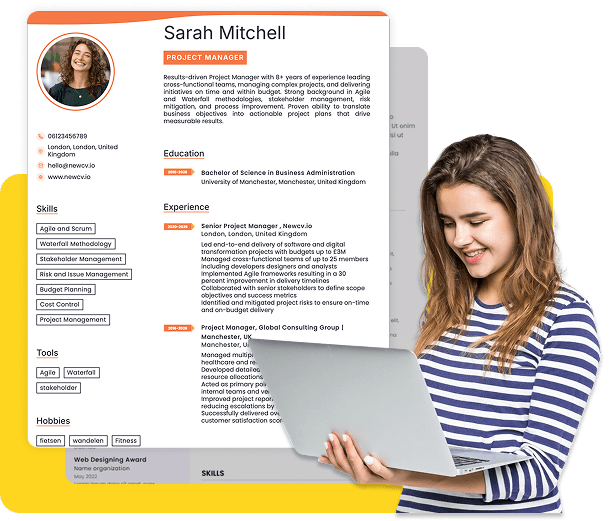
Use ATS-optimised Resume and resume templates that pass applicant tracking systems. Our Resume builder helps recruiters read, scan, and shortlist your Resume faster.

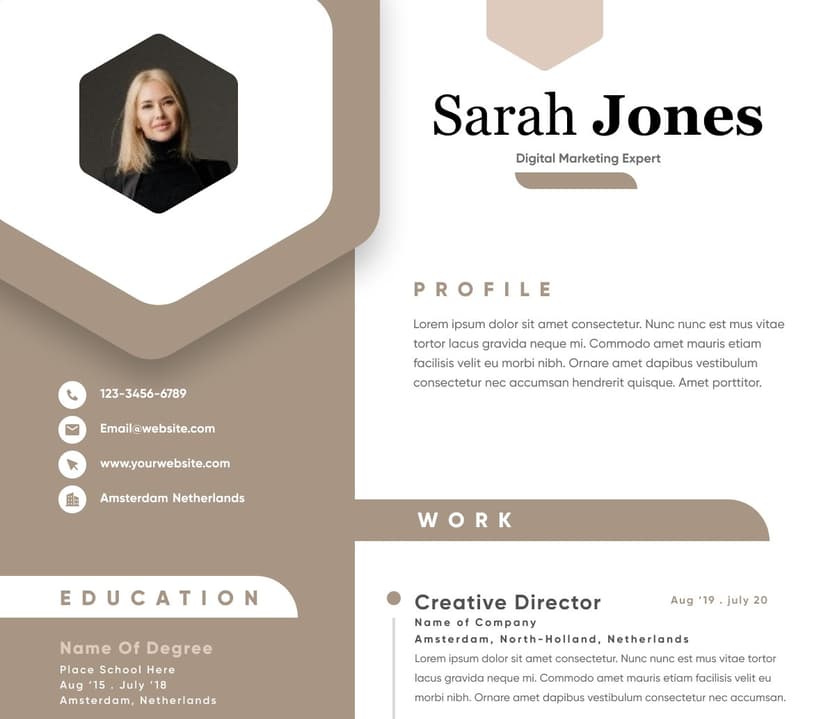
Use professional field-tested resume templates that follow the exact Resume rules employers look for.
Create Resume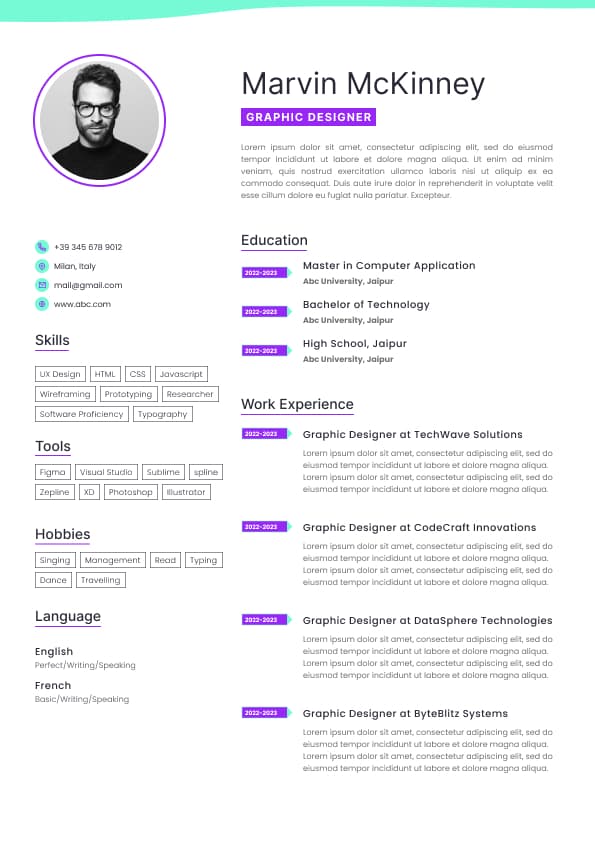
Use professional field-tested resume templates that follow the exact Resume rules employers look for.
Create ResumeIn Australia, most employers, recruiters, and hiring managers use the terms resume and CV interchangeably, but they are not always the same document. For the vast majority of private-sector jobs, employers expect a concise, tailored resume of around 2–4 pages. A traditional academic-style CV is usually only expected in fields like academia, research, medicine, and some government or executive roles.
This distinction matters more than many candidates realise. One of the most common reasons strong applicants get overlooked is because they submit the wrong style of document for the role. A corporate recruiter hiring for a project manager role in Sydney does not want a 9-page academic CV. Equally, a university hiring panel reviewing a research fellow application will likely expect a detailed CV with publications, grants, conferences, and teaching history.
The real issue is not terminology. It is whether your document matches Australian hiring expectations for your industry, seniority, and role type.
In the Australian job market, a resume is a targeted document designed to help recruiters quickly assess whether you are suitable for a specific role.
A modern Australian resume focuses on:
Relevant experience
Achievements and outcomes
Industry alignment
Commercial value
Career progression
Skills relevant to the advertised role
Most recruiters spend less than a minute on an initial resume scan. The goal is not to tell your entire career story. The goal is to make the hiring manager believe you are worth interviewing.
A strong Australian resume is:
Tailored to the role
Achievement-focused
Easy to scan
ATS-friendly
Commercially relevant
Concise without being vague
For most Australian jobs, resumes are preferred over detailed CVs because hiring teams prioritise efficiency during screening.
A CV (Curriculum Vitae) is generally more detailed and comprehensive than a resume.
In Australia, CVs are most commonly used in:
Academia
Higher education
Research roles
Medical professions
Scientific fields
Some government applications
Executive leadership applications requiring extensive detail
A CV may include:
Publications
Research projects
Grants and funding
Conferences
Teaching experience
Professional memberships
Certifications
Full employment history
Detailed project work
Unlike resumes, CVs are often intended to document an entire professional career rather than selectively market relevant experience.
This is where many candidates get confused. International advice often claims:
Resume = 1 page
CV = long document
That distinction is overly simplistic and often inaccurate in Australia.
Australian employers commonly accept:
2–4 page resumes
Longer CVs for specialist industries
The deciding factor is not page count. It is hiring context.
A resume is a marketing document.
A CV is a career record.
That difference changes how recruiters evaluate them.
| Resume | CV |
| --------------------------------- | ------------------------------- |
| Tailored to a specific role | Comprehensive career history |
| Achievement-focused | Detail-focused |
| Concise and commercially relevant | Broad and exhaustive |
| Common in corporate hiring | Common in academia and research |
| Prioritises readability | Prioritises completeness |
| Usually 2–4 pages | Can be much longer |
The mistake candidates make is assuming “more information = stronger application”.
In reality, Australian recruiters usually prefer:
Relevance over volume
Clear positioning over excessive detail
Outcomes over task lists
Most Australian recruiters are not looking for a perfect document. They are looking for fast evidence that you can solve the employer’s problem.
That means recruiters typically scan for:
Job title alignment
Industry relevance
Career stability
Commercial impact
Keywords matching the role
Seniority level
Communication quality
Evidence of results
This is why generic CVs often perform poorly in corporate hiring.
Recruiters regularly reject applications because of:
Overly long documents
Dense text blocks
Generic responsibilities
Irrelevant historical detail
Poor formatting
Lack of measurable achievements
Copy-paste applications
Academic-style writing for commercial roles
A candidate may have excellent experience but still lose interviews because their document does not match Australian hiring expectations.
Use a resume for:
Private-sector jobs
Corporate roles
Trades and construction
Retail and hospitality
Technology and IT
Marketing and sales
Operations roles
Finance and accounting
Engineering
HR and recruitment
Most mid-level and senior positions
Even many executive roles in Australia still use resumes rather than full academic CVs.
For most jobs advertised on:
Seek
Indeed
EthicalJobs
Company career portals
A resume is the expected format.
Use a CV when applying for:
Academic positions
University roles
Research fellowships
PhD opportunities
Medical specialist roles
Scientific research positions
Grant-funded programs
Certain public sector roles
International academic applications
If the employer specifically requests:
Publications
Research history
Teaching portfolio
Conferences
Full career chronology
They are usually expecting a proper CV rather than a resume.
The most common mistake is using the same document for every application.
Australian recruiters can immediately tell when:
A document is generic
A candidate has not tailored their application
Keywords are missing
The experience does not align properly with the role
Candidates often think tailoring means rewriting the entire document.
It does not.
Effective tailoring usually means:
Adjusting the professional summary
Reordering achievements
Matching terminology from the job ad
Highlighting relevant projects
Aligning skills with the role requirements
Small strategic changes often produce significantly better interview outcomes.
A major source of confusion comes from US-based resume advice dominating Google search results.
Australian hiring practices differ in several important ways.
In Australia:
2–4 pages is completely normal for experienced professionals
One-page resumes are usually too short for mid-career candidates
Senior professionals often need additional depth
Australian recruiters generally prefer enough detail to assess capability properly.
In Australia:
Photos are generally unnecessary
Many recruiters actively dislike them
They can create unconscious bias concerns
Exceptions may exist in modelling, acting, or some client-facing industries.
Australian resumes usually include:
Name
Phone number
LinkedIn profile
You generally do not need:
Date of birth
Marital status
Religion
Nationality
Full address
Outdated personal details can make resumes look old-fashioned.
Australian resumes usually state:
You do not need to include referee details unless specifically requested.
Applicant Tracking Systems (ATS) matter in Australia, particularly for larger employers and recruitment agencies.
However, many candidates misunderstand ATS optimisation.
ATS systems primarily help recruiters:
Search keywords
Filter applicants
Organise applications
They do not “hire” candidates.
The real goal is balancing:
ATS readability
Human readability
Strategic positioning
Over-optimising for ATS often creates robotic resumes that recruiters dislike.
Effective ATS optimisation includes:
Clear headings
Standard formatting
Relevant keywords
Matching role terminology
Clean structure
Avoiding graphics-heavy layouts
The best resumes work for both:
Recruiters
Screening systems
Career changers often make the mistake of documenting everything equally.
That approach weakens positioning.
If you are changing industries in Australia, your resume should:
Prioritise transferable value
Emphasise relevant achievements
Reduce irrelevant detail
Reposition your experience strategically
For example, a hospitality manager moving into operations should not lead with:
Bar opening duties
Venue administration
Shift scheduling alone
Instead, they should frame experience around:
Team leadership
Operational efficiency
Stakeholder management
Cost control
Staff performance
The structure matters as much as the experience itself.
Most candidates assume hiring managers read resumes top to bottom.
They usually do not.
Recruiters and hiring managers often scan in this order:
Current job title
Current employer
Career progression
Professional summary
Key achievements
Relevant industry experience
Education if relevant
This is why the first page matters disproportionately.
A weak opening section can kill interview chances before the recruiter even reaches strong experience later in the document.
High-performing resumes in Australia typically include:
Recruiters should immediately understand:
Your profession
Your seniority
Your industry alignment
Your value proposition
Weak resumes describe duties.
Strong resumes show outcomes.
Weak Example
“Responsible for managing customer accounts.”
Good Example
“Managed a portfolio of 120 enterprise accounts while increasing client retention by 18% over 12 months.”
Specificity creates credibility.
Australian employers strongly value:
Results
Efficiency
Revenue impact
Leadership capability
Problem-solving
Operational improvement
Candidates who demonstrate business impact generally perform better than candidates who simply list responsibilities.
In Australia, either term is usually acceptable for corporate roles.
However:
“Resume” is more common in private-sector hiring
“CV” is more common in academia and government contexts
If the job ad says:
“Submit your resume” → use resume terminology
“Submit your CV” → use CV terminology
Matching employer language creates subtle alignment.
Government hiring can differ from private-sector recruitment.
Some government roles require:
Longer application documents
Selection criteria responses
Detailed employment history
Formal CV formats
However, many Australian government jobs still request resumes rather than traditional academic CVs.
Always follow the wording and application instructions carefully.
Ignoring application instructions is a common rejection trigger.
For most Australian professionals, the best approach is:
Maintain one comprehensive master CV for your records
Create tailored resumes for applications
Your master CV can include:
Full career history
Projects
Certifications
Achievements
Training
Publications if relevant
Then you selectively adapt content into a focused application resume.
This approach saves time while improving targeting.
Your document may be underperforming if:
You rarely get interviews
Recruiters ghost you after applying
You attract the wrong roles
You are consistently overlooked despite strong experience
Your applications feel generic
Your resume reads like a job description rather than a value proposition
In Australia’s competitive hiring market, resume quality directly impacts interview rates.
Strong candidates regularly lose opportunities because their positioning is weak.
The difference between a resume and CV in Australia is not just terminology. It is about purpose, audience, and hiring context.
For most Australian jobs, employers want a concise, tailored resume focused on commercial relevance and measurable outcomes. Detailed CVs are usually reserved for academic, research, medical, and specialist applications.
The strongest candidates understand that hiring documents are strategic tools, not career archives.
A well-positioned resume helps recruiters quickly understand:
Who you are
What level you operate at
What value you bring
Why you are worth interviewing
That clarity is what drives interviews in the Australian job market.


 Upload Resume
 Import from Linkedin