
Choose from a wide range of NEWCV resume templates and customize your NEWCV design with a single click.

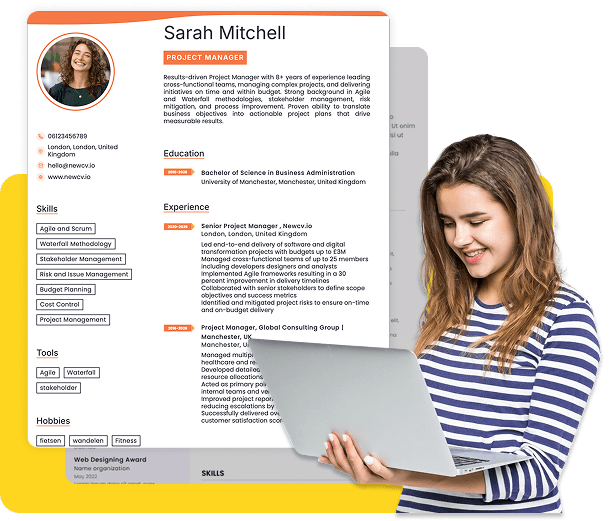
Use ATS-optimised Resume and resume templates that pass applicant tracking systems. Our Resume builder helps recruiters read, scan, and shortlist your Resume faster.


Use professional field-tested resume templates that follow the exact Resume rules employers look for.
Create Resume
Use professional field-tested resume templates that follow the exact Resume rules employers look for.
Create ResumeA strong construction resume in Australia is not about fancy formatting or stuffing keywords into a document. Hiring managers, labour hire recruiters, site supervisors, and construction companies want fast proof that you can work safely, show up reliably, and perform on-site without becoming a risk.
Most construction resumes fail because they are too vague, too generic, or written like corporate office resumes. In Australian construction hiring, recruiters often scan a resume for less than 30 seconds before deciding whether to shortlist, call, or reject. Your tickets, licences, site experience, machinery competency, safety record, and reliability matter more than generic career summaries.
The best construction resumes in Australia clearly show:
Relevant site or project experience
Australian tickets and licences
Machinery or tool competency
Safety compliance knowledge
Physical work capability
Construction hiring in Australia is highly practical. Recruiters are trying to reduce risk for employers. They are not looking for polished corporate language. They want evidence.
Most recruiters scan for these factors in this order:
White Card
Relevant licences and tickets
Recent construction experience
Industry type experience
Machinery or equipment operation
Site safety understanding
Reliability and attendance history
Reliability and attendance
Ability to work in teams and under pressure
Experience in commercial, residential, civil, mining, or infrastructure environments
If your resume quickly demonstrates those points, you dramatically increase your chances of getting interviews.
Physical capability
Local availability
Ability to start immediately
This means your resume structure matters.
If a recruiter cannot instantly identify your qualifications and suitability, they often move to the next applicant.
For most construction jobs in Australia, the ideal resume format is:
Include:
Full name
Mobile number
Professional email
Suburb and state
Relevant licences if highly important
Good Example
Daniel Morgan
Brisbane, QLD
0412 555 888
White Card | HR Licence | Forklift Ticket
Avoid adding:
Full residential address
Date of birth
Marital status
Photo
These are unnecessary in modern Australian hiring.
Your summary should immediately position you for the exact construction role.
Keep it practical and site-focused.
“Hardworking individual seeking opportunities to grow within a reputable company.”
This says nothing meaningful.
“Reliable construction labourer with 6 years’ experience across commercial and civil projects in Queensland. Skilled in site preparation, demolition, power tool operation, manual handling, and maintaining WHS compliance. Holds White Card, EWP, and forklift licence with a strong record of attendance and site safety.”
That summary works because it immediately answers:
What type of worker you are
Years of experience
Industry exposure
Key skills
Tickets
Reliability indicators
This section is critical in Australian construction hiring.
Place it near the top.
Depending on your role:
White Card
HR or MR Licence
Forklift Licence
EWP Ticket
Working at Heights
Confined Space
Dogging
Rigging
Traffic Control
First Aid
Excavator Ticket
Roller Ticket
Skid Steer Ticket
Telehandler Ticket
Recruiters often search resumes using these exact terms in ATS systems.
If your tickets are buried deep in the resume, you reduce visibility.
This section should align directly with the role you want.
Site preparation
Demolition
Concrete work
Formwork assistance
Power tool operation
Hand tool usage
Trenching
Civil labouring
Traffic management
Material handling
Site clean-up
WHS compliance
Manual handling
Machinery operation
Scaffolding assistance
General labouring
Commercial construction
Residential construction
Infrastructure projects
Avoid generic soft skills like:
Team player
Hard worker
Motivated
These phrases are massively overused and provide little hiring value unless supported by real examples.
This is where most construction resumes either win or fail.
Australian construction recruiters want:
Specific project environments
Responsibilities
Tools and equipment used
Safety responsibilities
Productivity contribution
Reliability indicators
Use:
Job title
Company name
Location
Employment dates
Achievement-focused bullet points
Construction Labourer
BuildForce Civil Pty Ltd
Brisbane, QLD
January 2021 – Current
Assisted with civil construction projects including drainage, trenching, concreting, and roadworks
Operated jackhammers, compactors, grinders, and demolition equipment safely
Maintained WHS compliance across active construction sites
Performed manual handling and material movement for crews of up to 25 workers
Supported excavation crews and traffic management operations
Achieved strong attendance record across long-term infrastructure projects
Completed pre-start safety checks and toolbox meetings daily
This works because it shows:
Real project involvement
Site tools and tasks
Safety awareness
Team environment
Reliability
Construction resumes are often rejected for avoidable reasons.
No White Card listed
Missing licences or tickets
Generic summaries
No project detail
Too much irrelevant experience
Poor formatting
Long blocks of text
No evidence of safety awareness
Unclear employment dates
Spelling mistakes
Copy-paste resumes for every role
One major issue in Australia is candidates applying for civil construction jobs using resumes designed for warehouse or retail roles.
Recruiters immediately notice when a resume lacks industry alignment.
Construction hiring varies heavily by sector.
Your resume should reflect the environment you are targeting.
Civil recruiters usually prioritise:
Roadworks
Drainage
Excavation support
Machinery tickets
Traffic management
Pipe laying
Infrastructure projects
Commercial construction employers often value:
Multi-storey site experience
Working at Heights
Site coordination
Fit-out work
WHS compliance
Ability to work around multiple trades
Mining and shutdown recruiters usually look for:
FIFO readiness
High-risk tickets
Strict safety compliance
Remote work capability
Long swing availability
Fatigue management awareness
Residential builders often prioritise:
Framing assistance
Site clean-up
Tool handling
Small crew adaptability
General labouring versatility
Applicant Tracking Systems are widely used by labour hire agencies and major contractors in Australia.
Your resume should naturally include relevant terms like:
Construction labourer
Civil labourer
Commercial construction
WHS
White Card
Excavation
Traffic control
Concrete labourer
Site labourer
Infrastructure projects
Forklift
EWP
Demolition
Formwork
Power tools
Manual handling
But avoid obvious keyword stuffing.
Recruiters can immediately tell when resumes are written purely for ATS rather than humans.
For most Australian construction workers:
1 to 2 pages is ideal
3 pages maximum for highly experienced candidates
Recruiters do not want:
Long career essays
Irrelevant jobs from 15 years ago
Excessive personal profiles
Prioritise recent and relevant site experience.
Usually only when:
Applying directly to builders or Tier 1 companies
Moving into supervisory roles
Applying for apprenticeships
Transitioning sectors
For labour hire applications, the resume itself usually carries most of the hiring weight.
Important keywords:
Site preparation
Demolition
Manual handling
Power tools
WHS compliance
Important keywords:
Trenching
Drainage
Roadworks
Pipe laying
Excavation support
Important keywords:
Tool handling
Mechanical assistance
Workshop support
Site maintenance
Important keywords:
Excavator
Loader
Roller
GPS systems
Machinery maintenance checks
Important keywords:
Traffic management
Stop-slow bat
Road safety
Traffic control plans
Many Australian construction jobs are filled through labour hire agencies.
These recruiters work fast.
Your resume should therefore:
Be easy to scan in under 30 seconds
Show immediate site readiness
Include availability
Include current tickets
Highlight reliability
Emphasise safety culture
A labour hire recruiter is usually asking:
“Can this person safely start on-site tomorrow?”
Your resume should answer that instantly.
If you are entering construction for the first time, focus on transferable value.
Relevant transferable experience includes:
Warehouse work
Landscaping
Trades assistant roles
Physical labour jobs
Delivery driving
Manufacturing
Farming or agricultural work
Emphasise:
Physical work capability
Reliability
Safety awareness
Early starts
Team environments
Tool usage
“Physically fit and reliable worker transitioning into construction after 4 years in warehouse operations. Experienced in manual handling, forklift operation, workplace safety procedures, and working in fast-paced team environments. Holds White Card and available for immediate start.”
Formatting affects recruiter behaviour more than many candidates realise.
Use clean headings
Keep font professional and readable
Use bullet points for responsibilities
Avoid graphics and columns
Keep spacing clean
Use consistent formatting
Save as PDF unless otherwise requested
Many ATS systems still struggle with:
Graphics
Tables
Complex layouts
Icons
Simple formatting performs better.
The strongest construction resumes demonstrate:
Reliability
Safety
Practical capability
Relevant site experience
Immediate productivity
Not personality fluff.
Hiring managers trust resumes that sound operational and realistic.
“Maintained WHS compliance across active civil sites”
“Supported crews on large-scale infrastructure projects”
“Operated demolition equipment safely”
“Completed daily pre-start checks”
“Passionate team player”
“Go-getter attitude”
“Thinking outside the box”
Construction hiring is practical, not corporate branding.
A construction resume that performs well in Australia:
Clearly shows site readiness
Highlights tickets and licences early
Uses practical construction terminology
Demonstrates safety awareness
Shows reliable employment history
Aligns with the target construction sector
Uses ATS-friendly formatting
Focuses on real operational value
The best resumes make recruiters feel low risk and high confidence within seconds.
That is what gets callbacks.


 Upload Resume
 Import from Linkedin