
Choose from a wide range of NEWCV resume templates and customize your NEWCV design with a single click.
Use ATS-optimised Resume and resume templates that pass applicant tracking systems. Our Resume builder helps recruiters read, scan, and shortlist your Resume faster.

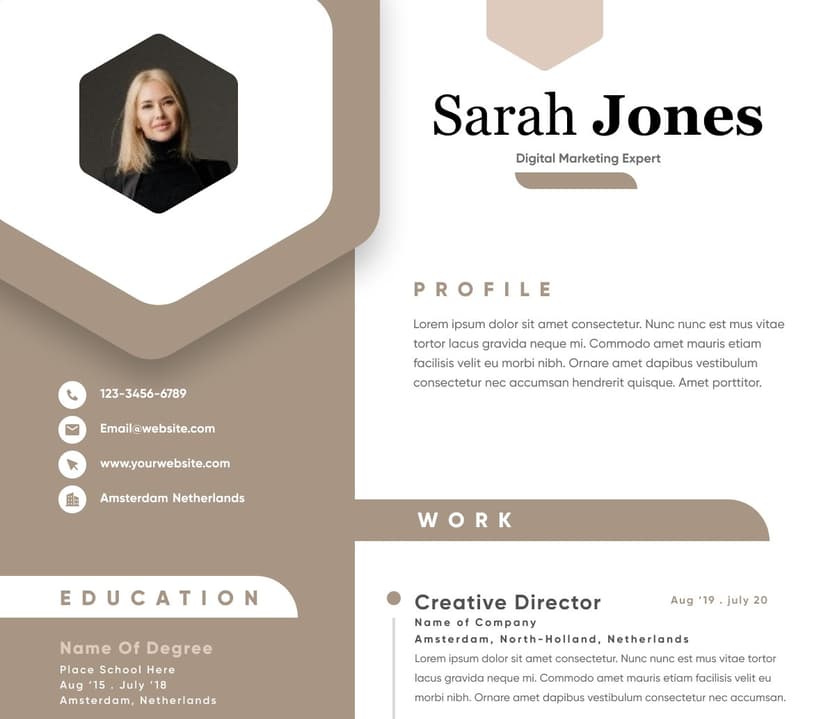
Use professional field-tested resume templates that follow the exact Resume rules employers look for.
Create Resume
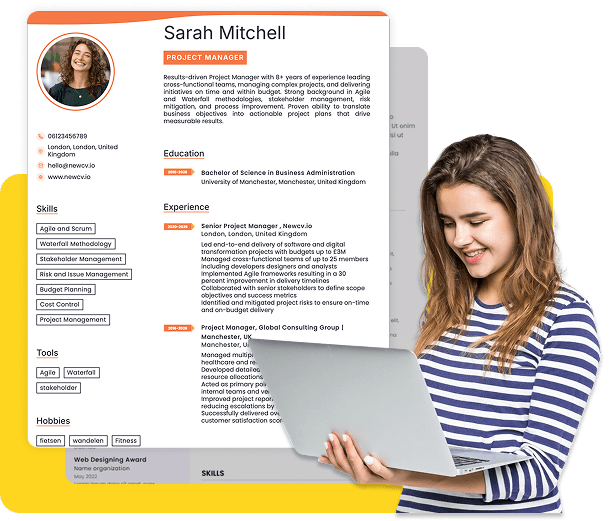
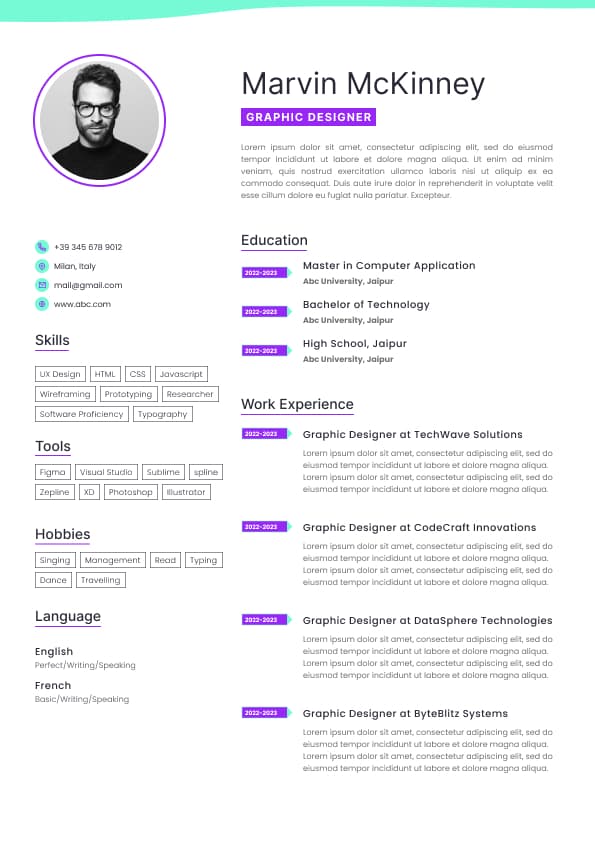
Use professional field-tested resume templates that follow the exact Resume rules employers look for.
Create ResumeKey selection criteria responses are often the deciding factor in Australian government, healthcare, education, university, and not for profit hiring. Most applicants fail because they write generic statements, repeat their resume, or answer criteria without evidence. A strong response clearly proves capability using real examples, measurable outcomes, and role-specific alignment.
Australian hiring managers are not looking for perfect writing. They are looking for evidence, relevance, judgement, communication skills, and whether you can perform the role in a real workplace. The best key selection criteria responses are structured, specific, concise, and directly aligned with the advertised requirements.
This guide explains the exact template recruiters and panel members expect, how assessment panels score responses, what weak applicants do wrong, and how to write selection criteria that genuinely improves your interview chances.
Key selection criteria are specific capabilities, qualifications, skills, behaviours, or experience areas employers use to assess candidates during recruitment.
They are especially common in:
•Australian Public Service (APS) roles
• State government jobs
• Local council positions
• Healthcare and nursing roles
• Universities and education
• Community services and NFP organisations
• Some corporate leadership roles
Instead of relying only on a resume, employers ask candidates to demonstrate capability through written examples.
A typical criterion might look like:
•Demonstrated ability to manage competing priorities in a fast paced environment
• Strong stakeholder engagement and communication skills
• Experience leading teams through organisational change
• Ability to analyse data and provide strategic recommendations
The employer is assessing whether you can provide evidence, not just claims.
The highest performing responses in Australian hiring processes usually follow a structured evidence-based format.
The most effective approach is:
Briefly confirm your capability and years or type of experience.
Explain the workplace scenario or challenge.
Describe specifically what you did.
Show measurable impact or positive outcomes.
Connect the example to the advertised position.
This structure works because it mirrors how assessment panels score applicants.
I have demonstrated strong experience in [insert capability area] through my work in [industry, organisation type, or role].
In my role as [job title] at [organisation], I was responsible for [brief context relevant to criterion].
A key example of this involved [describe challenge, project, or responsibility].
To address this, I:
• [Specific action]
• [Specific action]
• [Specific action]
As a result:
• [Measurable achievement]
• [Business or team outcome]
• [Positive operational impact]
This experience strengthened my ability to [link directly back to criterion], and I would apply the same approach in the [target role title] position.
Recruiters and hiring panels see the same problems repeatedly.
Weak responses usually:
•Repeat resume bullet points without evidence
• Stay too vague or generic
• Focus on duties instead of outcomes
• Use buzzwords without proof
• Include irrelevant career history
• Fail to answer the exact criterion
• Lack measurable impact
• Sound copied or AI generated
Hiring managers are trained to assess demonstrated capability, not confidence or writing flair.
A candidate who writes:
has provided no usable evidence.
A candidate who writes:
is demonstrating real capability.
The second response gives assessable proof.
Most Australian recruiters recommend STAR:
•Situation
• Task
• Action
• Result
But experienced hiring managers often prefer a simplified structure for written criteria responses because STAR can become too long.
A more effective modern approach is often:
•Situation
• Action
• Outcome
This keeps responses tighter and easier to score.
The mistake many applicants make is spending too much time explaining background context and not enough time proving capability.
Panels care most about:
•Your decision making
• Your judgement
• Your actions
• The quality of outcomes
• Relevance to the target role
This depends on the employer requirements.
General Australian hiring expectations:
•Short criteria responses: 150 to 300 words per criterion
• Standard responses: 300 to 500 words
• Senior government roles: up to 750 words where requested
Longer is not automatically better.
Hiring panels often review dozens or hundreds of applications. Dense, repetitive responses hurt readability and reduce scoring clarity.
The strongest responses are:
•Direct
• Evidence based
• Easy to assess
• Outcome focused
• Highly relevant to the role
Most applicants do not understand how selection panels score responses.
Panels usually evaluate based on:
•Relevance to the criterion
• Quality of evidence
• Complexity of example
• Communication clarity
• Demonstrated judgement
• Level of ownership
• Outcomes achieved
• Alignment with role seniority
This is why generic claims fail.
Assessment panels want evidence that you personally contributed to outcomes.
This creates uncertainty about your involvement.
This clearly demonstrates ownership and impact.
Strong examples usually involve:
•Problem solving
• Leadership
• Stakeholder management
• Process improvement
• Conflict resolution
• Risk management
• Service delivery improvements
• Operational efficiency
• Team collaboration
• Decision making under pressure
The strongest examples also include measurable outcomes where possible.
Examples of measurable evidence:
•Reduced turnaround times
• Improved compliance rates
• Increased customer satisfaction
• Reduced costs
• Improved workflow efficiency
• Delivered projects ahead of schedule
• Increased engagement scores
• Reduced incidents or errors
Numbers are helpful, but relevance matters more than inflated metrics.
One of the biggest mistakes candidates make is reusing the same response for multiple applications without tailoring.
Australian hiring managers can spot this immediately.
Instead:
Pay attention to recurring themes such as:
•Stakeholder engagement
• Policy development
• Community outcomes
• Strategic thinking
• Service delivery
• Team leadership
If the employer repeatedly mentions “cross functional collaboration”, use aligned terminology where truthful and relevant.
A leadership role requires strategic examples.
An operational role requires execution examples.
A customer facing role requires communication and service examples.
Your examples must match the level of responsibility expected.
A highly effective formula is:
Confirm experience.
Describe a real workplace scenario.
Explain what you personally did.
Show measurable or operational outcomes.
Connect back to the target role.
This structure aligns strongly with how Australian public and private sector panels assess capability.
A resume summarises duties.
Selection criteria require evidence and examples.
Claims without examples score poorly.
The example must directly match the criterion.
Panels do not need your full career history.
Long responses often reduce clarity.
Terms like “results driven” or “team player” have little value without evidence.
Actions without outcomes weaken credibility.
Higher scoring examples usually involve:
•Multiple stakeholders
• Tight deadlines
• Risk or pressure
• Competing priorities
• Strategic decision making
Clearly explain your role.
Avoid vague team-based language unless collaboration is central to the criterion.
Even operational improvements matter.
Australian hiring managers prefer clear professional communication over corporate jargon.
A smaller but highly relevant example often scores better than a major achievement unrelated to the criterion.
I have extensive experience managing competing operational priorities in fast paced environments across administration and customer service roles.
In my role as Operations Coordinator at a logistics company, I managed scheduling, client communication, supplier coordination, and internal reporting during a period of rapid business growth and staffing shortages.
One significant challenge involved coordinating urgent interstate deliveries while managing multiple supplier delays and increased customer escalations during peak trading periods.
To maintain service delivery standards, I implemented a revised priority tracking system, introduced twice daily workflow reviews with the operations team, and proactively communicated delays and revised delivery expectations to clients.
I also restructured daily task allocation processes to better distribute urgent workloads across team members based on capacity and deadlines.
As a result, the business maintained on time delivery performance above 95% during peak periods, customer complaints reduced significantly, and workflow bottlenecks were reduced across the operations team.
This experience strengthened my ability to remain organised, adaptable, and solutions focused while managing competing priorities under pressure, which aligns strongly with the requirements of this role.
Government employers usually prioritise:
•Structured examples
• Behavioural capability evidence
• Policy alignment
• Communication clarity
• Stakeholder management
• Accountability and governance
APS and state government panels often score responses formally against capability frameworks.
Private employers usually focus more on:
•Commercial outcomes
• Leadership impact
• Operational performance
• Revenue or efficiency improvements
• Client outcomes
• Adaptability
The writing style may be slightly less formal, but evidence is still critical.
Usually yes.
If the employer provides separate criteria, respond individually unless instructed otherwise.
Combining unrelated criteria into one response often weakens clarity and makes scoring harder for the panel.
However, overlapping examples can be reused strategically if tailored carefully.
This is becoming increasingly important in Australian hiring.
Recruiters often notice AI generated responses because they:
•Sound overly polished but vague
• Lack operational detail
• Avoid specific context
• Use repetitive corporate language
• Include generic leadership claims
• Lack believable nuance
Strong responses sound human because they include:
•Specific workplace context
• Real challenges
• Practical decisions
• Genuine operational detail
• Clear ownership
• Realistic outcomes
The best approach is using AI to structure and refine ideas, not fabricate experience.
The applicants who consistently secure interviews are not always the most experienced.
They are usually the candidates who:
•Directly answer the criterion
• Provide relevant evidence
• Demonstrate ownership
• Explain outcomes clearly
• Keep responses concise and readable
• Align examples to the actual role
Selection criteria are fundamentally evidence based assessments.
The panel is asking:
Your job is to remove doubt.
Key selection criteria are specific capabilities, qualifications, skills, behaviours, or experience areas employers use to assess candidates during recruitment.
They are especially common in:
•Australian Public Service (APS) roles
• State government jobs
• Local council positions
• Healthcare and nursing roles
• Universities and education
• Community services and NFP organisations
• Some corporate leadership roles
Instead of relying only on a resume, employers ask candidates to demonstrate capability through written examples.
A typical criterion might look like:
•Demonstrated ability to manage competing priorities in a fast paced environment
• Strong stakeholder engagement and communication skills
• Experience leading teams through organisational change
• Ability to analyse data and provide strategic recommendations
The employer is assessing whether you can provide evidence, not just claims.
The highest performing responses in Australian hiring processes usually follow a structured evidence-based format.
The most effective approach is:
Briefly confirm your capability and years or type of experience.
Explain the workplace scenario or challenge.
Describe specifically what you did.
Show measurable impact or positive outcomes.
Connect the example to the advertised position.
This structure works because it mirrors how assessment panels score applicants.
I have demonstrated strong experience in [insert capability area] through my work in [industry, organisation type, or role].
In my role as [job title] at [organisation], I was responsible for [brief context relevant to criterion].
A key example of this involved [describe challenge, project, or responsibility].
To address this, I:
• [Specific action]
• [Specific action]
• [Specific action]
As a result:
• [Measurable achievement]
• [Business or team outcome]
• [Positive operational impact]
This experience strengthened my ability to [link directly back to criterion], and I would apply the same approach in the [target role title] position.
Recruiters and hiring panels see the same problems repeatedly.
Weak responses usually:
•Repeat resume bullet points without evidence
• Stay too vague or generic
• Focus on duties instead of outcomes
• Use buzzwords without proof
• Include irrelevant career history
• Fail to answer the exact criterion
• Lack measurable impact
• Sound copied or AI generated
Hiring managers are trained to assess demonstrated capability, not confidence or writing flair.
A candidate who writes:
has provided no usable evidence.
A candidate who writes:
is demonstrating real capability.
The second response gives assessable proof.
Most Australian recruiters recommend STAR:
•Situation
• Task
• Action
• Result
But experienced hiring managers often prefer a simplified structure for written criteria responses because STAR can become too long.
A more effective modern approach is often:
•Situation
• Action
• Outcome
This keeps responses tighter and easier to score.
The mistake many applicants make is spending too much time explaining background context and not enough time proving capability.
Panels care most about:
•Your decision making
• Your judgement
• Your actions
• The quality of outcomes
• Relevance to the target role
This depends on the employer requirements.
General Australian hiring expectations:
•Short criteria responses: 150 to 300 words per criterion
• Standard responses: 300 to 500 words
• Senior government roles: up to 750 words where requested
Longer is not automatically better.
Hiring panels often review dozens or hundreds of applications. Dense, repetitive responses hurt readability and reduce scoring clarity.
The strongest responses are:
•Direct
• Evidence based
• Easy to assess
• Outcome focused
• Highly relevant to the role
Most applicants do not understand how selection panels score responses.
Panels usually evaluate based on:
•Relevance to the criterion
• Quality of evidence
• Complexity of example
• Communication clarity
• Demonstrated judgement
• Level of ownership
• Outcomes achieved
• Alignment with role seniority
This is why generic claims fail.
Assessment panels want evidence that you personally contributed to outcomes.
This creates uncertainty about your involvement.
This clearly demonstrates ownership and impact.
Strong examples usually involve:
•Problem solving
• Leadership
• Stakeholder management
• Process improvement
• Conflict resolution
• Risk management
• Service delivery improvements
• Operational efficiency
• Team collaboration
• Decision making under pressure
The strongest examples also include measurable outcomes where possible.
Examples of measurable evidence:
•Reduced turnaround times
• Improved compliance rates
• Increased customer satisfaction
• Reduced costs
• Improved workflow efficiency
• Delivered projects ahead of schedule
• Increased engagement scores
• Reduced incidents or errors
Numbers are helpful, but relevance matters more than inflated metrics.
One of the biggest mistakes candidates make is reusing the same response for multiple applications without tailoring.
Australian hiring managers can spot this immediately.
Instead:
Pay attention to recurring themes such as:
•Stakeholder engagement
• Policy development
• Community outcomes
• Strategic thinking
• Service delivery
• Team leadership
If the employer repeatedly mentions “cross functional collaboration”, use aligned terminology where truthful and relevant.
A leadership role requires strategic examples.
An operational role requires execution examples.
A customer facing role requires communication and service examples.
Your examples must match the level of responsibility expected.
A highly effective formula is:
Confirm experience.
Describe a real workplace scenario.
Explain what you personally did.
Show measurable or operational outcomes.
Connect back to the target role.
This structure aligns strongly with how Australian public and private sector panels assess capability.
A resume summarises duties.
Selection criteria require evidence and examples.
Claims without examples score poorly.
The example must directly match the criterion.
Panels do not need your full career history.
Long responses often reduce clarity.
Terms like “results driven” or “team player” have little value without evidence.
Actions without outcomes weaken credibility.
Higher scoring examples usually involve:
•Multiple stakeholders
• Tight deadlines
• Risk or pressure
• Competing priorities
• Strategic decision making
Clearly explain your role.
Avoid vague team-based language unless collaboration is central to the criterion.
Even operational improvements matter.
Australian hiring managers prefer clear professional communication over corporate jargon.
A smaller but highly relevant example often scores better than a major achievement unrelated to the criterion.
I have extensive experience managing competing operational priorities in fast paced environments across administration and customer service roles.
In my role as Operations Coordinator at a logistics company, I managed scheduling, client communication, supplier coordination, and internal reporting during a period of rapid business growth and staffing shortages.
One significant challenge involved coordinating urgent interstate deliveries while managing multiple supplier delays and increased customer escalations during peak trading periods.
To maintain service delivery standards, I implemented a revised priority tracking system, introduced twice daily workflow reviews with the operations team, and proactively communicated delays and revised delivery expectations to clients.
I also restructured daily task allocation processes to better distribute urgent workloads across team members based on capacity and deadlines.
As a result, the business maintained on time delivery performance above 95% during peak periods, customer complaints reduced significantly, and workflow bottlenecks were reduced across the operations team.
This experience strengthened my ability to remain organised, adaptable, and solutions focused while managing competing priorities under pressure, which aligns strongly with the requirements of this role.
Government employers usually prioritise:
•Structured examples
• Behavioural capability evidence
• Policy alignment
• Communication clarity
• Stakeholder management
• Accountability and governance
APS and state government panels often score responses formally against capability frameworks.
Private employers usually focus more on:
•Commercial outcomes
• Leadership impact
• Operational performance
• Revenue or efficiency improvements
• Client outcomes
• Adaptability
The writing style may be slightly less formal, but evidence is still critical.
Usually yes.
If the employer provides separate criteria, respond individually unless instructed otherwise.
Combining unrelated criteria into one response often weakens clarity and makes scoring harder for the panel.
However, overlapping examples can be reused strategically if tailored carefully.
This is becoming increasingly important in Australian hiring.
Recruiters often notice AI generated responses because they:
•Sound overly polished but vague
• Lack operational detail
• Avoid specific context
• Use repetitive corporate language
• Include generic leadership claims
• Lack believable nuance
Strong responses sound human because they include:
•Specific workplace context
• Real challenges
• Practical decisions
• Genuine operational detail
• Clear ownership
• Realistic outcomes
The best approach is using AI to structure and refine ideas, not fabricate experience.
The applicants who consistently secure interviews are not always the most experienced.
They are usually the candidates who:
•Directly answer the criterion
• Provide relevant evidence
• Demonstrate ownership
• Explain outcomes clearly
• Keep responses concise and readable
• Align examples to the actual role
Selection criteria are fundamentally evidence based assessments.
The panel is asking:
Your job is to remove doubt.
Usually one strong, detailed example is better than multiple weak examples. For broader criteria, two concise examples may work well if they demonstrate different aspects of capability.
The STAR method works well, but many Australian hiring managers prefer tighter responses focused mainly on situation, actions, and outcomes. Avoid overloading the response with unnecessary background detail.
You can reuse core examples, but every response should be tailored to the wording, priorities, and seniority level of the specific role. Generic responses reduce interview chances significantly.
The biggest mistake is making claims without evidence. Panels want demonstrated capability through real examples, not personality descriptions or resume summaries.
Yes. They remain very common across government, healthcare, universities, education, and many community sector roles. Many employers still use them as a major shortlisting tool.
Yes, where possible. Metrics strengthen credibility and help demonstrate impact. However, relevant operational outcomes are more important than forcing numbers into every example.


 Upload Resume
 Import from Linkedin