
Choose from a wide range of NEWCV resume templates and customize your NEWCV design with a single click.

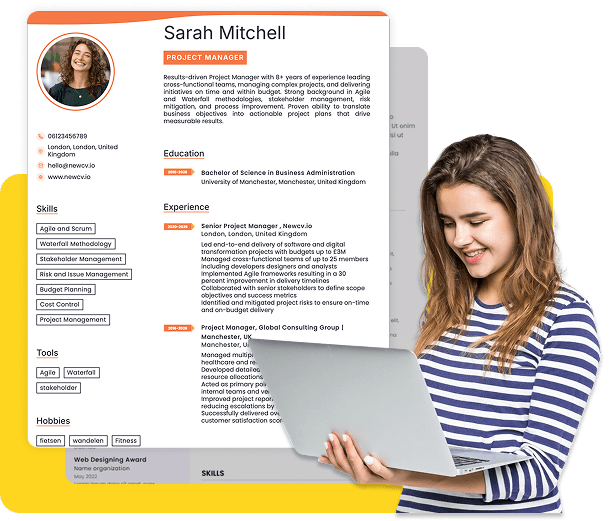
Use ATS-optimised Resume and resume templates that pass applicant tracking systems. Our Resume builder helps recruiters read, scan, and shortlist your Resume faster.

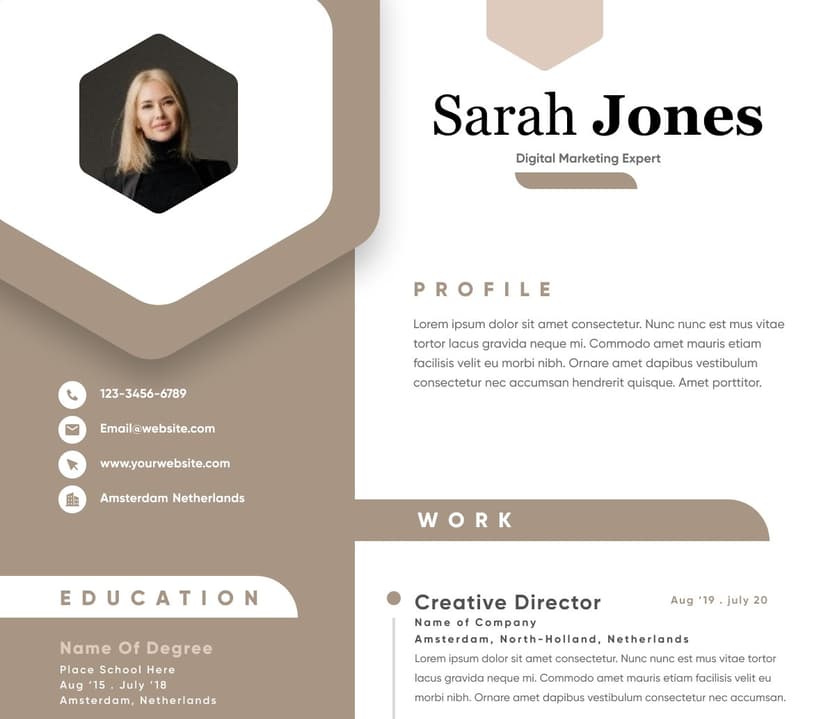
Use professional field-tested resume templates that follow the exact Resume rules employers look for.
Create Resume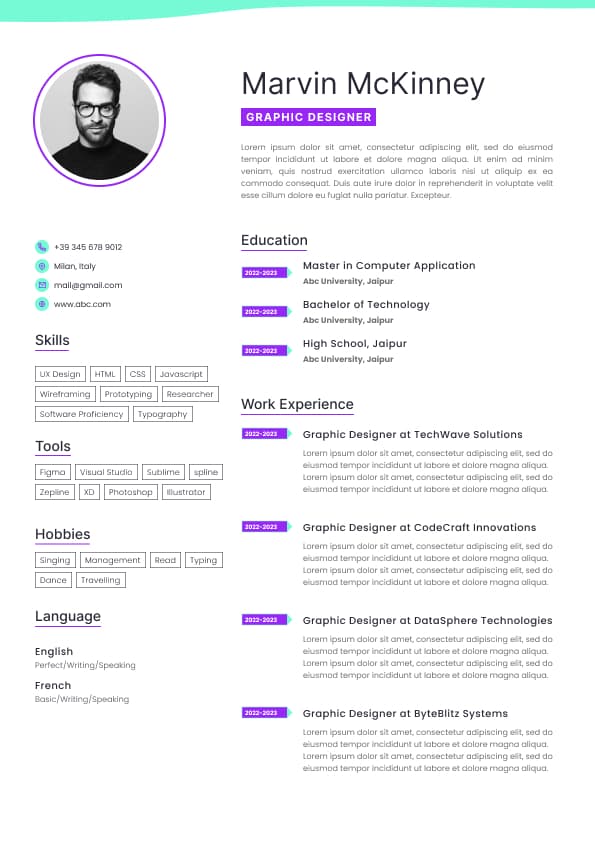
Use professional field-tested resume templates that follow the exact Resume rules employers look for.
Create ResumeIf you’re applying for IT jobs in Australia, your resume needs to do far more than list technical skills. Australian recruiters and hiring managers assess resumes based on commercial relevance, project impact, communication clarity, local market fit, and how quickly they can understand your value. A technically strong candidate can still miss interviews because their resume reads like a technical document instead of a hiring decision tool.
For Australian IT hiring, employers want evidence that you can solve business problems, work with stakeholders, communicate clearly, and contribute in modern delivery environments. Your resume must show outcomes, not just responsibilities.
The biggest mistakes candidates make are:
Overloading resumes with tools and certifications
Writing generic job descriptions
Using overseas resume formats that do not align with Australian hiring expectations
Failing to tailor resumes to the exact IT role
Australian hiring managers typically spend less than 30 seconds on the first review of a resume. In highly competitive IT markets such as Sydney, Melbourne, and Brisbane, recruiters often scan hundreds of applications per role.
Your resume must answer these questions immediately:
What IT role are you targeting?
What technologies do you specialise in?
What business outcomes have you delivered?
Have you worked in similar environments?
Can you communicate clearly and professionally?
Are you aligned with Australian workplace expectations?
Australian recruiters generally prefer resumes that are:
A modern Australian IT resume should follow a logical structure that supports both ATS systems and human reviewers.
Ignoring ATS keyword alignment
A strong Australian IT resume is clear, targeted, achievement-driven, and commercially relevant.
Clean and easy to scan
Achievement-focused
Written in direct language
Tailored to the specific role
Relevant to the local market
Free from unnecessary personal information
Unlike some international markets, Australian resumes do not require:
Photos
Date of birth
Marital status
Religion
Passport details
Multiple-page career biographies
For most IT professionals, a 2 to 4-page resume is standard in Australia depending on experience level.
Include:
Full name
Mobile number
Professional email address
LinkedIn profile
City and state
Do not include your full address.
This is one of the most important sections on the resume.
A strong IT resume summary should quickly position you for the target role.
“Experienced IT professional with strong technical skills seeking a challenging opportunity.”
This tells recruiters almost nothing.
“Cloud Engineer with 6+ years’ experience designing and supporting AWS infrastructure across financial services and SaaS environments. Strong background in Terraform, Kubernetes, CI/CD automation, and cloud security uplift projects. Known for reducing deployment times, improving platform stability, and supporting scalable cloud transformation initiatives.”
The second version:
Identifies the exact specialisation
Demonstrates commercial value
Includes relevant technologies
Aligns with recruiter search behaviour
Sounds credible and specific
Most IT candidates overload the skills section.
Recruiters are not impressed by long keyword dumps without context.
Group skills strategically.
Cloud Platforms
AWS
Azure
GCP
Programming Languages
Python
Java
JavaScript
TypeScript
DevOps & Automation
Terraform
Docker
Kubernetes
Jenkins
GitHub Actions
Databases
PostgreSQL
MySQL
MongoDB
Methodologies
Agile
Scrum
DevOps
This improves:
ATS readability
Recruiter scanning speed
Resume structure
Keyword coverage without stuffing
This is where most hiring decisions are made.
Australian recruiters care less about task lists and more about:
Scope
Business impact
Technical complexity
Stakeholder interaction
Delivery outcomes
The best resume bullet points combine:
Action
Technical detail
Outcome
Business impact
“Responsible for managing cloud infrastructure.”
This sounds passive and generic.
“Designed and implemented AWS infrastructure using Terraform and Kubernetes, reducing deployment times by 45% and improving platform scalability across multi-region environments.”
This works because it shows:
Ownership
Technology stack
Quantifiable impact
Commercial relevance
Use this framework:
“Developed automated CI/CD pipelines using Jenkins and GitHub Actions, reducing production deployment failures by 35% and improving release velocity across engineering teams.”
This is how recruiters assess technical credibility quickly.
One of the biggest mistakes candidates make is using the same resume for every application.
A Software Engineer resume should not read like a Cyber Security Analyst resume.
Australian recruiters expect alignment between:
Resume positioning
Job title
Skills
Achievements
Keywords
Focus on:
Product delivery
System design
Scalability
Development frameworks
Agile collaboration
Code quality
Focus on:
Risk reduction
Compliance
Incident response
Security tooling
Governance frameworks
Threat mitigation
Focus on:
Business insights
SQL
Power BI or Tableau
Stakeholder reporting
Data modelling
Commercial decision support
Focus on:
Infrastructure automation
Cloud migration
Scalability
Cost optimisation
Security
Reliability
Focus on:
Ticket resolution metrics
User support
Customer satisfaction
Troubleshooting
SLA performance
Technical communication
Most medium and large employers in Australia use Applicant Tracking Systems.
However, ATS optimisation is widely misunderstood.
Keyword stuffing does not work well anymore.
Modern ATS systems are designed to assess relevance, structure, and alignment.
If the role says:
“Senior DevOps Engineer”
And your resume says:
“Technology Specialist”
You create unnecessary friction.
Align titles naturally where accurate.
Mirror terminology from the job ad when truthful and relevant.
Example:
If the ad mentions:
AWS
Terraform
Kubernetes
CI/CD
Those terms should appear naturally in your resume if you genuinely use them.
Avoid:
Text boxes
Complex graphics
Multiple columns
Icons
Header-heavy layouts
Simple formatting performs better.
Hiring managers often skim resumes differently from recruiters.
Recruiters assess fit broadly.
Hiring managers assess:
Technical credibility
Team fit
Problem-solving capability
Delivery maturity
Commercial awareness
What stands out positively:
Specific achievements
Ownership of projects
Measurable outcomes
Strong communication
Modern technology exposure
Stability and progression
What creates concern:
Vague experience
Excessive job hopping without explanation
Generic bullet points
Outdated technologies only
No measurable impact
Buzzword-heavy resumes
Many candidates describe what they did instead of what they achieved.
“Worked on cloud migration projects.”
“Led migration of 120+ workloads from on-premises infrastructure to AWS, improving system uptime and reducing operational costs by 28%.”
Huge technology lists reduce credibility.
Recruiters often assume:
The candidate lacks depth
The resume is keyword stuffed
The experience is superficial
Prioritise:
Current technologies
Relevant technologies
Strong technologies
Generic summaries immediately weaken positioning.
Avoid phrases like:
Hard-working professional
Team player
Results-driven individual
Fast learner
These phrases add no evidence.
Australian employers increasingly hire for commercial value, not just technical ability.
Strong IT resumes explain:
Efficiency improvements
Cost savings
Risk reduction
Delivery acceleration
Customer impact
Revenue support
For IT jobs in Australia:
Usually 2 pages.
Usually 2 to 3 pages.
3 to 4 pages can be acceptable if highly relevant.
Long resumes are only a problem when they contain:
Repetition
Irrelevant detail
Old technologies
Generic descriptions
Concise depth is better than excessive brevity.
Yes, especially in IT.
Certifications matter more in some areas than others.
AWS Certifications
Microsoft Azure Certifications
Google Cloud Certifications
CISSP
CompTIA Security+
CEH
Scrum Master
PRINCE2
ITIL
CCNA
CCNP
However, certifications do not replace practical experience.
Recruiters prioritise:
Real project delivery
Technical capability
Commercial outcomes
A candidate with strong hands-on achievements usually outperforms someone with many certifications but limited delivery experience.
This is highly important in Australia.
Many overseas candidates are technically strong but struggle with resume positioning.
Australian recruiters commonly assess:
Local communication style
Stakeholder experience
Business communication clarity
Australian work rights
Local market relevance
Cultural fit within teams
Avoid overly academic wording.
Australian hiring culture values:
Clarity
Practicality
Direct communication
If your employer is not widely known in Australia, add context.
“Worked for a large telecommunications provider supporting 10 million+ users across enterprise infrastructure environments.”
This helps recruiters understand scale quickly.
Business outcomes are globally understood.
Strong metrics improve credibility regardless of country.
The strongest resumes are strategically positioned.
They are not simply career histories.
A specialist, not a generalist
A problem solver, not just a technical operator
Commercially valuable
Relevant to the exact role
Easy to hire confidently
Recruiters shortlist candidates who feel low risk and high value.
Your resume should reduce uncertainty.
Instead of:
“Experienced IT professional with diverse technical skills.”
Use:
“Senior DevOps Engineer specialising in AWS infrastructure automation, CI/CD optimisation, and scalable cloud delivery across enterprise financial services environments.”
Specific positioning dramatically improves interview rates.
The Australian IT market increasingly rewards candidates who combine:
Technical depth
Communication ability
Commercial awareness
Delivery capability
Adaptability
The resumes getting interviews in 2026 are:
Tailored
Outcome-driven
Technically credible
ATS-friendly
Easy to scan
Commercially relevant
Generic resumes are increasingly filtered out early.
Before applying, check whether your resume:
Clearly targets one IT role
Includes measurable achievements
Uses relevant technical keywords naturally
Matches the job description
Demonstrates business impact
Avoids generic summaries
Uses modern Australian resume formatting
Is easy to scan quickly
Shows progression and technical depth
Positions you as commercially valuable
If recruiters cannot quickly understand your value, your resume will struggle regardless of your technical ability.


 Upload Resume
 Import from Linkedin